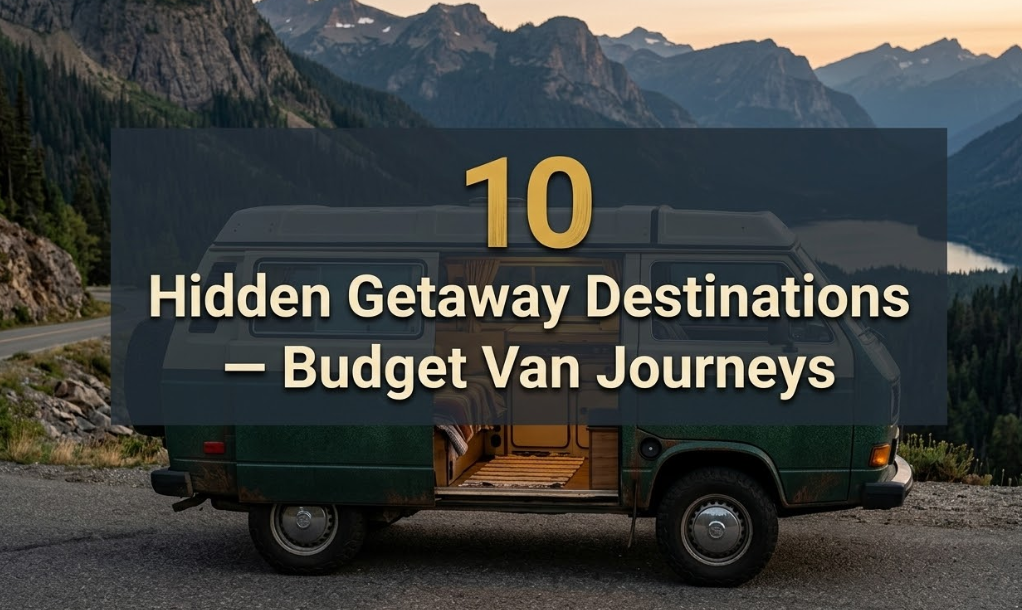
There is something magical about taking off down an open road in a van with no hotel reservations and not a stiff timeline.
Budget van trips have surged in popularity over the past few years — and for good reason. You gain freedom, flexibility and an expert’s opportunity to get to know parts of a place that most tourists never see.
But here’s the thing: Most van travel articles take you to the same overcrowded places. The popular national parks. The famous coastal routes. The so-called Instagrammable camping sites that are booked out six months ahead.
This article is different.
We’re exploring 6 budget van road trips that go way off the beaten path — to secret canyons, overlooked fishing villages, winding mountain roads and windswept coastlines that even most drivers bypass.
And the best part? All of the routes in this post are meant to be accomplished on a shoestring budget. We’re talking actual money-saving advice, not ephemera like “make your own meals.”
Let’s hit the road.
The Smartest Way to Explore Hidden Places: Budget Van Travel
Before diving into specific routes, let’s talk about why van travel is so well suited to reach off the beaten path spaces.
You Go Where the Crowds Don’t
The tourist trail is well travelled. They fly in and out of major cities, rent cars and drive to the top five attractions on Google. Van travelers move differently. You pause when something catches your interest. You rest where the sunset leaves you.
And that flexibility is your greatest asset.
Your Out-Of-Pocket Costs Are Still Low (Really Low)
If you sleep in your van, then the biggest travel expense — accommodation — disappears. A nice campsite is $10–$25 a night. Several remote camping sites on public land come at zero cost.
Compare that with $100–$200 a night for even a budget hotel.
The Secret Places Pay Off Slow Travel
Not every hidden destination lays itself out at your feet. Others call for dirt roads, early mornings or local savvy. People in vans have time for all of that. You aren’t running to tick items off a list.
How Much Van Travel Costs: A Budget Breakdown
You have to understand the real numbers before you plot a single route.
| Expense Category | Daily Budget (Low) | Daily Budget (Mid) |
|---|---|---|
| Fuel | $15–$25 | $25–$45 |
| Campsite / Sleeping | $0–$15 | $15–$30 |
| Food & Groceries | $10–$20 | $20–$35 |
| Activities & Entry Fees | $0–$10 | $10–$25 |
| Miscellaneous | $5–$10 | $10–$20 |
| Total Per Day | $30–$80 | $80–$155 |
The average budget van traveler spends $40 to $70 a day when planning well. That’s less than one night at a bare-bones motel in most areas.
Journey #1 — The Overlooked Backroads of the Olympic Peninsula, Washington
The Olympic Peninsula is located in the northwest corner of Washington State. The average visitor sticks to the main entrances of Olympic National Park. That is precisely the reason to dig deeper.
What Makes This Route Special
That loop passes through temperate rainforests, untamed Pacific beaches and quirky logging towns that feel stuck in time. There are hot springs nestled in the woods, sea stacks jutting up from foggy beaches and rivers so clear they seem artificial.
The Hoh Rainforest gets attention. A stop at the beaches of Rialto and Ruby Beach is worth every minute. But the real magic happens between stops — on the little roads that wrap through Quinault, around Lake Crescent and down to the fishing village of Westport.
How to Do It on a Budget
- Free and low-cost camping: The Olympic National Forest has dispersed camping areas. Many cost nothing. Others charge $5–$8.
- Groceries in Port Angeles: Stock up here before you head into the peninsula. Prices jump in smaller towns.
- Skip guided tours: Hoh Rainforest, Rialto Beach and Hurricane Ridge are all self-guided. Admission to Olympic National Park is $30 per vehicle and lasts for 7 days.
Hidden Gem Stop
Travel to Ozette Lake in the northwest corner. Hike the wooden boardwalk trail (9 miles round trip) to Cape Flattery or to Wedding Rocks, where Native American petroglyphs carved into the rock can be viewed. Almost nobody makes this detour.
Best time to visit: May to September for drier weather. Moody fog and reduced crowds arrive in October.
Journey #2 — Deep in the Ozark Mountains, Arkansas & Missouri
Most people consider the Ozarks fly-over country. That’s the worst travel mistake you can make.
Why the Ozarks Are Wildly Underrated
This mountainous region covers parts of Arkansas, Missouri and Oklahoma. It’s full of crystal-clear spring-fed rivers, limestone bluffs, cave systems and tiny towns with a deep musical legacy.
The Buffalo National River is among America’s first protected rivers — and it’s beautiful. Along the way are float trips, hiking trails and cliff jumping spots. Outside of summer weekends, entire stretches of this river will be almost all yours.
Route Highlights
Start in Fayetteville, Arkansas. Head north up through the Boston Mountains, then east along the corridor of the Buffalo River. Pass into Missouri via the Mark Twain National Forest. Circle back south through the Current River area and Ozark National Scenic Riverways.
This complete loop is approximately 600–700 miles and can easily occupy two weeks of slow, glorious driving.
Money-Saving Tips for This Route
- Free camping: Both the Ozark National Forest and Mark Twain National Forest permit dispersed camping. You can sleep at no cost on hundreds of thousands of acres.
- Swim free: Each of the major swimming holes, river access points and waterfalls in this region is free to visit.
- Local diners: Small-town diners across the Ozarks serve huge breakfasts for $6–$9. Avoid restaurant dinners and cook at camp instead.
Hidden Gem Stop
Look for Hawksbill Crag (also known as Whitaker Point) in the Buffalo National River region. It’s a brief but scrambly hike to an overhanging sandstone ledge overlooking a valley. It looks like a movie set. One weekday morning and you’ll probably be the only visitor.
Budget estimate: $40–$55 daily along this route.
Journey #3 — The Empty Roads of the Great Basin, Nevada & Utah
If you want to feel genuinely alone on planet Earth, drive the Great Basin.
A Region Most Travelers Fly Over
The Great Basin lies between the Sierra Nevada and the Wasatch Range. It includes most of Nevada and extends into Utah, Oregon and Idaho. It is a high-desert landscape of salt flats, ancient mountain ranges and ghost towns.
Most travelers fly into Las Vegas or Salt Lake City and never glance out the window. That means the best places in the Great Basin are lying quietly, empty and waiting.
What You’ll Find Out Here
- Great Basin National Park: One of the least-visited national parks in the country. Ancient bristlecone pines (some more than 4,000 years old), the Lehman Caves and a glacier tucked into a desert mountain range.
- The Loneliest Road in America (US Route 50): This highway passes directly across Nevada past tiny communities, old mining districts and open land that stretches to every horizon.
- Berlin-Ichthyosaur State Park: Part ghost town, part fossil site where the remains of giant prehistoric sea animals are found. It’s almost free to visit.
Great Basin Budget Van Tips
| Tip | Savings |
|---|---|
| Use free BLM (Bureau of Land Management) camping | $0 vs $25–$30/night |
| Fill water in Austin, Ely or Eureka | Avoid overpriced convenience stops |
| Cook all meals (no restaurants for miles anyway) | $10–$15/day on food |
| Visit Great Basin NP on a weekday | No wait times, same cost |
Hidden Gem Stop
Head toward Ward Charcoal Ovens State Historic Park, near Ely, Nevada. Six giant stone beehive-shaped ovens tower above a canyon. They were constructed in the 1870s for producing charcoal to be used in silver smelting. Today they’re utterly empty, impeccably preserved and beautifully strange. Almost no one visits.
Best time to go: April–June or September–October. Summers are searingly hot in the lower elevations.
Journey #4 — Along Mississippi & Alabama’s Forgotten Gulf Coast
Everyone talks about Florida. No one ever mentions Mississippi and Alabama’s Gulf Coast. That’s your opening.
What the Gulf Coast Keeps Quiet
Florida’s sprawling tourism machine tends to overshadow this stretch of coastline. But the Mississippi and Alabama Gulf Coast has miles of white sand, warm water, and a deep-rooted culture of seafood, blues music and Southern history.
Biloxi, Ocean Springs, Dauphin Island, Gulf Shores — all of these places have real beaches but none of the prices or crowds you’ll find at Destin or Miami Beach.
Planning Your Gulf Coast Van Route
Start in New Orleans (technically Louisiana, but worth the detour for the culture and food). Drive east along the coast through Biloxi and Gulfport. Cross over into Alabama and stop in Fairhope, a lovely artsy town on Mobile Bay. Finish at Dauphin Island, a quiet barrier island where pelicans outnumber humans on weekdays.
The entire stretch runs about 250 miles of coastal driving.
Budget Hacks for This Journey
- Dauphin Island campground: Right on the Gulf, $22–$28 a night. Wake to pelicans walking by your van.
- Dockside seafood: Purchase shrimp, oysters and crabs directly from fishing docks. You’ll pay half what restaurants charge.
- Free beaches: The majority of Gulf Coast beaches in Mississippi and Alabama carry no entry fee. No parking charges, no resort fees.
- Farmers markets in Ocean Springs: This artsy little town has amazing fresh produce and local food at low prices.
Hidden Gem Stop
Explore Horn Island, reached by ferry or kayak from Ocean Springs. This uninhabited barrier island inspired painter Walter Anderson’s best-known works. Permits are available for overnight camping. Bring everything you need. It’s just sand, birds and silence out there.
Budget estimate: $35–$60 per day on this route.
Journey #5 — The Ancient Valleys of the San Juan Mountains, Colorado
Colorado has Rocky Mountain National Park. It has Vail, Aspen and Telluride. Those spots are stunning — and pricey, packed with tourists and draining.
The San Juan Mountains of southwestern Colorado are not.
Why the San Juans Are Colorado’s Best-Kept Secret
This rugged mountain range has more 13,000-foot peaks than any other range in North America. The old mining towns here — Ouray, Silverton, Creede, Lake City — are actual working communities, not mere resort playgrounds.
The roads are dramatic. The scenery is staggering. The San Juans feel quieter since they take a bit more driving to reach, and the crowds thin out quickly after you leave the interstate.
Route Overview: The San Juan Skyway
The San Juan Skyway is a 233-mile loop that officially connects Durango, Cortez, Telluride, Ouray and Silverton before returning. But the true magic is on its back roads.
Traverse the Alpine Loop (a high-clearance dirt road) between Ouray and Lake City. Pull over at Yankee Boy Basin for wildflower meadows and waterfalls. Take a detour to Creede, a narrow canyon town with a genuine theater company and almost no tourists.
Keeping Costs Low in the San Juans
The San Juan National Forest and Gunnison National Forest border this entire area. Much of this land has dispersed camping that is legal and free. The trick is to know where the forest service roads lead.
- Ouray Hot Springs: A giant outdoor hot spring pool in town charges roughly $14 for adults. It’s worth every penny after days of mountain driving.
- Free 4WD roads: The backcountry roads are extensive, free and amazing if your van has clearance.
- Durango for supplies: Before you head into the mountains, stock up on groceries in Durango. Prices spike in Silverton and Ouray.
Hidden Gem Stop
Drive to Slumgullion Pass outside Lake City. At the summit sits a geological wonder known as the Slumgullion Earthflow — a slow-moving landslide that has been oozing down the mountain for 700 years. Strange, beautiful and entirely free. You’ll likely have it almost to yourself.
Best time to go: July through September. Many high roads are impassable with snow until mid-June.
Journey #6 — The Wild Atlantic Edge of Maine’s Downeast Coast
Maine’s coast is famous. Bar Harbor and Acadia National Park attract millions each year. But head northeast out of Bar Harbor and the world quickly becomes different.
What “Downeast” Actually Means
“Downeast” is the name of the coast of Washington County, Maine — the easternmost region of the U.S. coastline. It’s wild, rugged, foggy and nearly entirely ignored by tourists.
There are working fishing harbors that send lobster boats out before dawn. Blueberry barrens that turn deep red in autumn. Lighthouses on granite headlands with no visitor centers, no gift shops and no crowds.
The Downeast Van Route
Begin in Ellsworth (just beyond Bar Harbor). Head northeast on US Route 1, through Cherryfield, Harrington, Milbridge and Jonesport. Travel east to Lubec — the easternmost town in the continental U.S., where West Quoddy Head Lighthouse stands red-and-white against the grey Atlantic.
If you’re feeling adventurous, hop on the ferry or drive over to Campobello Island (technically New Brunswick, Canada, so you’ll need your passport). This is where Franklin D. Roosevelt used to summer, and it’s perhaps the quietest historical site you’ll ever set foot in.
Budget Tips for Downeast Maine
- Free coastal camping: Cobscook Bay State Park has beautiful tidal camping for $21–$30 a night. The tides here are some of the highest in the world.
- Buy dockside lobster: In Jonesport, Cutler and Lubec you can buy lobster directly from fishermen at prices that’ll blow your mind.
- Skip Bar Harbor: Things are more expensive there. Just drive through and continue northeast.
- Free lighthouse access: Most Downeast lighthouses are on public land and free to visit.
Hidden Gem Stop
Find Cutler Coast Public Land near the tiny village of Cutler. A 12-mile trail system winds around some of the most rugged coastal headlands in New England. Towering granite cliffs, puffins nesting offshore and views over the Bay of Fundy. It costs absolutely nothing. You might see three other people all day.
Budget estimate: $35–$65 per day on this route.
Van Setup Essentials for Budget Adventure Travel
Great destinations are meaningless if your van breaks down or you’re not comfortable. If you’re just getting started, Budget Van Journeys is a great resource for van build ideas, gear guides and route planning tips.
What Every Budget Van Traveler Needs
Sleeping setup: Even a simple foam mattress cut to fit your van floor makes all the difference. Add a wool blanket and a sleeping bag rated to 20°F. Total cost: $80–$200.
Cooking gear: A two-burner propane camp stove, one pot, a pan and a cutting board. You can cook almost anything. Budget: $40–$80.
Water storage: Store 5–10 gallons in jugs. Potable water is available for refilling at campgrounds, visitor centers and towns. A basic water filter (Sawyer or LifeStraw) provides backup safety.
Navigation: Download maps for offline use on Google Maps or use apps such as iOverlander and FreeRoam for finding free camping spots. Don’t depend on cell service in remote areas.
Power: A basic 100-watt solar panel and battery bank charges phones, powers lights and runs a fan. Total cost: $150–$300.
For a deeper look at van gear and build inspiration, the Outdoors with Bear Grylls website is a solid external resource with practical survival and outdoor living tips.
FAQs About Budget Van Journeys to Hidden Destinations
Q: Do I need a special van for budget van travel? No. Any reliable van works. A lot of travelers drive minivans, cargo vans or even big SUVs. You don’t have to go full-on “Instagram van” to have an amazing trip.
Q: Is it legal to sleep in my van? It depends on location. Dispersed camping is generally legal and free on public lands (BLM land, national forests). In cities and towns, the rules differ. Always check local laws regarding overnight parking.
Q: How do I find free camping spots? There are a number of apps you can use, including iOverlander, FreeRoam, The Dyrt or Campendium. The USDA Forest Service and Bureau of Land Management websites also list dispersed camping areas for each region.
Q: What is the biggest mistake first-time van travelers make? Overpacking. You need a lot less than you think. Concentrate on the essentials — sleep, cook, stay warm, stay dry — and leave everything else behind.
Q: How do I stay safe as a solo van traveler? If you’re feeling unsure, park in a well-lit area or at established campgrounds. Share your rough route plan with someone you trust. Lock your doors at night. Trust your instincts — if a place seems off, keep moving.
Q: What if I have mechanical trouble in a remote area? Pack a basic toolkit, jumper cables, a spare tire and a fix-a-flat canister. A roadside assistance membership (AAA or similar) is worth paying for annually. Also download an offline repair manual specific to your vehicle model.
Q: Is budget van travel possible for families? Absolutely. There are families who live full time on the road in vans or cargo vehicles. It takes more planning for space and sleeping arrangements, but the cost savings are even bigger when you’re covering multiple people’s accommodation costs.
Wrapping It All Up
Budget van journeys are certainly not just about saving money. They’re about the kind of travel that actually changes you.
When you fall asleep under dark skies in the Great Basin, watch a lobster boat heading out at 4 a.m. from a Downeast Maine harbor or stumble across petroglyphs on a Washington beach where no one is within miles — that’s not something you can book on a travel website.
These six secret routes — the Olympic Peninsula, the Ozarks, the Great Basin, the Gulf Coast, the San Juan Mountains and Downeast Maine — each offer something that mainstream tourism will never give you: genuine discovery.
You do not need loads of money. You need a van you can trust, some basic kit and the willingness to turn left when everyone else turns right.
The hidden places are still out there. They’re waiting for exactly the kind of traveler who makes the effort to seek them out.
Now go find yours.