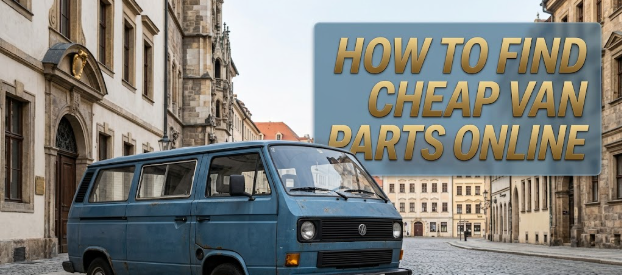
I once spent four hours chasing a $14 part. A trim clip, the kind that holds your interior door panel on, snapped off during a build and I figured I’d just order a replacement in five minutes. Five minutes turned into a rabbit hole of mismatched part numbers, three different sellers claiming to have “the right one,” and one package that arrived fitting a completely different van than mine. That afternoon taught me more about buying van parts online than any guide I’d read up to that point.
If you’re building or maintaining a van on a budget, parts sourcing is where a lot of the money either gets saved or quietly bleeds away. Dealerships will always be the most expensive option. Knowing where else to look, and how to verify what you’re actually buying, makes the difference between a smooth build and a stack of returns.
1. Start With Your VIN, Not the Part’s Name
Before you search for anything, pull your van’s VIN (vehicle identification number) and have it ready. Most generic part names, like “alternator” or “interior door handle,” cover dozens of variations depending on the exact trim, model year, and sometimes even the production month of your van. Two Ford Transits from the same model year can use different parts if one was built before a mid-year spec change.
Sites like RockAuto and the manufacturer’s own parts lookup tools let you enter your VIN and get a filtered list specific to your vehicle. It’s an extra step, sure, but it saves you from the trim clip problem I mentioned above. I’ve started every parts search this way since that afternoon, and it’s cut my return rate down to almost nothing.
If you’re early in a build and still deciding what you’re working with, it’s worth reading why buying a used van saves more than you think, because the van you choose at the outset directly affects how easy or painful parts sourcing will be for the next few years.
2. Know Which Marketplaces Actually Work for Van Parts
Not every platform is built the same way, and treating them all as interchangeable is one of the more common budget mistakes. Here’s roughly how I’d rank them based on what I’ve actually bought through each one.
| Source | Best For | Watch Out For |
|---|---|---|
| RockAuto | Filters, brakes, belts, sensors, OEM and aftermarket | Shipping is split by warehouse, so combine orders carefully |
| eBay Motors | Discontinued or rare parts, used OEM | Check seller return policy before buying, not after |
| Facebook Marketplace | Local pickup, salvage panels, full assemblies | No buyer protection, inspect before paying |
| Salvage yards (in person or via LKQ-style networks) | Body panels, interior trim, seats | Bring your own tools, parts are “as-is” |
| Manufacturer forums (Sprinter-Source, etc.) | Used parts from other builders, advice on fitment | Slower, but the most knowledgeable community by far |
RockAuto tends to be my default for anything mechanical because their filtering system is genuinely the best in the business once you’ve entered your VIN. eBay is where I go for things that have been out of production a while. And forums, honestly, are underrated. Other van owners parting out a build will often sell you exactly the piece you need for a fraction of retail, and they’ll usually tell you straight up if it’s not going to fit.
3. The OEM vs Aftermarket Decision Isn’t Always About Money
People assume aftermarket is always cheaper and OEM is always better quality. That’s not quite right, and it’s where I see a lot of new builders go wrong. For cosmetic or low-stress parts, like interior trim or cup holders, aftermarket is usually fine and considerably cheaper. For anything load-bearing or safety-related, brake components, suspension parts, steering linkage, I pay the OEM premium without much hesitation.
The middle ground is electrical. Aftermarket sensors and modules can be hit or miss depending on the brand, and a $20 savings isn’t worth a check engine light that takes three diagnostic visits to chase down. If you’re setting up your own electrical system from scratch rather than repairing factory components, that’s a separate project entirely, and van electrical systems for beginners covers the fundamentals well if you haven’t gone down that path yet.
4. Verify Before You Buy, Every Time
This is the step people skip when they’re in a hurry, and it’s almost always the step that costs them. A few things I check on every single listing now:
- The part number listed by the seller matches what your VIN lookup returned, not just a description that sounds close
- Photos show the actual part, not a stock manufacturer image (stock images hide condition issues)
- The return window is at least 30 days, since fitment problems don’t always show up until installation
- Seller feedback specifically mentions automotive parts, not just general retail
And here’s where people usually go wrong: they trust the listing title over the actual part number. A title says “Transit door handle, fits 2015-2020,” but the fine print, if there is any, narrows that down considerably. Sellers aren’t always lying. Sometimes they genuinely don’t know the difference between sub-models. The responsibility to verify sits with you.
5. Timing and Bundling Save More Than Hunting for Discounts
A pattern I’ve noticed after several builds: chasing the absolute lowest price on each individual part rarely saves as much as buying smart in bulk. Shipping costs on heavy items like brake rotors or suspension components can run $15 to $40 per box. If you order five separate small parts over five separate weeks, you’re paying that shipping fee five times.
Instead, make a full list of everything you need for a given stage of the build, mechanical, electrical, interior, whatever section you’re tackling, and order it together where the warehouse and seller allow it. RockAuto in particular groups items by warehouse automatically and shows you the combined shipping before checkout, which makes this easy to plan around.
If you’re trying to keep the whole project under a hard ceiling, it’s worth cross-referencing your parts list against van build under $5,000: what you actually need before you start ordering anything. Knowing what’s actually essential versus what’s a nice-to-have changes how you prioritize spending from the start.
A Quick Note on Salvage Yards
Don’t skip these just because they feel old-fashioned. I’ve pulled an entire intact bench seat assembly from a salvage yard for $80 that would have run me close to $400 new. The tradeoff is your own labor and time, plus you need to bring tools and know what you’re looking for before you go. Call ahead if you can. Many yards will check inventory by make and model over the phone and save you a wasted trip.
Where Budget Van Journeys Fits Into This
A good chunk of what I write about on Budget Van Journeys comes from exactly this kind of trial and error, buying the wrong part, figuring out why, and adjusting the next purchase. It’s not glamorous content, but it’s the stuff that actually saves money over a build. If you’ve already made a few of these mistakes yourself, you’re in good company. Most of us have a box of “almost right” parts sitting in a garage somewhere.
It’s also worth saying that parts sourcing rarely happens in isolation. It connects to bigger decisions, like whether you’re restoring an older van or buying something newer with fewer issues, and those choices ripple through your entire budget. 5 van life budget mistakes that cost you more digs into a few of the bigger-picture ones if parts spending is just one piece of a budget that feels tighter than expected.
FAQs
Is it cheaper to buy van parts used or new? It depends on the part. Used works well for body panels, interior trim, and seating, where wear isn’t a safety concern. For brakes, belts, and anything with a service life, new (whether OEM or quality aftermarket) is usually the better call, since you don’t know the history of a used component.
How do I know if a part will actually fit my van without test-fitting it? Match the part number against your VIN-specific lookup, not the general description. If a seller can’t or won’t confirm the part number against your VIN, that’s a sign to keep looking elsewhere.
Are salvage yards worth the trip for van parts? Yes, especially for larger interior or body components that are expensive new. Call ahead to check inventory, and bring your own basic tools since most yards don’t loan them out.
What’s the biggest mistake people make buying van parts online? Trusting a listing title instead of verifying the actual part number. A close-sounding description isn’t the same as a confirmed fitment match.
Should I buy all my parts at once or as I go? Buying in batches by project stage, mechanical, electrical, interior, usually saves more on shipping than ordering piece by piece. It also forces you to plan ahead rather than buying impulsively.
For anyone deep into the planning stage rather than the buying stage, the RockAuto VIN lookup tool is a good place to start before you spend a dollar on anything.