Most “best states for van life” lists are written by someone who spent four nights in Moab and called it a personality. That’s the problem with this genre. The real answer to where you should actually park a van for weeks or months at a time comes down to three things that have nothing to do with how the sunset photo turns out: how much public land is nearby, what the weather is doing that season, and whether a sheriff’s deputy is going to be tapping on your window at 2 a.m.
I’ve spent enough winters bouncing between desert washes and forest service roads to have opinions about this, some of which contradict the usual list, and that’s more or less why Budget Van Journeys exists in the first place. So let’s get into what actually matters.
- What Actually Makes a State Good for Budget Van Life
Public land density is the single biggest factor, and it’s not close. States with huge amounts of BLM (Bureau of Land Management) and National Forest land let you camp for free, legally, often for up to 14 days at a stretch before you need to move. States without much of that, mostly east of the Mississippi, push you toward paid campgrounds or a lot more stealth parking in town, which carries its own risk and its own stress.
Weather is the second filter. A state can have a million acres of free dispersed camping and still be useless to you in July if it’s 112 degrees with no shade anywhere. Climate windows matter more than raw acreage, every single time.
Then there’s the boring stuff that actually decides whether this is sustainable long term: fuel prices, cell coverage if you work remotely, and how aggressively local police enforce overnight parking rules in town. None of that shows up in a scenic photo. All of it shows up in your bank account and your sleep schedule.
- The States That Actually Deliver
Here’s where the usual suspects earn their reputation, and where a couple of them get more credit than they probably deserve.
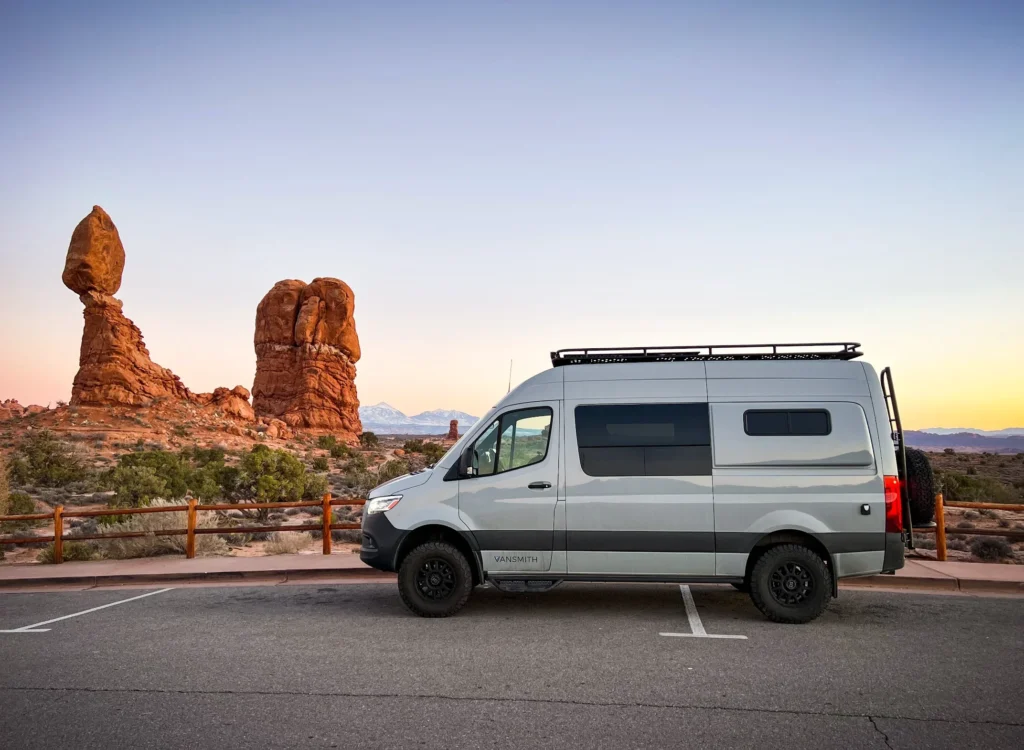
Utah, Arizona, and Nevada carry the bulk of accessible BLM land in the country. Southern Utah in particular has so much dispersed camping near Moab, the San Rafael Swell, and Escalante that you could spend a whole winter rotating spots and never pay a camping fee. Arizona’s a similar story around Quartzsite and the broader Sonoran Desert, especially January through March when the temperature is actually pleasant instead of punishing. (Quartzsite in January turns into its own small city, rock vendors, swap meets, ham radio guys with antennas the size of a small forest. It’s an experience. Anyway, back to the point.)
Nevada is excellent for free camping access too, though calling the whole state equal is a bit misleading. The rural north behaves nothing like the Vegas corridor, and the long empty stretches between towns mean fuel planning matters more here than almost anywhere else on this list.
New Mexico and Colorado round out the public-land core. New Mexico is genuinely underrated, mostly because it gets less Instagram attention than its neighbors, which in practice just means fewer crowded pullouts for you.
Texas and Florida don’t offer the same public land access, but both have no state income tax, which matters a lot if you’re using one of them as your legal domicile state rather than your actual camping destination. Plenty of full-timers split the difference: domicile in Texas, camp in New Mexico or Utah, and never think about it again.
Here’s a rough side-by-side if you want the short version:
StateFree/dispersed campingBest seasonNo state income taxWatch out forUtahExcellentOct–AprilNoBrutal summer heat in the southArizonaExcellentNov–MarchNoCrowding at Quartzsite in peak winterNevadaVery goodYear-round (varies)YesLong empty stretches, fuel planning mattersNew MexicoVery goodSept–MayNoBig elevation swings, cold nightsColoradoGoodJune–SeptNoLimited access once snow hitsTexasLimitedNov–March (south)YesMostly paid camping outside the far west
That table covers the basics, but it doesn’t tell you how to actually find the spots, which is its own separate skill. I went deeper on the apps that actually work for this in a piece on free overnight parking apps, since half the battle is just knowing where to look.
- Where Most People Get This Wrong
The most common mistake isn’t picking a bad state. It’s treating “free camping” like it’s actually free.
It isn’t, and free starts costing real money fast once you factor in the diesel it takes to reach it. Someone sees a stunning dispersed site three hours off the highway, drives out, stays two nights, and burns sixty dollars in fuel to save forty on a campground fee. That’s not a win, it’s a number that looks good right up until you actually do the math. We’ve run these fuel numbers before on Budget Van Journeys, and it’s worth doing your own before committing to a far off “free” spot, especially if your route involves a lot of backtracking.
The second mistake, and this one’s sneakier, is assuming state level rules apply everywhere inside that state. They don’t. BLM and Forest Service land follows federal rules no matter which state it’s in. City and county ordinances about overnight parking, sleeping in your vehicle, or “no camping within city limits” are local, and they vary block by block in some places. A state can be famously van friendly on public land and still have a town in the middle of it where you’ll have your window knocked on twenty minutes after parking on a residential street.
And the third one, honestly the one I see most from people newer to this: chasing the same five spots everyone’s already seen on social media. Those spots get crowded, they get patrolled more, and the magic wears off fast when you’re parked eight feet from three other vans doing exactly what you’re doing.
- Building a Route Instead of Chasing a List
The actual answer to “which state is best” is that no single state is best year round. The smart move is a loop, not a destination.
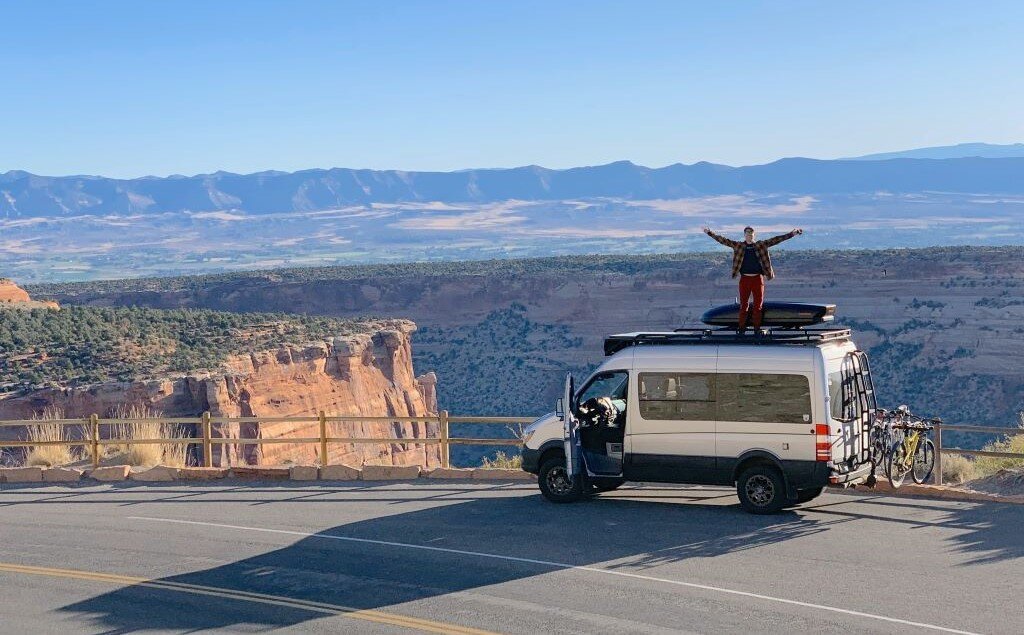
Desert Southwest in winter, Arizona, southern Utah, parts of New Mexico, then north and up in elevation as it warms, Colorado or northern New Mexico through summer, then back down again before the first real cold front hits. That loop follows the weather instead of fighting it, and it keeps you out of the worst extremes on both ends.
If you’re trying to stay somewhere cold through winter instead of running from it, that’s a different set of problems entirely, mostly around insulation and how your water lines hold up once temperatures actually drop, which I’ve gone into separately in what winter van life really feels like if that’s the route you’re considering.
That’s the whole philosophy behind Budget Van Journeys, really: chase the route that costs less and works with the weather, not whichever five locations are trending this month.
FAQs
Is it legal to sleep in my van overnight in most states?
There’s no single state law that covers this everywhere. Federal public land (BLM, National Forest) generally allows it for free, usually up to 14 days at a stretch. Cities and counties set their own rules for parking on streets or in lots, and those vary a lot, so check local ordinances rather than assuming a whole state is fine just because the desert outside of town is.
Which state actually has the most free camping?
By raw acreage, Nevada and Utah sit near the top, with Arizona and New Mexico close behind. Access matters as much as acreage though. A lot of BLM land needs a high clearance vehicle to actually reach.
Does state income tax matter if I’m not staying in one place?
Yes, more than people expect. Your domicile state, the one on your driver’s license and vehicle registration, is what determines your tax situation, regardless of where you’re actually parked most of the year. Texas, Florida, and South Dakota are common domicile picks among full-timers specifically because none of them charge state income tax.
Is the desert Southwest too hot for van life in summer?
For most of it, yes. Weeks of temperatures past 100 degrees aren’t comfortable or safe without serious AC, and most budget van builds don’t have that. That’s the whole reason for following a seasonal loop instead of staying put.
Do I need 4WD to get to the good free camping spots?
Not for all of it, but for a meaningful chunk, yes. A lot of the better dispersed sites sit down rougher forest or BLM roads. If you’re running a 2WD van, it’s worth scouting on satellite view or an app before committing, since getting stuck out in a remote spot is its own expensive problem to solve.
If you want to see what this actually costs once you’ve picked a region and a season, the real numbers are broken down in our piece on van life’s monthly costs for 2026.