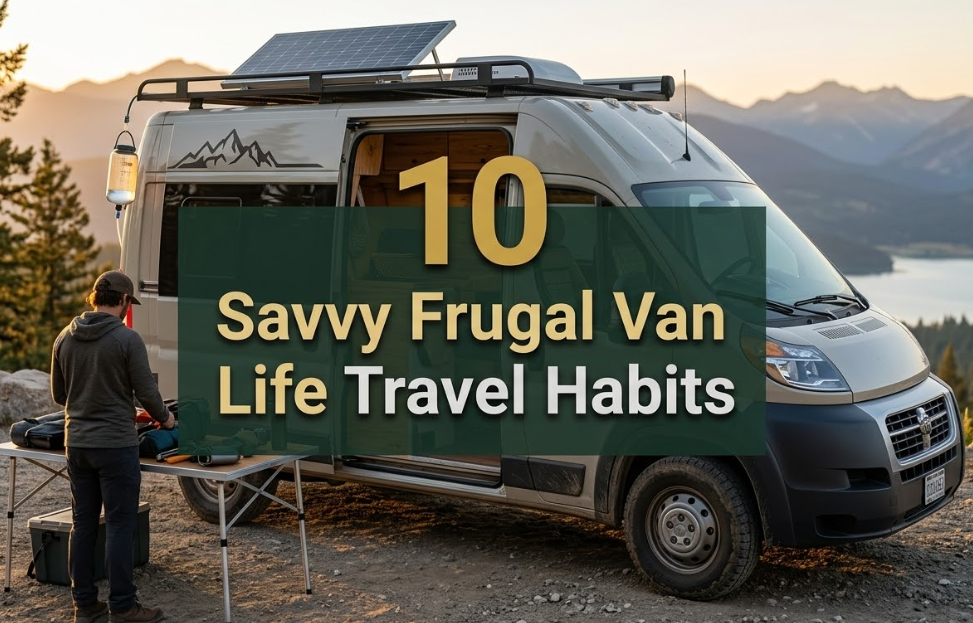
Van life sounds like a dream. Open roads, fresh air, and total freedom. But without good habits, it can quickly empty your wallet. Fuel, food, campsites, repairs — the price tags add up fast.
The good news? Thousands of van-dwellers have figured it out. They travel smart and they spend a lot less. Not because they got lucky. Because they created smart habits that work on every single occasion.
This guide distills 10 budget van journeys travel habits that move the needle. These are hands-on, road-tested tips you can put to use on your next trip.
Why You Need a Good Budget Even If You Have Unlimited Funds
The common thinking is that saving money on the road is all about being on a tight budget. But that’s only half the story.
The real secret is based on how you travel. Two different van lifers can begin with the same sum of money. One runs out in three weeks. The other extends it for three months.
The difference is habits.
Small daily choices stack up into massive savings. Decisions about where to park, when to fill your tank, what to prepare for dinner, and how you chart out your route — those all cost money or save it.
Now, let’s dive into the money-saving habits.
1. Map Your Route Around Free Places to Camp
Paid campgrounds are one of the biggest expenses for van lifers. Paid camping, at $30–$60 a night, can run over $1,500 for a month.
Free camping changes everything.
How to Find Free Overnight Parking
In the United States, free dispersed camping is allowed on Bureau of Land Management (BLM) land. There are millions of acres available in the western states. National Forests sometimes permit free camping as well, generally for periods of up to 14 consecutive days at a single location.
Apps such as iOverlander, FreeRoam, and The Dyrt help you discover free locations within minutes. Many people traveling by van in cities also stop overnight at Walmart parking lots, industrial areas, and quiet residential streets.
In Europe, tools like Park4Night serve the same purpose. Free or low-cost overnight ferry layovers, industrial ports, and rural country roads provide accommodations.
The 14-Day Rule
On public land all over the U.S., you have to move every 14 days. This is actually to your advantage. It requires you to keep exploring instead of staying stagnant.
Potential Monthly Savings with Free Camping: $600–$1,500+
2. Prepare Nearly Every Meal in the Van
Eating out is the stealthiest budget buster on the road. A single meal at a restaurant can run $15–$25. Do that two times a day, and you’re paying $900–$1,500 a month simply on food.
Van cooking isn’t complicated. It just takes a little prep.
Build a Simple Kitchen in Your Van
You don’t need a gourmet kitchen. The basics are enough:
| Gear | Estimated Price | Function |
|---|---|---|
| Two-burner propane stove | $30–$60 | Cooking |
| Cast iron skillet | $20–$40 | Versatile cooking |
| Small cooler or 12V fridge | $40–$300 | Food storage |
| Cutting board + knife | $15–$25 | Meal prep |
| Collapsible bowls/cups | $10–$20 | Eating on the go |
Cheap and Easy Meal Ideas
- Rice and beans with canned vegetables
- Pasta with jarred sauce and fresh herbs
- Scrambled eggs with tortillas
- Peanut butter banana oatmeal
- One-pot lentil soup
Buy groceries at discount stores like Aldi, Lidl, or Walmart. Browse local markets if you are near small towns. Produce is less expensive and fresher, and you’re helping local farmers.
Monthly Savings from Van Cooking: $800–$1,200
3. Master Fuel-Efficient Driving Habits
Fuel is usually the single largest expense in budget van trips. It takes a lot of gas or diesel to drive a heavy van hundreds of miles. But the way you drive makes a big difference.
Speed and Fuel Use
Driving at 60 mph rather than 75 mph can increase fuel economy by as much as 20%. That adds up to a lot of savings over time.
Here’s a quick overview of how speed influences a representative van achieving 18 MPG:
| Speed | Approx. MPG | Cost Per 100 Miles (at $3.50/gal) |
|---|---|---|
| 55 mph | 22 MPG | $15.91 |
| 65 mph | 18 MPG | $19.44 |
| 75 mph | 14 MPG | $25.00 |
| 80 mph | 12 MPG | $29.17 |
More Fuel-Saving Driving Tips
- Open the throttle slowly and coast to your stops
- Don’t idle for more than a few minutes
- Keep tires properly inflated
- Get rid of excess weight from the van
- Use cruise control on flat highways
Also, consider using apps such as GasBuddy or Waze to locate the cheapest fuel stations along your way. Even a $0.20 savings per gallon turns into real money over a full tank.
Smart Driving Monthly Fuel Savings: $100–$300
4. Have the Right Insurance and Roadside Plan
This might sound counterintuitive. Spending more to save more?
Yes, absolutely.
Why Skipping Coverage Costs You More
One breakdown or accident without adequate coverage can wipe out months of savings. A tow by itself can range from $200–$500. An emergency room visit can easily add up to thousands of dollars without health insurance.
Smart van travelers invest in:
- Good vehicle insurance with roadside assistance included
- AAA membership or an equivalent roadside service ($60–$120/year)
- Travel health insurance if going on an international trip
- Mechanical breakdown or extended warranty coverage for older vans
The Most Affordable Way to Address Repairs
Learn basic van maintenance yourself. Oil changes, air filter replacements, brake pad swaps, and tire rotations are all DIY-friendly. Van models have free tutorials on YouTube.
Join van life Facebook groups and forums. Community members share free advice, mechanic recommendations, and repair tips specific to your van.
Annual Savings from Smart Coverage and DIY Repairs: $500–$2,000
5. Use Free Showers and Facilities Like a Pro
Van life gym memberships are a total game changer. You can get a basic Planet Fitness membership in the U.S. for about $25/month. With nationwide access, you get a clean shower every single day.
Other Free or Inexpensive Shower Alternatives
- Truck stops (some have showers for $10–$15)
- State park day use areas (usually $5–$8 admission)
- Public showers at beaches and recreation areas
- Swimming holes and rivers for a quick rinse
- Friends and family along the way
For laundry, only go to a laundromat when necessary. Small items can be washed by hand and air dried. If you do need a machine, go to the cheapest laundromat in town and do one big load rather than many small ones.
Monthly Savings on Hygiene and Laundry: $50–$150
6. Travel During Off-Peak Seasons
One of the most underrated budget van journeys travel habits: timing your travels. The season you travel in affects everything — costs for campsites, ferries, city parking, and tourist spot crowding all vary wildly.
Off-Season Benefits at a Glance
| Factor | Peak Season | Off-Season |
|---|---|---|
| Campsite fees | $30–$60/night | $0–$20/night |
| Ferry prices | High | 30–50% cheaper |
| Crowds | Heavy | Minimal |
| Parking | Difficult | Easy |
| Weather | Hot, unpredictable | Mild in many areas |
The shoulder seasons — spring and fall — tend to be the sweet spot. The weather is nice, crowds thin, and prices tumble.
Best Off-Season Destinations for Van Travelers
- Southwestern U.S. during fall and winter (Arizona, New Mexico, Utah)
- Pacific Coast in early spring
- Scottish Highlands in late September
- Southern Spain and Portugal, October through April
Monthly Savings from Off-Season Travel: $200–$600
7. Generate Income While You Travel
The strongest budget habit isn’t necessarily about saving money. It’s about earning income while on the road.
Remote work has made this easier than ever. Van travelers often have all their expenses covered by part-time or full-time remote work.
How to Make Money While Van Traveling
Remote Jobs:
- Freelance writing, design, or coding
- Virtual assistant work
- Online tutoring or teaching English
- Social media management
On-the-Road Work:
- Seasonal farm work (fruit picking, harvesting)
- Camp host positions (sometimes with a complimentary campsite)
- Local jobs in the hospitality or service industry
- Photography and selling prints
Passive Income:
- Starting a van life blog or YouTube channel
- Selling digital products (guides, presets, templates)
- Affiliate marketing through travel content
That math changes completely when you can earn $500–$1,000/month while traveling. Instead of your budget getting smaller, it remains steady or increases.
Monthly Income Potential: $500–$5,000+
8. Join Van Life Communities for Free Resources
There’s a whole community of travelers out there sharing resources, tips, and even free places to stay. Accessing this network drives real savings.
What Van Life Communities Offer
- Driveway camping: Many homeowners list their driveways on platforms like Harvest Hosts or Boondockers Welcome for free or low-cost overnight parking
- Tool lending: Community Facebook groups often help travelers find free tools for roadside repairs
- Ride-sharing: Splitting fuel costs with van travelers headed in the same direction
- Bulk buying: Some van communities organize group grocery runs to get cheaper prices
According to Harvest Hosts, their membership at around $99/year gives you access to wineries, farms, breweries, and museums that let you camp for free overnight. For regular travelers, it pays for itself in the first week.
Online Communities Worth Joining
- r/vandwellers on Reddit
- Van Life Facebook Groups (several active groups)
- Vanlife Diaries community forums
- iOverlander forums for international travel
Annual Savings Through Community Resources: $300–$1,000
9. Keep Maintenance on a Strict Schedule
One of the biggest mistakes you can make on a long trip is neglecting your van’s maintenance. A blown engine or transmission failure in the middle of nowhere can run $3,000–$10,000.
It is always cheaper to prevent problems than to fix them.
Basic Van Maintenance Schedule
| Maintenance Task | Frequency | DIY Difficulty |
|---|---|---|
| Oil change | Every 3,000–5,000 miles | Easy |
| Tire rotation | Every 5,000–7,500 miles | Easy |
| Air filter check | Every 15,000 miles | Easy |
| Brake inspection | Every 20,000 miles | Medium |
| Coolant flush | Every 30,000 miles | Medium |
| Timing belt check | Per manufacturer spec | Hard |
Signs of Trouble to Never Ignore
- Unusual engine noises
- Warning lights on the dashboard
- Changes in braking performance
- Unusual fuel consumption spikes
- Shaking or vibrating while driving
Spotting a problem early — such as a tiny coolant leak or worn brake pads — can save you from a catastrophic breakdown that ends your trip and wipes out your savings.
Annual Savings from Regular Maintenance: $1,000–$5,000
10. Track Every Expense With a No-Excuses Budget System
Cutting costs is impossible without knowing where your money goes. This habit may sound boring, but it really is one of the most impactful budget van journeys travel habits you can develop.
The Simple Van Budget System
You don’t need complex spreadsheets. A simple budget tracker works perfectly.
Divide your expenses into five categories:
- Fuel – Gas, diesel, propane
- Food – Groceries plus occasional meals out
- Shelter – Campsites, hostels, parking fees
- Maintenance – Oil, parts, repairs
- Everything Else – Entertainment, gear, personal care
Use a free app such as Trail Wallet, Splitwise, YNAB, or even the notes section of your phone. Record every purchase, no matter how small.
Weekly Budget Check-In
Do a 10-minute review every Sunday:
- Where did you overspend?
- What categories were under budget?
- How much have you spent for the month so far?
This weekly check-in prevents small leaks from turning into big holes in your budget.
Sample Monthly Van Budget (Solo Traveler, U.S.)
| Category | Budget Range |
|---|---|
| Fuel | $200–$400 |
| Food (cooking in-van) | $150–$250 |
| Shelter (mostly free camping) | $0–$100 |
| Maintenance | $50–$150 |
| Miscellaneous | $100–$200 |
| Total | $500–$1,100/month |
Contrast that with the average American’s monthly costs of $3,000–$5,000. Van life, done right, costs a fraction of conventional living.
Monthly Savings from Expense Tracking: $100–$400 (by catching waste early)
The Big Picture: How Much Can You Really Save?
Let’s put it all together. Here’s a realistic estimate of how much these 10 habits save a full-time van traveler each month:
| Habit | Monthly Savings |
|---|---|
| Free camping | $600–$1,500 |
| Cooking in-van | $800–$1,200 |
| Fuel-efficient driving | $100–$300 |
| Smart insurance + DIY repairs | $80–$170 |
| Free showers + laundry | $50–$150 |
| Off-season travel | $200–$600 |
| Road income | $500–$5,000+ |
| Community resources | $25–$85 |
| Preventive maintenance | $80–$420 |
| Budget tracking | $100–$400 |
| Total Monthly Savings | $2,535–$9,825+ |
These aren’t theoretical numbers. Van lifers who stack these habits consistently live on $700–$1,500/month.
Frequently Asked Questions
Q: What is the monthly cost of budget van life in reality? Most solo van lifers spend $700–$1,500/month by budgeting wisely. Most couples could live on $1,000–$2,000/month combined.
Q: Do I need an expensive van to travel on a budget? No. Many successful van travelers begin with older, less expensive vans. A well-maintained $5,000–$10,000 van is capable of taking you just as far as a $50,000 build.
Q: Is free camping safe? Yes, most of the time, especially on BLM and National Forest land. Always research specific areas beforehand when parking. Trust your instincts. If a spot doesn’t feel right, keep moving.
Q: Can you really make money while living in a van? Absolutely. Remote work, freelance gigs, seasonal jobs, and content creation are all practical income streams that van dwellers use every single day.
Q: What is the single most effective budget van journeys travel habit to start with? Free camping. It knocks off one of the biggest daily costs right away. Download FreeRoam or The Dyrt and start finding free spots on your very next trip.
Q: How do van lifers manage mail and banking while traveling? Most use a mail forwarding service such as Traveling Mailbox or Earth Class Mail. For banking, fee-free online banks such as Charles Schwab or Chime tend to be popular since they reimburse ATM fees.
Q: Is van life more affordable than renting an apartment? For most people, yes — in a big way. The average rent in the U.S. is greater than $1,500/month. A disciplined van traveler can live on half of that while traversing the whole country.
The Road Ahead
Budget van journeys travel habits are not about suffering or deprivation. They’re about being intentional. Spending money where it matters and cutting waste everywhere else.
You don’t have to adopt all 10 habits at once. Choose two or three that particularly stand out for you. Build them into your routine. Then add more as they feel natural.
The freedom of the open road is within reach for anyone. You don’t need to come from money or win the lottery. You just need good habits, a sturdy van, and the will to keep going.
The road is waiting. And with these habits on your side, you’ll stretch your money a lot further than you imagine.