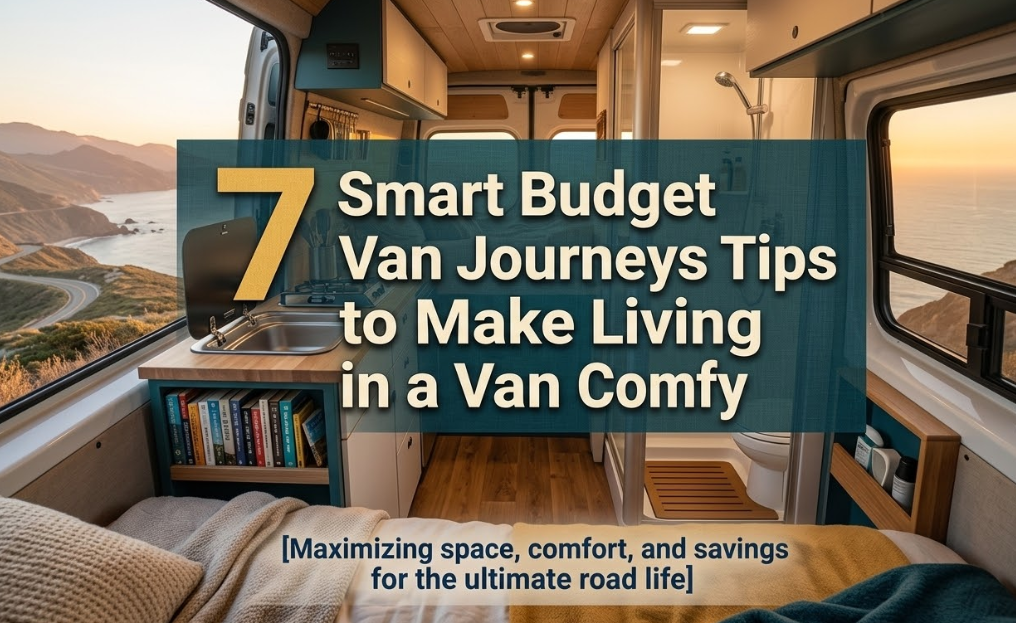
The idea of van life is magnetic in many ways. Waking up with a view of the mountains. Brewing coffee when the world is still dark. Getting on whenever you choose to do so.
But here’s what most travelers won’t tell you up front — van life can be expensive. Fuel, campsite fees, repairs, food, phone data. It adds up quickly.
The good news? Living comfortably in a van on a shoestring budget is totally doable. Tens of thousands of people do it every day. They’ve cracked the code of what works, and in this article you’ll find every last one.
Whether you’re planning your first budget van journey — or endeavoring to save money while on the road — these seven smart strategies will transform how you travel.
The Explosive Rise of Budget Van Journeys
Van life isn’t just a trend. It’s a lifestyle shift.
Soaring rent prices, an increasing prevalence of remote work, and an intensifying desire for freedom have sent people drifting toward life on the open road. Searches for “van life” and “budget van travel” have increased dramatically year over year, according to surveys conducted by several travel companies.
Individuals want to travel more on a budget. Van life offers both — if done right.
The operative word here is “when done right.” With no plan, van life will deplete your savings. With a plan, it can even be cheaper than renting an apartment in most cities.
So, let’s get into the seven tricks that make all the difference.
Trick #1 — Design Your Van Layout Based on What You Really Use
Stop Copying Instagram Van Builds
These gorgeous van conversions are everywhere on social media. Custom woodwork, solar arrays, hidden storage, fold-out kitchens. They look incredible.
They also cost between $15,000 and $40,000 to build.
That is the wrong place to start for a van trip on a budget. Build for function, not aesthetics. Ask yourself one question: what do I really need to be comfortable?
Most people need:
- A place to sleep flat
- A way to cook simple meals
- Storage for clothes and gear
- A power source for devices
- Ventilation and temperature control
That’s it. Everything else is optional.
The Minimum Viable Van Setup
You do not require a professional build. A simple platform bed with storage beneath, a small foam mattress, a plastic drawer unit, and a portable butane stove will meet 90 percent of your needs — for less than $500.
| Item | Estimated Cost |
|---|---|
| Foam mattress (twin) | $80–$150 |
| Plywood bed platform | $60–$120 |
| Plastic drawer unit | $30–$60 |
| Portable butane stove | $25–$40 |
| Curtains or window covers | $20–$50 |
| Total | $215–$420 |
Start simple. You can always upgrade later after you learn what you actually miss.
Insulation Is Worth Every Penny
But one thing you should not skimp on is insulation. A well-insulated van will be cooler in the summer and warmer in the winter. That means you operate fans and heaters less, saving on power and fuel.
Insulation made of recycled denim, or spray foam in the walls and ceiling, makes a huge difference. Plan on spending about $150 to $250 for a basic insulation job that you can do yourself over a weekend.
Trick #2 — Get the Most Out of Free and Cheap Camping
Paid Campsites Will Wreck Your Budget
A full-hookup RV park might run $35 to $80 a night. Even simple campgrounds typically cost $20 to $30. At those rates, merely sleeping costs you $600 to $2,400 a month.
That’s not budget van travel. That’s expensive van travel.
The answer is learning where free camping exists — in fact, much more free camping than you’d think is open to newcomers.
Where to Find Free Camping
Bureau of Land Management (BLM) Land Millions of acres of BLM land in the U.S. allow dispersed camping free of charge. You can remain in a single location for as long as 14 days. Apps such as iOverlander and The Dyrt assist you in finding particular locations.
National Forests Most national forests allow free dispersed camping, as long as you adhere to Leave No Trace principles and remain outside designated fee areas.
Walmart and Truck Stop Parking You can park overnight at most big retail parking lots for free, including Walmart. Not glamorous, but handy if you’re passing through a city.
Casino Parking Lots Many casinos are open to overnight van stays. They want you close by, counting on the fact that you’ll spend money inside — but you’re not obliged to.
Stealth Camping in the City In cities, hiding in plain sight is crucial. Hang out on quiet residential streets, don’t attract attention, then move every night or two.
Budget Camping Cost Comparison
| Camping Option | Avg. Cost Per Night | Monthly Cost (30 nights) |
|---|---|---|
| Full RV hookup | $50 | $1,500 |
| State campground | $25 | $750 |
| Free BLM/Forest | $0 | $0 |
| Mixed strategy | ~$5 avg | ~$150 |
A mixed strategy — mostly free camping, with a few paid spots now and then for showers and hookups — keeps your camping expenses close to zero.
Trick #3 — Do Your Own Cooking (Pretty Much) Every Day
Eating Out Cuts a Van Budget Down Quickly
Food is one of the biggest money leaks in van life. When you’re tired or on the go, it can be easy to turn to fast food. But even inexpensive fast food can total up to $300–$500 a month if you’re not careful.
Cooking your own food saves a massive amount of money. And in a van, it’s simpler than you’d think.
Simple Van Kitchen Setup
You don’t need a built-in stove or full kitchen. A two-burner butane stove, a medium pot, one pan, a cutting board, and a sharp knife handle almost everything.
Add a 12V cooler (or a good ice cooler) and you have ingredients stored for days on end.
Budget Van Meal Planning
Base meals on staples that are inexpensive, filling, and simple to prepare:
- Rice and beans — Incredibly cheap, highly nutritious, adaptable
- Eggs — Fast, easy, protein-rich
- Oats — Great for breakfasts, don’t need refrigeration
- Canned fish (tuna, sardines) — Affordable protein with a long shelf life
- Seasonal vegetables — Farmers markets are where to buy for the best value
- Pasta — Cooked fast, varied easily
One realistic grocery budget for one person cooking most meals in a van is $150 to $250 monthly.
Take Advantage of Grocery Store Apps and Discount Bins
Download apps such as Flashfood, Too Good To Go, or your local chain’s app. These feature deeply discounted food that’s about to reach its sell-by date. It’s perfectly good food — just needs to be eaten that day or the next.
Ethnic grocery stores (Asian, Latin, Indian) often offer lower prices on essential items than mainstream chain supermarkets.
Trick #4 — Get Your Power Situation Right Without Breaking the Bank
Why Power Matters on Budget Van Journeys
Power is what your phone, laptop, lights, fan, and 12V cooler run on. Without a solid power system, van life tends to be way more painful and less comfortable.
Most people overbuy solar systems they don’t need. A $3,000 lithium battery + solar system is fantastic — but not essential for a budget build.
The Budget Power Solution
Start with your alternator. Your van’s engine recharges the starter battery while you’re driving. A basic battery isolator (roughly $30–$60) allows you to charge a second “house” battery from the alternator without draining your starter battery.
Add one deep cycle battery. A 100Ah AGM deep cycle battery will typically cost $120–$180. It runs your lights, phone charging, fan, and laptop for a whole day or more between charges.
Add a single solar panel (optional but recommended). A 100-watt solar panel costs around $80–$120. It keeps your house battery charged up on sunny days and greatly extends your independence from shore power or driving.
Budget Power Setup Cost
| Component | Estimated Cost |
|---|---|
| Battery isolator | $40 |
| 100Ah AGM battery | $150 |
| 100W solar panel | $100 |
| Basic charge controller | $30 |
| Wiring and connectors | $40 |
| Total | ~$360 |
This setup manages the essentials comfortably. For less than $400, you have consistent, renewable power on the road that keeps you comfortable.
Trick #5 — Keep Fuel Costs In Check
Fuel Is One of Your Biggest Expenses
If you drive every day, fuel will be your largest monthly expense. But most seasoned van travelers do not drive every day.
The secret to cheap fuel costs is strategic movement.
The “Base Camp” Strategy
Instead of constantly moving, choose a broad region and spend 1–2 weeks exploring it locally. Shorten the distance you drive daily — or avoid driving at all for days on end.
This alone can save you 40–60% on fuel compared to constantly rolling to new locations.
Fuel Saving Tips That Actually Work
- Use GasBuddy to locate the most cost-effective pumps anywhere
- Drive at lower speeds — highway driving at 65 mph consumes significantly less fuel than 75 mph
- Avoid idling to generate heat or AC — use your van’s insulation, bedding, and vent fans instead
- Keep tires properly inflated — poor tire inflation decreases fuel economy
- Route your travels to avoid major cities at rush hour — stop-and-go traffic guzzles gas fast
Monthly Fuel Budget Estimate
| Driving Frequency | Avg. Miles/Month | Est. Fuel Cost (25 mpg, $3.50/gal) |
|---|---|---|
| Constant mover | 2,500 miles | ~$350 |
| Moderate traveler | 1,500 miles | ~$210 |
| Base camp strategy | 800 miles | ~$112 |
Just from driving habits, the difference between a constant mover and a base-camp traveler is more than $200 a month.
Trick #6 — Handle Hygiene and Laundry Like a Pro
Showers and Clean Clothes Are Non-Negotiable
Comfort in a van is largely dependent on feeling clean. This is where most beginners fall down — and small habits make a huge difference.
You don’t need a shower in your van to stay clean. You need a system.
The Budget Shower Toolkit
Gym memberships are the most common solution. Planet Fitness has low membership fees (around $25/month) with locations all over the U.S. and expanding internationally. One membership gives you unlimited access to showers across the country.
Truck stops like Pilot and Love’s charge $12–$15 for individual showers. They’re clean, private, and well-stocked with towels.
Outdoor showers using a solar camp shower bag ($15–$25) are terrific in warm climates. Fill it up in the morning, hang it in the sun, and by midday you have a warm shower.
Navy showers work anywhere you have a few gallons of water. Wet down, soap up, rinse off — and use less than a gallon of water total.
Laundry on a Budget
Laundromats are the most practical option. Visit every 1–2 weeks. Run one full load of clothes at a time rather than small loads every few days.
Estimated cost: $4–$8 per laundry session. Monthly cost: $20–$40.
Pack quick-dry athletic and wool clothing. They dry quickly, resist odor, and don’t need to be washed as often as cotton.
Trick #7 — Build a Sustainable Income While Traveling
The Budget Problem No One Is Talking About
You can make everything cheaper — camping, food, fuel, power. But eventually, when income doesn’t come in, money dries up.
Long-term budget van travel will require income on the road. This is the trick that separates people who do van life for a couple of months from those who keep it going for years.
Remote Work Options for Van Travelers
Freelancing is the most flexible option. Writing, graphic design, web development, social media management, video editing — all of this can be done from a van with a laptop and internet connection.
Platforms like Upwork, Fiverr, and Toptal link freelancers with clients across the globe.
Remote employment is increasingly common. Thousands of companies are hiring remote workers in a wide range of fields — customer service, tech support, software development, marketing, and project management.
Content creation around your van journey can eventually be monetized via YouTube ad revenue, sponsorships, affiliate marketing, or Patreon memberships.
Seasonal work is another angle. National parks, ski resorts, Amazon fulfillment centers, and harvest farms hire seasonal workers. Several of these jobs include free camping close to the work site. According to Workamper News, thousands of van and RV travelers find paid seasonal work every year that also covers their campsite costs.
Internet on the Road
A decent internet connection is essential for remote work. The most popular options among van travelers:
- Mobile hotspot through a major carrier (T-Mobile or Verizon provides the most U.S. coverage)
- Starlink portable — costly ($120+/month) but works just about anywhere, even in rural areas
- Campgrounds and libraries — free WiFi for short visits
Plan on spending roughly $50–$80/month for a good mobile data plan in support of remote work.
What a Realistic Monthly Budget Looks Like
Here’s an example monthly budget for a single person living the budget van journey lifestyle full-time:
| Expense Category | Monthly Cost |
|---|---|
| Fuel | $150–$200 |
| Camping (mixed strategy) | $50–$100 |
| Groceries | $200–$250 |
| Phone/Data plan | $60–$80 |
| Van maintenance fund | $100–$150 |
| Gym membership (showers) | $25 |
| Laundry | $30–$40 |
| Miscellaneous | $50–$100 |
| Total | $665–$920/month |
That’s less than what most people pay for rent alone in a big city. And it covers full-time travel, meals, and a comfortable place to sleep every night.
Top Mistakes That Destroy Your Van Budget
Before closing, here are the traps to guard against:
Buying the wrong van. High-mileage vans with no maintenance history become money pits fast. Allow $1,000–$2,000 for a pre-purchase mechanic inspection. It’s worth every penny.
Overbuilding before you travel. Many people spend months constructing an elaborate van without ever having left home — and find out on the road what they really needed. Start simple, travel, then improve.
Ignoring a maintenance fund. Vans break down. Tires wear out. Brakes need replacing. Set aside a minimum of $100/month into a dedicated van maintenance fund or you will be blindsided.
Underestimating data costs. Remote work, navigation, streaming — data adds up. Get a plan with enough data before you leave, not after you’ve hit your cap around week two.
FAQs About Budget Van Journeys
How much money is needed to start van life? A realistic starting budget is $5,000–$10,000. This includes a reliable used van ($3,000–$6,000), a minimal build-out ($500–$1,500), emergency funds, and your first few months of travel expenses.
What is the most affordable van to live in? The Ford Transit, Ram ProMaster, and Mercedes Sprinter are the three most popular options. Tighter budgets can find older Ford Econoline or Chevy Express vans for under $5,000 — both are mechanically simple to maintain.
Can van life be done without solar panels? Yes. Most van lifers rely on alternator charging during drives and shore power at select campgrounds. Solar enhances your off-grid independence but is not required to begin.
Is van life legal? It is legal to live in a van nearly everywhere — but where you park matters. Overnight stays are welcome on BLM land, in national forests, and at most truck stops. Urban stealth camping requires more care — check local ordinances before settling down for the night in any city.
What do van travelers do about mail? Common solutions include using a friend or family member’s address, renting a virtual mailbox service (such as PostScan Mail or Traveling Mailbox), or using a mail forwarding service. Many full-time van dwellers also use UPS Store mailboxes.
What about healthcare on the road? Most U.S.-based van travelers use marketplace health insurance plans through healthcare.gov. Others use health-sharing programs or short-term travel insurance. Telehealth services are now more viable than ever for minor health issues during a trip.
Do I need a special license to drive a van? In the U.S., a standard driver’s license is all that’s needed to drive most passenger and cargo vans. A commercial license is only required for vehicles over 26,001 pounds gross vehicle weight — which does not apply to the average camper van.
Wrapping It All Up
Budget van journeys are not about roughing it. They’re about making clever decisions that allow you to live well while spending substantially less than a conventional life.
The seven tricks in this article — building smart, camping free, cooking your own food, setting up affordable power, controlling fuel costs, handling hygiene on a budget, and earning income on the road — form an interlocking system.
None of them are complicated. All of them are proven.
The critical difference between someone who tries van life for three months and someone who lives it for three years is planning, habits, and a willingness to keep things simple.
Choose a single trick from this list. Start there. Build the habit. Then add the next one.
The road is cheaper than you assume — and more comfortable than most people imagine.