
A standard Ford Transit Connect has around 2.8 cubic metres of cargo space. That’s the same volume as a single flat-pack wardrobe. Not a walk-in, not even a double. One narrow wardrobe’s worth of room, and people make that their entire home.
So every time I see advice suggesting you need a high-top Sprinter or a fully converted campervan to do van life properly, I struggle to agree. Van size is almost never the real problem. The real problem is how you’re using the space you already have.
I’ve spent a significant amount of time in the van life community, learning from people who live full-time in compact vans and watching where storage systems succeed or fall apart completely. And the problems don’t disappear when you upgrade to a bigger vehicle. They just grow to match the new footprint. What actually works is rethinking your approach to space itself, beginning with a few things most people get completely backwards.
1. The Belief That’s Wasting Your Square Footage
The most common mindset blocking good van storage isn’t laziness or poor taste in products. It’s the assumption that more space equals more organisation.
Buy a bigger van, the thinking goes, and the problem solves itself.
It doesn’t. What happens instead is that more space creates more room to be disorganised. If you’re travelling on a tight budget, a larger vehicle also brings bigger fuel costs, harder wild camping logistics, and in some urban areas, genuine limitations on overnight parking. For the kind of van life that Budget Van Journeys is built around, a compact and well-organised smaller van is often the smarter starting point, full stop.
The myth also shapes how people set up their storage from day one. They approach a small van believing it’s fundamentally broken, and they spend money on products and upgrades trying to fix something that’s really a mindset problem, not a square footage problem.
What actually needs to change is the assumption that every single item you own deserves a permanent place inside the van.
2. What’s Actually Consuming Your Space
There are four patterns that come up repeatedly when van storage goes wrong. Not every build has all four, but most have at least two.
The first is floating items. Things without a fixed home. Every item that doesn’t have a designated spot eventually ends up wherever gravity or chance puts it, and then it gets moved, and then you spend four minutes locating it every time you need it. It’s not just frustrating. Floating items physically consume more space because they need a buffer zone, you can never really pack around them.
Second is contingency gear. The third sleeping bag layer. The portable coffee grinder you’ve used once. The comprehensive first aid kit when a small zippered pouch handles 95% of real-world needs. A lot of van builds collapse under the weight of things packed for situations that never materialise.
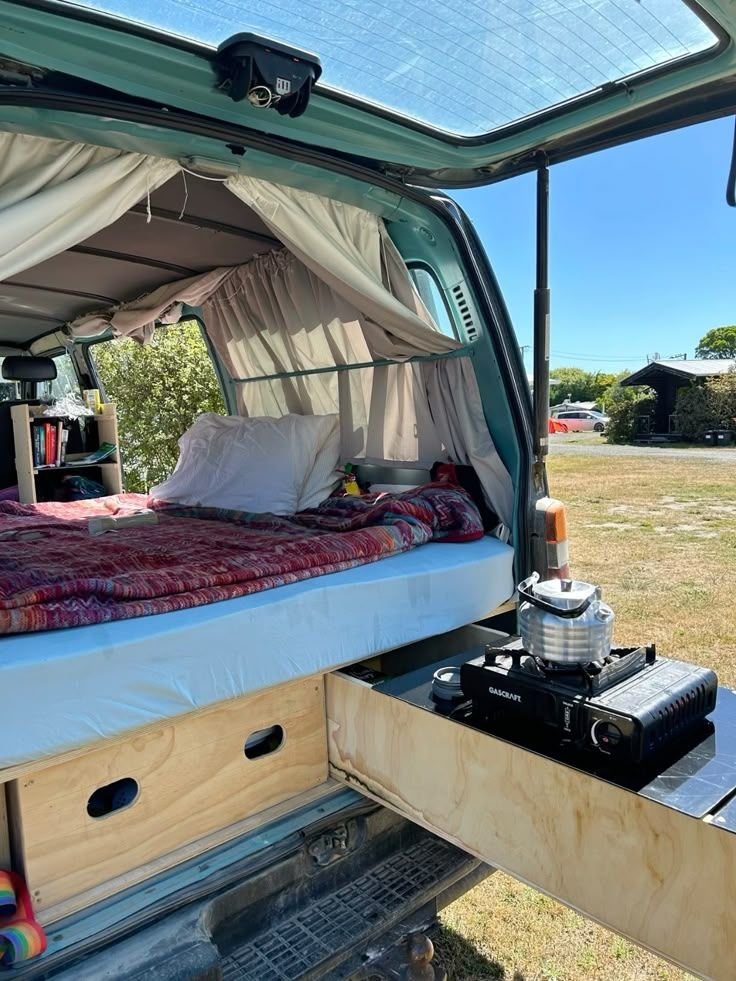
Third is floor-level bias. Humans default to storing things on the floor because it’s the most instinctive surface. The wall space, the back door interior, the ceiling area near the cab, none of these get the same attention. And they’re often completely empty in small builds that claim to have no storage space left.
Fourth, honestly, is buying storage solutions before understanding your own habits. A hammock-style shoe organiser takes up a wall section you might need for something else. A tiered spice rack collects herbs you don’t cook with. The instinct to shop for organisation before you’ve spent real time in the van tends to create more clutter, not less.
If you’re in the early stages of a build, working through the essential van setup guide for beginners before purchasing a single storage product will save you from most of this.
3. Vertical Space: Where Small Vans Actually Have an Advantage
Floor space is the finite resource everyone fixates on. But in a compact van, the vertical real estate is often completely untouched, and using it can make a serious difference.
Ceiling cargo nets stretched between the cab headrests and the rear of the van are one of the most effective low-cost changes you can make. They cost around £10 to £15, install in minutes, and hold a surprising amount of lightweight gear. Sleeping bag, spare clothing layer, dry bags, a folded windbreaker. All of it off the floor, all of it accessible, none of it blocking pathways or covering useful surfaces.
Back door pocket panels are another consistently underused option. The interior of most van rear doors is a flat panel with nothing attached to it. A few shallow fabric or plywood pockets fitted to that surface give you a proper home for small items: torch, first aid pouch, gloves, spice sachets, charger cables. Shallow, lightweight, in a space that was doing absolutely nothing before.
Track and hook wall systems work well even in smaller vans. A single strip of slotted aluminium running along one side wall lets you hang bags, tools, or a folded camp chair without drilling multiple separate fixings across the panel. It’s also modular, so it adapts as your needs change without any additional work.
The framework for thinking about vertical storage is three layers: low, mid-height, and high. Most van builds use two of those three levels. The third layer is usually where the actual available space is.
4. Fold-Away, Flat-Pack, and the Question of What You Actually Need
There’s a whole strand of van storage advice that’s essentially a long shopping list. Get this collapsible bowl set. Get that compression stuff sack. Get the nesting cookware, the stackable tubs, the vacuum storage bags.
Some of that is genuinely useful. But none of it helps if the core problem is simply owning too much.
A properly compressed sleeping bag packs down to roughly the size of a thick hardback book. Three budget sleeping bags layered for warmth take up something closer to a medium-sized holdall. The difference in storage load is real, and it compounds across every category of gear you bring. One good multi-purpose item replaces two or three specialist ones, and the space saving stacks up quickly.
This is where the budget van conversation deserves to be more honest. Budget van living isn’t just about what you spend on the road. It’s about choosing less, choosing well, and resisting the pull of things that earn their place only in theory. That’s a harder conversation than recommending a cargo net, but it matters more.
That said, when it does come to choosing storage products, here’s how common options actually stack up in compact builds:
| Storage Option | Good for Small Vans? | Notes |
|---|---|---|
| Ceiling cargo net | Yes | Lightweight, very cheap, uses unused overhead space |
| Under-bed drawer unit | Depends | Only works with a properly raised platform bed |
| Back door fabric or plywood pockets | Yes | Zero floor impact, excellent for small everyday items |
| Slotted wall track system | Yes | Modular and adaptable without extra drilling |
| Stacking plastic storage bins | Rarely | The item you need is always in the bottom one |
| Collapsible fabric storage cubes | Yes | Packable when empty, versatile for clothing |
| Magnetic strip for kitchen tools | Sometimes | Only justifies the wall space if you cook regularly |
| Fixed wooden shelf unit | Yes, if planned | Best long-term solution; needs upfront planning |
The plastic stacking bins are genuinely popular in van builds and almost always a mistake in small vans. They’re heavy, inflexible, and the access problem gets worse the longer you’re on the road.
5. Small Builds, Specific Fixes
Beyond the general principles, a few specific additions come up consistently in compact builds as being genuinely useful rather than just clever on paper.
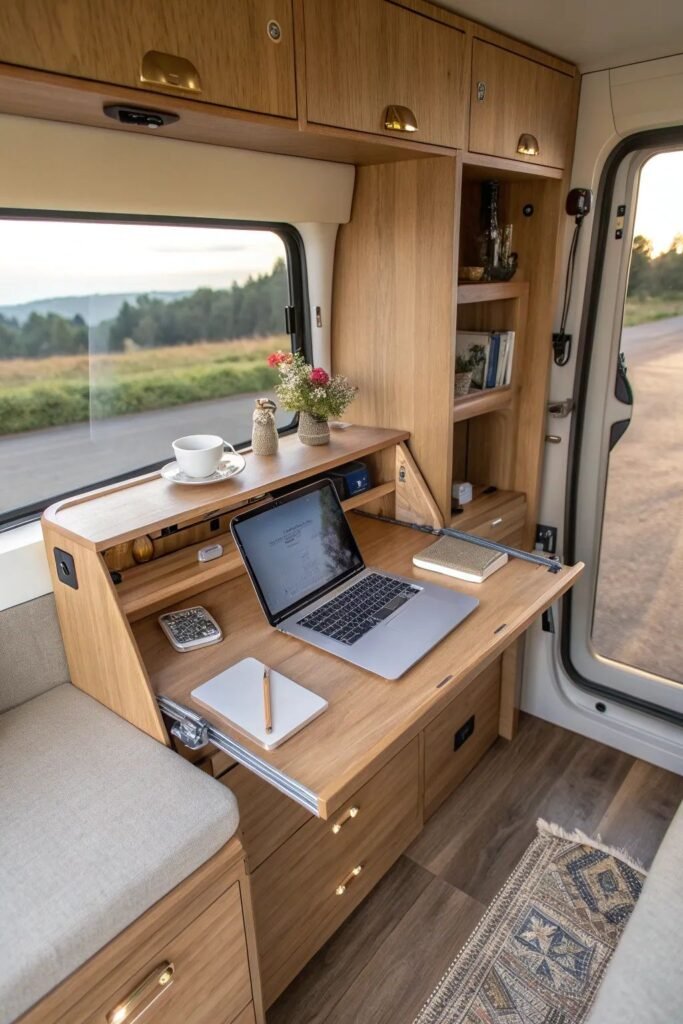
A headboard shelf is one. A narrow shelf at the top of your sleeping area, maybe 15cm deep, running the full width of the bed. It holds the things you reach for last thing at night and first thing in the morning: phone, headlamp, water bottle, earplugs. Without it, these migrate across the bed surface and the floor. With it, they’re always in the same spot. And it can be built from scrap wood for almost nothing.
Velcro backing for loose items sounds minor until you’ve spent a week reorganising after every drive because things shifted. Industrial velcro on the base of frequently used small items and on flat surfaces keeps them genuinely fixed. It’s the sort of change you make and then immediately wonder why you didn’t do it sooner.
A pegboard panel in the living area, even just half a square metre, gives you a flexible hanging system for everyday items. Keys, bags, headphones, a small tool roll. It uses wall space that’s usually blank, and it adapts as your needs change just by moving hooks around.
For more ideas in this space, the DIY upgrades post for budget van builds covers a solid range of low-cost modifications that hold up in real-world use rather than just looking tidy in a photograph.
6. The Mistake That Undoes Everything Else
You could implement every idea in this article and still end up with a cramped, chaotic van. Because the single most costly storage mistake in a small build isn’t about the products you choose or the layout you design.
It’s setting up your whole storage system before you know how you actually live in the van.
Most people move in, install everything, and then discover that their real daily patterns look nothing like what they imagined. They packed for a week of fresh cooking but heat things up three times. They put their most-reached-for items in the hardest-to-access spot. They built a full drawer unit for gear they end up never touching. And then they wonder why everything feels wrong.
The van lifers who nail small-space storage almost always did at least one trial run before committing to a layout. A long weekend, nothing more. Enough time to find out whether they access the rear from the back doors or the side doors, whether they get dressed inside or outside, whether what they reach for first in the morning is clothing, a coffee pot, or a phone charger. Those patterns don’t show up in planning. They show up in living.
It mirrors packing a bag for a long journey. Experienced travellers pack half of what they packed on their first trip, because they’ve learned the hard way what they actually use. Van storage follows the same logic, a small van forgives very little, which is actually a useful constraint if you let it work for you rather than against you.
The Budget Van Journeys post on daily comfort tricks is worth reading alongside this one, especially if you’re in the first few weeks of full-time van life and still mapping out what your days actually look like.
FAQs
What are the best van storage ideas for a very small van like a Ford Connect or Transit Custom?
Ceiling cargo nets, back door pocket panels, and a slotted wall track system are the three highest-impact changes for compact vans. Under-bed storage only makes sense if you have a properly raised platform bed. The key principle is getting items off the floor and giving every single thing a fixed home. Floating items take up more space than they should because nothing can be packed reliably around them.
How do I stop things from shifting around while I’m driving?
Industrial velcro is the cheapest effective solution for small to medium items. Bungee cords clipped to floor anchor points handle heavier gear. But the real long-term fix is having everything in a fixed position so nothing is loose to begin with. Properly housed items don’t move. Things piled in a corner always do.
Can I have proper van storage without doing a full conversion?
Yes. Cargo nets, back door pockets, collapsible fabric boxes, and a simple wooden headboard shelf are all zero-permanent-modification options. If you’re renting the van or not ready to drill into panels, these give you a genuinely workable system. The ceiling cargo net alone, without a single screw, makes a meaningful difference in any compact van.
Is it better to buy ready-made van storage products or build your own?
For most things in a budget build, DIY produces better results for less money. A headboard shelf and a back door pocket panel setup costs under £20 in materials and takes a few hours. Ready-made van storage products are usually priced and sized for Sprinter builds and frequently don’t fit smaller vans well. The exceptions are cargo nets and collapsible fabric storage cubes, both of which are inexpensive and genuinely hard to improve on at home.
How much storage space do I actually need for long-term van life?
Less than you think. Most people who’ve been doing it more than a few months say they settled at around two-thirds of what they originally packed, sometimes considerably less. A useful personal audit: anything you haven’t touched in the past seven days is probably negotiable. The goal isn’t to fit everything. It’s to own only the things that genuinely earn their place.