
Most people think a roof vent is just a hole with a fan bolted into it. It isn’t, and that misunderstanding is the reason so many van builds end up damp, stuffy, or smelling faintly of mildew within their first winter. I’ve watched it happen to friends who spent real money on insulation and finishes, then skipped the vent because it felt like a minor line item. It’s not minor. It’s often the single thing that decides whether a build feels livable or feels like camping in a sealed box.
This isn’t a roundup of every vent on the market. It’s a comparison of the four types people actually install, what each one is good at, and where each one quietly lets you down.
1. What a Roof Vent Is Actually Doing
A van is a closed metal container with humans, a stove, and sometimes a dog breathing inside it. Cooking, showering with a portable bag shower, even just sleeping, all of that puts moisture into the air. Without somewhere for that moisture to go, it lands on the coldest surface it can find, usually the inside of your roof or the back of your wall panels, right behind the insulation.
That’s the real job of a vent. Airflow, not just “fresh air.” It needs to pull moist, stale air out faster than your body and your kettle are putting it in. A vent that looks great but barely moves air is, functionally, decoration.
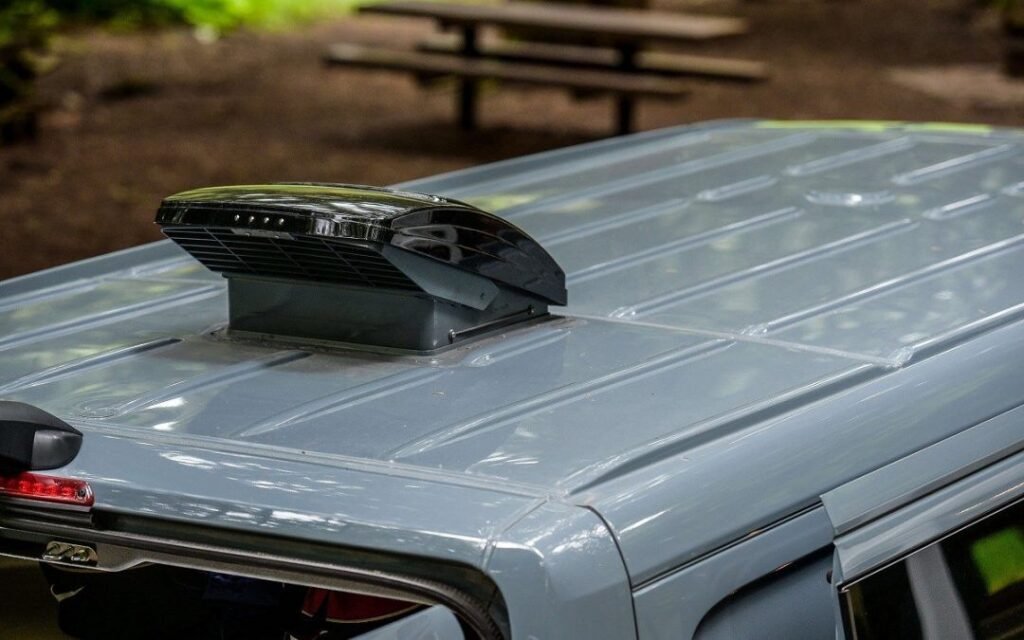
2. The Four Main Types, Compared
Here’s how the common options actually stack up against each other when you’ve lived with them, not just read the spec sheet.
| Vent Type | Airflow Power | Power Draw | Rain-Open Capability | Rough Cost |
|---|---|---|---|---|
| 12V fan vent (Maxxair-style) | Strong, adjustable speed | Moderate, draws on your battery bank | Yes, most can stay open in light rain | $250 to $370 |
| Turbine vent (passive, wind-driven) | Weak to moderate, depends on wind | None | No moving parts to worry about, but no fan boost either | $25 to $60 |
| Solar-powered fan vent | Moderate | Self-contained, doesn’t touch your house battery | Varies by brand, check the seal rating | $80 to $150 |
| Basic static vent (no fan) | Minimal, relies on convection only | None | Usually needs to be closed in rain | $15 to $40 |
The fan vent wins almost every practical test. It’s the one I’d point a first-time builder toward without much hesitation. But it’s also the most expensive option here, and it’s one more thing pulling from your electrical setup, which matters if your solar isn’t sorted yet. If you haven’t worked out your power budget, it’s worth reading through Budget Van Journeys’ breakdown on what a van build under $5,000 actually needs before you commit to a vent that assumes you’ve got amps to spare.
3. Where People Usually Get This Wrong
The mistake I see most often isn’t picking the wrong vent. It’s picking a good vent and then under-insulating around the hole you cut for it. A fan vent moves air well, sure, but if the metal frame around it is a thermal bridge with no insulation buffer, you’ll get condensation forming right at the edges of the vent itself, which then drips down exactly where you don’t want water. People assume the vent solves the moisture problem entirely and stop thinking about it. It doesn’t. It manages moisture, it doesn’t eliminate the conditions that create it.
And the second mistake: running the fan on low because it’s quieter, then wondering why the van still feels stuffy by morning. Low speed on most of these units barely cycles the air in a space the size of a typical camper van. You usually need medium or higher overnight, especially with two people and a dog. There’s a real trade-off between quiet sleep and actual air exchange, and most people pick quiet without realizing what they’re giving up.
If you’re still working through how your insulation choices interact with moisture and cold, the article on what nobody tells you about van insulation covers a lot of the parts that don’t show up in product descriptions.
4. Installation Realities Nobody Puts in the Marketing Copy
Cutting a hole in your roof is the part that makes people nervous, and honestly, it should make you a little careful, just not paralyzed. The actual cut is usually the easy part. What trips people up is sealant. A lot of first-time builders use way too little, or use the wrong type entirely, and then six months later they’re chasing a slow leak that’s already gotten into the wood framing underneath.
Use a proper sealant rated for the material your roof actually is, not whatever was cheapest at the hardware store. Butyl tape under the flange, then a bead of compatible sealant over the top edge, redone annually as a check, not a one-time job. That’s it. That’s the whole secret, and it’s not glamorous.
If your roof situation already includes windows or you’re weighing whether to add them alongside a vent, the piece on cheap van windows worth installing or skip is worth reading before you start drilling anything, since window and vent placement can affect each other more than people expect.

5. Which One I’d Actually Buy
For most builds, a 12V fan vent. It’s the option that solves the most problems at once: moisture control, temperature regulation on hot days, and decent airflow even when it’s not running, since most models allow passive airflow with the fan off. The upfront cost stings a bit, but it’s one of those purchases that earns its place back in comfort within the first month of actually living in the van.
A turbine vent makes sense if your budget is genuinely tight and you’re parked somewhere with consistent breeze. Solar fan vents are a solid middle ground if your electrical system is already maxed out and you don’t want one more draw on the house battery. The static vent, honestly, I’d only recommend as a second vent paired with something more active, not as your only source of airflow. It’s better than nothing. It’s not a real solution on its own.
One more thing worth saying plainly: don’t let the vent be the last thing you budget for. It’s tempting to spend everything on the bed platform and the kitchen setup and figure the vent can wait. But the insulation failing in cold weather problem and the vent problem are connected, and trying to retrofit good airflow after the interior is finished is a much bigger job than doing it during the build.
That’s roughly where I’d land if a friend asked me over coffee. Buy the fan vent if you can stretch the budget. If you can’t yet, that’s fine too, just don’t skip airflow entirely and assume you’ll deal with it later.
FAQs
Do I really need a powered vent, or will a static one do? A static vent is better than sealing your van up completely, but it relies on passive air movement, which is weak. If you’re cooking inside, sleeping with the windows closed, or dealing with a humid climate, a powered fan vent will outperform it noticeably within the first few weeks of use.
Can I run a roof vent fan all night without draining my battery? Most 12V fan vents draw somewhere between 0.5 and 1.5 amps depending on speed setting. Running it overnight on a low or medium setting is usually fine with a modest solar and battery setup, though it’s worth checking your specific fan’s draw against your battery capacity before assuming it.
Will cutting a hole in my roof cause leaks down the line? Not if it’s sealed properly with butyl tape and a compatible sealant, and checked annually. Most leaks come from sealant breaking down over time or being applied too thin in the first place, not from the hole itself.
What’s the difference between a turbine vent and a fan vent? A turbine vent spins passively using wind and outside air pressure differences, with no electrical draw, but it’s inconsistent in still conditions. A fan vent uses a motor to actively pull or push air regardless of wind, which makes it far more reliable but adds a power draw.
Is it worth paying more for a name-brand fan over a cheaper version? Often yes. The cheaper unbranded fans tend to have weaker motors, louder operation, and seals that degrade faster in sun exposure. For something installed in your roof that’s a pain to replace, paying a bit more upfront tends to save money over a few years.
If you’re deciding between vent options for your own build, it’s worth reading through real numbers on what a van build actually costs before locking in your full parts list, since the vent is one piece of a much bigger budget puzzle.