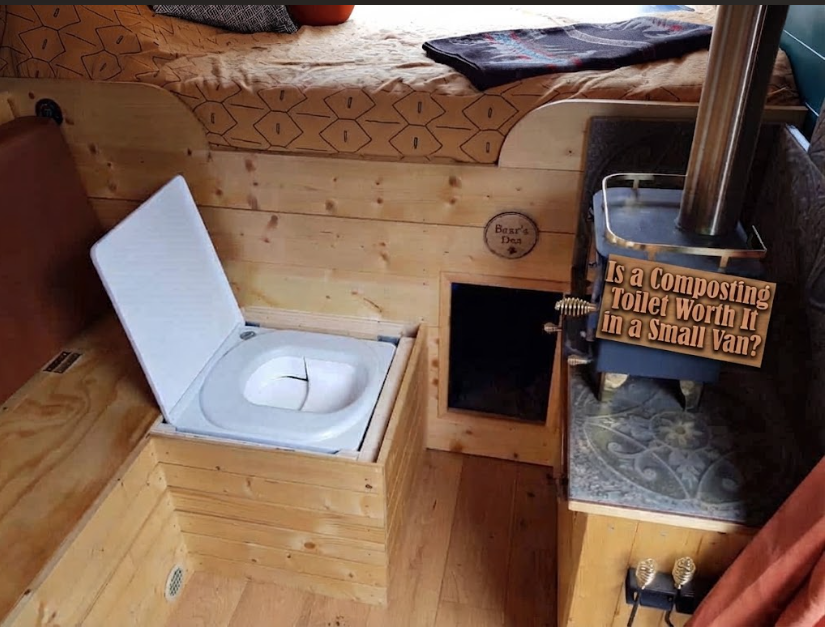
I get asked about composting toilets more than almost anything else on this site, usually right after someone has just watched a van tour video where the bathroom looks spotless and smells like nothing at all. Real life is a little messier than that. Not bad, just messier.
So let’s talk about whether one actually belongs in a small van, because “small” changes the math more than most people expect.
1. What a Composting Toilet Actually Does
A composting toilet separates liquid waste from solid waste. That’s the whole trick. Urine goes into a front bottle or tank, solids drop into a bin lined with coco coir or peat moss, and a small fan (usually 12V, wired into your electrical system) pulls air through the solids bin and vents it outside. No water, no chemicals, no black tank.
The separation is what keeps smell down. Combine urine and solids in the same container and you get the classic porta-potty smell within a day. Keep them apart and a well-maintained unit barely smells like anything, maybe a faint earthy note if you get close.
2. The Space Problem, Specifically
Here’s where van size actually matters, more than most articles admit. The two most common composting toilets on the market, the Nature’s Head and the Separett Villa, both need a footprint of roughly 19 to 21 inches deep and close to 20 inches wide. In a full-size cargo van that’s nothing. In a Sprinter 144, still fine. In a Transit Connect, ProMaster City, or a converted minivan, that footprint can eat 15 to 20 percent of your usable floor space once you account for the clearance needed to actually sit on it comfortably.
We cover this kind of space math in more detail in our guide to setting a realistic van life budget, because toilet choice affects layout choice, and layout choice affects what you can and can’t do with the rest of the build.
The mistake people make constantly is buying the toilet first and designing the bathroom around it. Measure your actual floor space with tape on the ground before you buy anything. Sit where the toilet would go. It sounds obvious. It gets skipped constantly anyway.
3. Cost, Honestly
A composting toilet runs $900 to $1,400 for a quality unit. A cassette toilet runs $150 to $400. That gap is real and it matters if you’re building on a tight budget, which, if you’re reading this site, you probably are.
| Toilet Type | Upfront Cost | Ongoing Cost | Dump Frequency |
|---|---|---|---|
| Composting toilet | $900–$1,400 | Coco coir, ~$10/month | Solids every 3–4 weeks, liquids every 1–3 days |
| Cassette toilet | $150–$400 | Chemical treatment, ~$15/month | Every 3–5 days |
| Porta-potty style | $80–$200 | Chemical treatment | Every 2–4 days |
The composting toilet wins long term if you’re living in the van full-time for a year or more. It loses if you’re doing weekend trips or a few months of seasonal travel, because you’ll never make back the price difference before you sell the van or swap builds. This is one of those decisions where the math genuinely depends on how you use the vehicle, not just what sounds nicer.
We get into the full weekend-versus-full-time cost breakdown in how much it really costs to live in a van, if you want the bigger picture before committing to any one system.
4. Maintenance Nobody Mentions in the Reviews
Composting toilets need the solids bin emptied every three to four weeks for one person using it full-time, sooner with two people. Emptying it is not glamorous. You pull the bin, walk it to an appropriate disposal spot (this varies by state and by whether you’re on public land, so check local regulations before you assume you can just bury it anywhere), and dump it. It looks like dirt at this stage if the composting process has been working correctly. If it doesn’t look like dirt and smells sharp instead of earthy, something’s off, usually too much moisture or not enough coir.
The liquid bottle is the part that actually catches people off guard. It fills faster than expected, especially with two people, and it needs to be dumped every one to three days. Skip a day too many and you’ll know it. This is the maintenance task that quietly determines whether someone loves or hates their composting toilet, and it rarely gets mentioned until you’re already three weeks into ownership.
And here’s a small thing that trips people up constantly: the fan needs to run essentially all the time the toilet is in use, which means a slow, continuous power draw. Budget for it in your electrical system rather than treating it as an afterthought. Most 12V composting toilet fans pull somewhere around 12 to 20 mAh, which sounds tiny until you’re already running low on battery during a stretch of cloudy days.
5. Common Mistakes People Make With This Decision
The biggest one is choosing a composting toilet because it looks better in photos, not because the travel pattern actually calls for it. A composting toilet is a strong choice for full-time living in a van with no black tank access and limited dump station availability. It’s a weaker choice for occasional weekend use, where a $150 cassette toilet does the same job with far less upfront cost and far less to think about.
The second common mistake is underestimating ventilation needs. The fan has to vent somewhere, and that somewhere needs a clean exterior path, not a coiled hose tucked behind cabinetry hoping for the best. Poor venting is the single most common cause of composting toilet complaints online, and it’s almost always a build problem, not a product problem.
The third mistake, and this one’s more about mindset than mechanics, is assuming a composting toilet means zero maintenance. It means different maintenance. Less frequent, more hands-on when it happens. Some people find that trade genuinely easier. Some people find it worse. Worth being honest with yourself about which one you are before you spend the money.
If you’re still working out your overall build budget, this decision fits into a bigger conversation about where your money actually goes in a van conversion, which we’ve broken down in why van life isn’t as cheap as Instagram shows. And if the toilet question is really part of a first-build panic where everything feels like it needs deciding at once, our guide to your first month on the road walks through what actually needs to be locked in before departure versus what can wait.
So, worth it in a small van? If you’re full-timing it and dump stations are scarce where you travel, yes, probably. If you’re doing shorter trips or your van is genuinely tight on floor space, a cassette toilet will save you money and headache without costing you much in daily comfort. There’s no wrong answer here, just a wrong answer for your specific situation, and that’s worth figuring out before you order anything.
FAQs
Does a composting toilet smell in hot weather? Slightly more than in cool weather, since heat speeds up decomposition and can intensify odor if the coir-to-waste ratio is off. Keeping the fan running continuously and staying on top of stirring the mixture solves most of this.
Can two people use a composting toilet full-time without it becoming a hassle? Yes, but expect to empty the liquid bottle daily rather than every couple of days, and the solids bin closer to every two to three weeks instead of monthly.
Do I need a vent fan running 24/7, or just when someone uses the toilet? Continuously, ideally. Intermittent fan use lets moisture and odor build up between uses, which defeats the point of the ventilation system.
Is it legal to dump composted solids on public land? It depends heavily on the state and the specific land management agency (BLM, Forest Service, state park, etc.), so check local rules rather than assuming. Some areas allow properly composted material to be buried away from water sources; others don’t.
What’s the actual lifespan of a Nature’s Head or Separett unit? Most owners report 5 to 10 years of solid function with basic maintenance, with the fan motor typically being the first component to need replacing.
For more on planning a realistic van build budget, see our full breakdown at budgetvanjourneys.com.