
My first month on the road, I spent more on gas station snacks than I did on actual groceries. I didn’t clock it until I sat in a parking lot outside Flagstaff on a rainy afternoon and finally added up my bank statement. Forty dollars on jerky and energy drinks one week. Twelve on a sad pre-made sandwich because I hadn’t planned dinner. By the end of the month I’d burned through almost $380 on food, most of it from convenience store shelves, while a perfectly good propane stove sat untouched under my bed platform.
That’s the part nobody tells you when you start dreaming about van life. Rent disappears, sure. But food doesn’t get cheaper on its own. It gets cheaper when you build a system around it, and most people, myself included, figure that out the expensive way first.
1. Why Grocery Costs Sneak Up on a Van Budget
A small fridge, or no fridge at all, changes how you shop in ways that aren’t obvious until you’re living it. You can’t stock up the way you would at home, so you end up making more frequent, smaller purchases, and small purchases are where prices creep. Add in decision fatigue from driving, finding parking, and figuring out where you’ll sleep that night, and cooking starts to feel like one task too many. Takeout wins by default, not because anyone planned it that way.
There’s also a quieter problem. Boredom snacking. Long stretches of driving or sitting somewhere remote with nothing to do tend to turn into chip runs and gas station coffee, and those add up fast, faster than people expect, faster than people expect because nobody is tracking it in the moment.
A lot of new vanlifers also assume that being on the road is automatically cheaper across every category, food included, and that’s a mistake worth correcting early. If you want the fuller picture of where the real savings (and the real surprises) show up, Is Full-Time Van Life Really Cheaper Than Rent? breaks it down line by line, and groceries are usually the category people underestimate the most.

2. Building a Number That Actually Holds
The fix isn’t complicated, but it does take an honest week or two of tracking before you set a number you can trust. I’d rather see someone overestimate by twenty dollars and feel relieved than underestimate and feel like they’re failing every Sunday at checkout.
Here’s a rough starting point based on what most solo vanlifers and couples report once they’ve settled into a routine:
| Setup | Weekly Grocery Range | What It Usually Covers |
|---|---|---|
| Solo, mostly home-cooked | $45 to $65 | Basics, bulk grains, some fresh produce |
| Solo, mix of cooking and convenience | $70 to $90 | Less planning, more pre-made items |
| Couple, mostly home-cooked | $90 to $120 | Shared meals, modest variety |
| Couple, eating out occasionally | $130 to $160 | One or two restaurant meals built in |
These numbers shift depending on region, obviously. Groceries in coastal California cost more than groceries in rural Texas, and that gap is wider than most people expect before they’ve actually driven it. For a broader look at how grocery spending fits into the rest of a monthly van budget, Van Life Monthly Cost: Real Numbers for 2026 lays out the full picture, fuel, insurance, food, and everything in between.
3. What Actually Goes in the Cart, and What Doesn’t
This is where most of the savings actually happen, not in finding a magic discount app. Shelf-stable proteins do a lot of heavy lifting: canned beans, lentils, canned tuna or chicken, peanut butter. Root vegetables hold up well without refrigeration for a week or more, potatoes and onions and carrots especially. Rice and oats are cheap, filling, and forgiving if your cooking skills are still developing.
And here’s where people usually go wrong. They buy like they’re stocking a kitchen with a real fridge, loading up on dairy, fresh meat, and leafy greens that need to be eaten within two or three days. A 12V fridge running off a small battery bank often isn’t cold enough, or consistent enough, to keep those items safe much past that window, and a cooler with ice melts faster than people plan for. The result is food going bad before it’s used, which is the most expensive kind of grocery mistake there is, because you’re paying for it twice.
A better pattern is buying fresh produce in small amounts every few days rather than once a week in bulk, and leaning on shelf-stable staples to fill the gaps in between. It sounds like more effort. It’s actually less, once it’s a habit. For a deeper breakdown of exactly what a tight grocery week can look like in practice, Eating on $15 a Day: Van Life Grocery Strategy is one of the more detailed pieces we’ve put together on this.
4. Cooking Without Burning Through Propane or Power
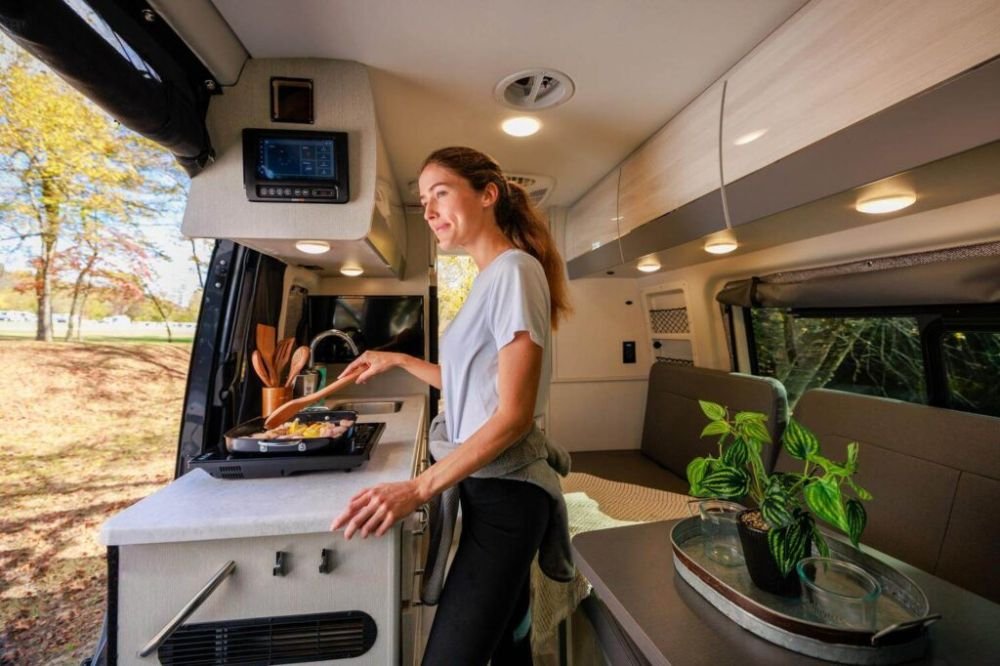
One-pot meals are the unofficial backbone of budget van cooking, and for good reason. Rice and beans, lentil stews, pasta with whatever vegetables are still good, these use one burner, minimal water, and clean up in under five minutes. That matters more than it sounds like it should when you’re cooking in a space the size of a closet.
Batch cooking before you head somewere remote also saves both money and propane. Cook a big pot of something before leaving a town with hookups or a known camp kitchen, portion it out, and you’ve got two or three meals ready without needing to cook again until you’re back near civilization. It’s a small shift, but it changes the rhythm of the whole week.
Quick aside, since I get asked this a lot: no, you don’t need a fancy two-burner stove to make this work. I cooked on a single butane burner for the better part of a year and it was fine, occasionally inconvenient, mostly fine. The stove matters far less than the habit of planning two or three meals ahead instead of deciding fresh every single time. For specific methods and gear that actually hold up, Cooking in a Van on $10 a Day: Real Methods goes into more detail than I have room for here.
5. Where You Shop Matters More Than What You Buy
This one surprises people. The same cart of groceries can cost forty percent more at a small-town market than it would twenty miles away at a chain grocery store, and rural gas stations are worse again, sometimes double. Stocking up before leaving a larger town, even if it means carrying slightly more weight for a few days, almost always beats buying piecemeal once you’re somewhere remote.
Aldi, when one is nearby, tends to beat Walmart on staples. Walmart beats most regional chains on bulk items. Dollar stores are genuinely useful for shelf-stable basics like canned goods, oats, and pasta, even if the selection is limited. None of this requires loyalty to one store. It requires a bit of route awareness, which is something a lot of Budget Van Journeys readers tell us they wish they’d thought about sooner.
It’s not glamorous advice. But it’s the kind that actually shows up in your bank account by the end of the month, which is more than I can say for most of the grocery hacks floating around online.
I still keep a propane stove I barely had to use that first month, the one that sat there while I lived off gas station sandwiches. These days it gets used most nights. Funny how that works out.
Frequently Asked Questions
Do van lifers really save money on food compared to apartment living? Yes, but only with intention. Without a system, food costs in a van can match or exceed a typical grocery bill because of convenience purchases and spoilage. With basic planning, most solo vanlifers land well below what they’d spend with a full kitchen and a stocked pantry at home.
What’s a realistic weekly grocery budget for one person living in a van? Most solo vanlifers settle somewhere between $45 and $90 a week, depending on how much cooking from scratch they’re doing and how often they supplement with pre-made or restaurant food.
How do you keep food fresh without a big fridge? Buy fresh produce in small amounts every few days rather than stocking up all at once, lean on shelf-stable staples like canned beans and grains for the bulk of meals, and treat a 12V fridge or cooler as supplemental storage, not a full kitchen fridge replacement.
Is it cheaper to cook in a van or eat out on the road? Cooking is almost always cheaper, often by three to four times per meal. The exception is when spoiled or wasted groceries are factored in, which is why portion planning matters as much as the cooking itself.
What grocery stores are best for van life budgets? Aldi and Walmart generally offer the lowest prices on staples where available. Dollar stores work well for shelf-stable basics. Small-town and gas station markets are the most expensive option and worth avoiding when a larger town is within reasonable driving distance.