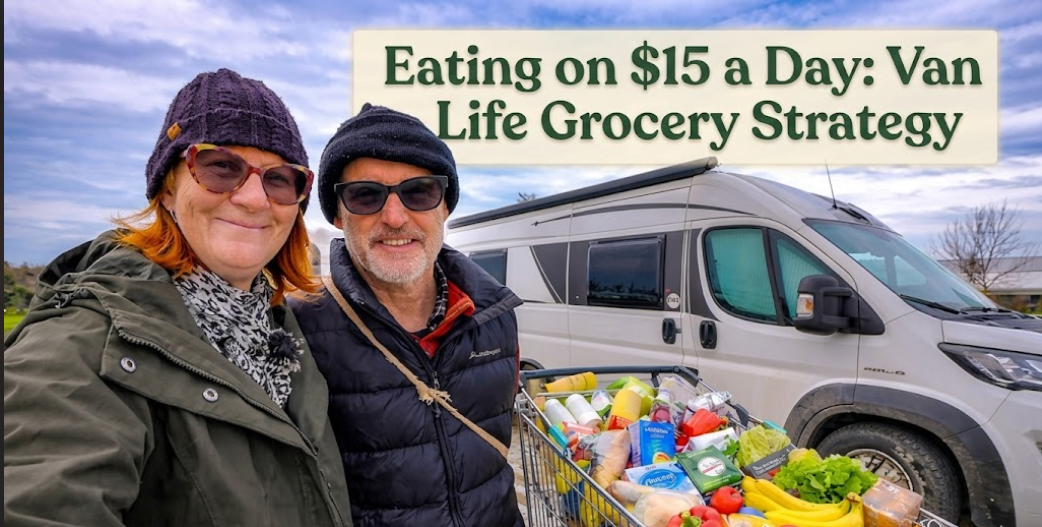
The misconception I kept seeing when I started writing about budget van living was that eating cheaply on the road means eating badly. Tinned beans every night, sad sandwiches, protein bars as a substitute for breakfast. People ask me all the time whether $15 a day is even realistic, like it’s some kind of punishment budget that nobody actually chooses willingly.
$15 a day is $105 a week for one person. That’s a completely workable grocery budget for someone who shops with any intention at all.
But the intention part is the thing. Because without it, you can spend $25 a day on food that still isn’t satisfying and doesn’t make sense.
1. Why the Number Isn’t the Problem
Most people overspend on van food not because $15 is genuinely too tight, but because they’re still shopping with a house-person’s habits. Two-litre bottles of things they won’t finish before they go off. Impulse items at eye level. Pre-chopped vegetables in little bags when a whole head of cabbage costs a third of the price, lasts longer, and gives you more.
The first week I actually tracked what I spent on food in the van, I realised roughly 30% of my grocery budget was going to things that got thrown away or went unused before I got to them. That’s not a budget problem, it’s a planning problem, and they’re completely different issues with completely different solutions.
Cooking and eating in a van actually helps with this, once you accept the constraints rather than fighting them. Limited fridge space. One burner, sometimes two. Storage that rewards density over volume. Those limits force a kind of deliberate shopping that most people find difficult to maintain in a full kitchen with a pantry and infinite shelf space.
2. What a $15 Day Actually Looks Like
Rather than vague principles, here’s a specific example. This is approximately what I spend when I’m being intentional, for one person, shopping at Aldi or a similar discount grocer:
SAMPLE WEEKLY GROCERY LIST (~$90-105 total)

PROTEINS
Eggs (12-pack)                  $2.50
Canned chickpeas x3             $2.40
Canned tuna x4                  $4.00
Peanut butter (large jar)       $3.50

CARBS & STAPLES
Oats (large bag)                $2.80
Pasta x2 bags                   $2.00
Rice (2lb bag)                  $1.80
Bread (1 loaf)                  $1.50

VEGETABLES
Whole cabbage                   $1.20
Carrots (bag)                   $1.50
Sweet potatoes x4               $2.40
Frozen mixed veg (bag)          $2.50
Tomatoes (punnet)               $2.00

FRUIT & SNACKS
Bananas                         $1.20
Apples (bag)                    $2.50

FATS & FLAVOUR
Olive oil (small bottle)        $3.00
Garlic (bulb)                   $0.80
Soy sauce or hot sauce          $2.50 (lasts multiple weeks)
Lemons x2                       $1.00

DAIRY
Butter                          $2.50
Block of cheddar                $3.50

CORE SHOP TOTAL                 ~$43-50
Wait, and I should clarify this, because the maths needs explaining. That core shop adds up to well under $50, which puts the daily cost closer to $7 on a typical week. The $15 figure is the realistic monthly average that accounts for coffee, mid-week fresh additions, and the weeks where you need to restock olive oil or spices that you’ve burned through. Some weeks are cheaper. The ones with pantry restocks are higher. Over a month, $12-15 per day is where most solo van lifers land when they’re shopping at a discount grocer.
3. The Cooking Setup That Makes It Work
When I first moved into a van I had a two-burner propane stove, a small cast iron pan, a medium saucepan, and a knife that was, honestly, barely usable. For a while that felt limiting. Eventually I realised it was the exact setup that forces you to cook properly, or at least cook deliberately.
One burner. One dish. Thirty minutes. That’s the meal planning model that keeps costs down and food waste minimal.
The meals that work best on a van grocery budget aren’t complicated or particularly creative, but they’re not miserable either. Pasta with olive oil, garlic, and a fried egg on top costs under $2. Fried rice made with leftover vegetables and soy sauce costs almost nothing if the rice was already cooked. A spiced chickpea stew over rice takes 20 minutes and costs about $1.80 per portion. Sweet potato roasted in the pan with smoked paprika, eaten with a simple peanut sauce, is actually something I make by choice when I have a full kitchen available. None of it feels like deprivation. It’s just good food cooked simply.
The fridge situation matters more for planning than people realise. Most budget van setups run a small 12V compressor fridge. Budget Van Journeys has looked at the 12V fridge options in more detail elsewhere, but for grocery planning purposes: assume 30-40 litres of usable cold storage, plan your protein and dairy around it, and don’t try to shop for a week of fresh vegetables expecting them all to stay in good condition. Root vegetables, whole cabbages, onions, garlic, and anything that tolerates ambient temperatures should live outside the fridge. This doubles your effective food storage without touching the electrical load.
4. Where People Actually Lose Money
A few specific patterns come up consistently, and they’re worth naming directly.
The camping food trap. Look up “van life meal ideas” in the wrong corner of the internet and you’ll find a lot of expensive dehydrated meals, trail mix pouches, protein bars marketed at the aesthetic, and packaged hiking foods that make the van life grocery strategy sound like a REI shopping list. A single dehydrated camping meal costs $8-12 for one portion. A portion of lentil dal from scratch costs about 90 cents. These are not interchangeable options, they’re different categories entirely.
Buying in quantities that don’t match your storage. A large bag of spinach is often better value per gram than a smaller bag, but if you’re cooking one portion a day from a single burner, you won’t finish it in time. Value per unit only matters if you actually use the whole unit. Correctly sized portions for a one- or two-person van setup matter more than chasing the lowest price per gram.
Eating out to compensate for bad planning. This is the quiet one. When there’s no meal plan and the fridge is empty on a Wednesday evening, the solution becomes a $12 meal from a food truck or a café lunch that was never in the budget. Not every day, but often enough that it adds up. Planning three days ahead is completely sufficient for a van setup and eliminates most of this problem entirely.
Name-brand loyalty at the grocery store. Aldi, Lidl, and similar chains run most of their product range as private-label goods made in the same facilities as name-brand products, at 30-50% lower cost. Oats are oats. Butter is butter. The soy sauce with the plain label tastes the same as the one with the nicer bottle. This isn’t about deprivation, it’s about not paying for the packaging design.
Budget Van Journeys readers tend to be practical people, and in my experience the ones who are honest about their food spending are always surprised by how much of the “van life is expensive” narrative comes from food choices rather than van costs.
5. Making It Mentally Sustainable
This part doesn’t get written about enough.
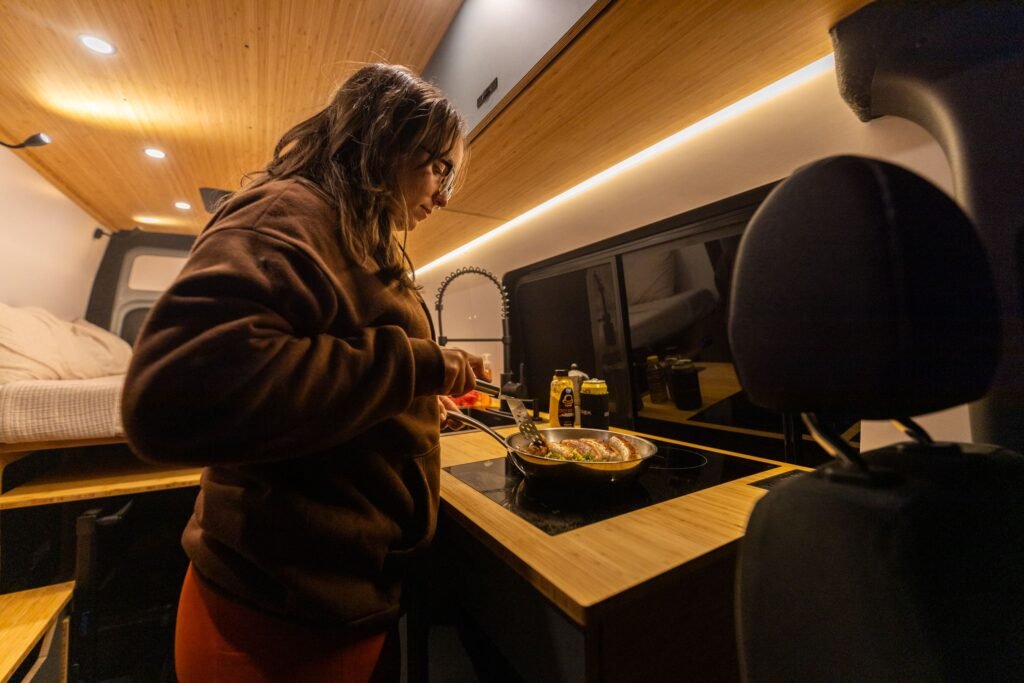
Eating on a strict daily budget for weeks or months at a time only works if it doesn’t feel like constant denial. The way I’ve found it works is to include one or two things in the weekly shop that feel like genuine treats. Not expensive treats, just things that make the food feel good rather than purely functional. A good block of cheddar instead of the cheapest pre-sliced stuff. A bar of dark chocolate. Fresh bread from a local bakery once a week, which in most places costs $4-5 and is infinitely better than the $1.50 supermarket loaf, and feels like something worth looking forward to.
The framing that helps me, and it might not be the right one for everyone, is thinking of it as a cooking budget rather than a deprivation budget. $15 a day spent thoughtfully produces genuinely good food. $15 a day spent reactively produces bad value, waste, and the low-level frustration of always feeling like you’re running short.
The practical cost is about 10 minutes once a week. A quick plan for the next three days, a short shopping list, and knowing which grocery store to stop at before you move on. That’s it.
FAQs
Is $15 a day actually doable in expensive cities? Yes, but you need to shop carefully. The strategy is to find the discount grocer in the area rather than shopping at whatever’s most convenient. Aldi, Lidl, Walmart Grocery, and ethnic food stores in most cities run 20-40% cheaper than mainstream chains, even in high cost-of-living areas. The amount doesn’t change, the location of the shop does.
What about coffee? Does that count toward the $15? If you’re buying coffee out every day, yes, it absolutely pulls from the daily food budget. A $3.50 coffee five days a week is $17.50, which is already over the daily target. Most long-term van lifers end up with an AeroPress or a stovetop moka pot, a bag of ground coffee from the weekly shop, and the occasional café coffee as a treat rather than a default. A bag of ground coffee that covers a week costs $5-8 and produces far more cups than $5-8 worth of bought coffee.
How do you hit protein targets without spending more? Eggs, tinned tuna, tinned sardines, lentils, chickpeas, and peanut butter are the reliable core. A 12-pack of eggs gives you 12 protein portions for around $2.50. Sardines on toast or in pasta cost about $1 per serving and are genuinely satisfying. The moment fresh meat becomes a daily staple rather than an occasional addition is when the protein line in the budget inflates noticeably.
Can you make this work without any fridge at all? Yes. Without a fridge you rely more heavily on tinned goods, dried pulses, root vegetables, and non-dairy proteins, but the calorie and nutrition picture holds up well. The main limitation in warm weather is keeping eggs and any opened tins safe. In cooler climates, ambient temperature often handles this for you. A basic 12V cooler (not a full compressor fridge) expands the options considerably without a big electrical draw.
What does a simple three-day meal plan look like at this budget?
| Day | Breakfast | Lunch | Dinner |
|---|---|---|---|
| Day 1 | Porridge + banana | Bread + peanut butter + apple | Pasta, olive oil, garlic, fried egg |
| Day 2 | Scrambled eggs on toast | Rice + tinned tuna + soy sauce | Spiced chickpea stew + rice |
| Day 3 | Oats + peanut butter | Leftover chickpea stew | Sweet potato + cheddar + fried egg |
Three days of actual food for roughly $12-14 at Aldi prices. That’s what $15 a day looks like in practice.
Van food planning is one of those things that looks like extra effort until you’ve done it once and realised how much quieter the rest of the week feels because of it. The budget works. The food is good. It just needs a small amount of attention before you walk into the shop, not during, not after.