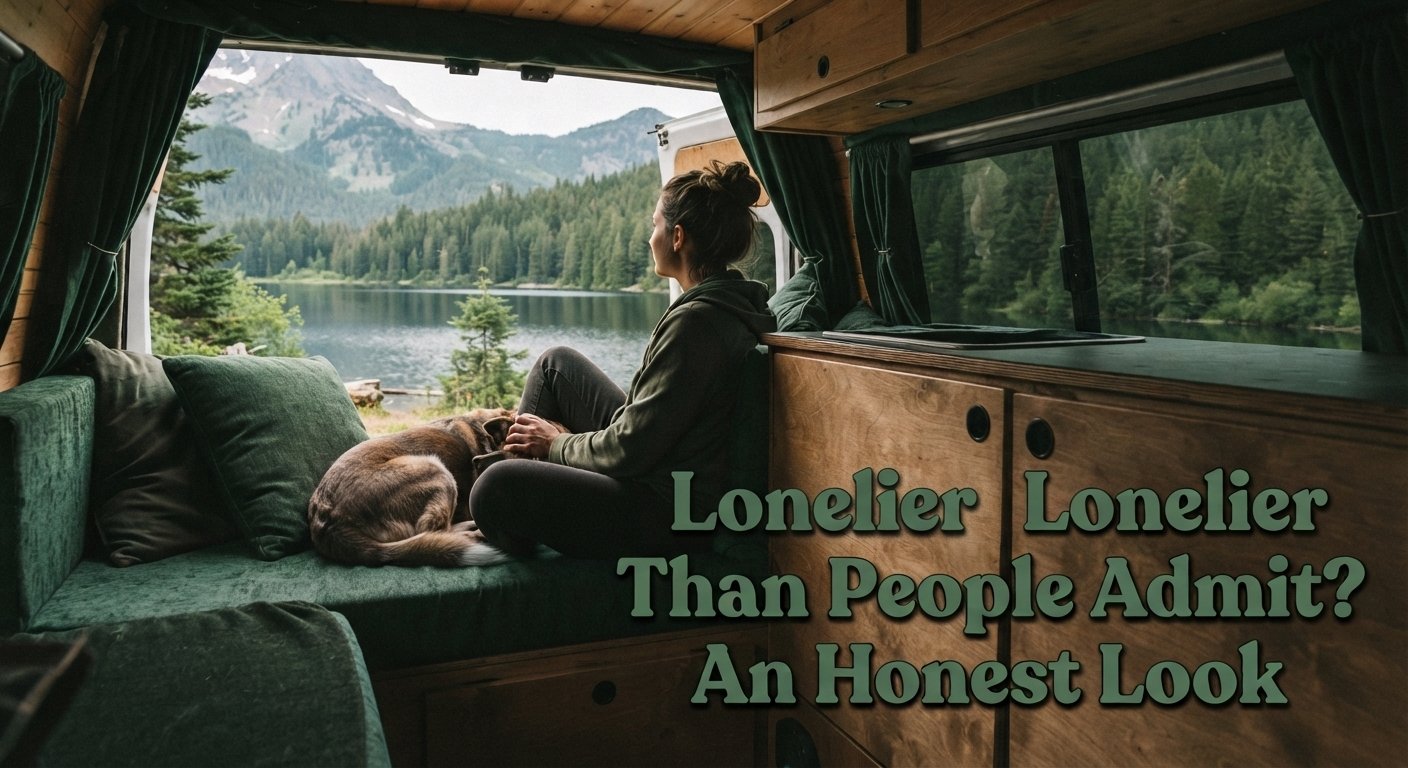
Nobody posts a video of themselves eating cold pasta out of the pot at 8pm in a gas station parking lot, three days into a stretch without a real conversation. That’s the part of van life that doesn’t make it into the feed, and it’s the part most people find out about the hard way.
We’ve talked to enough people at Budget Van Journeys who’ve done a full year on the road to know the answer isn’t a simple yes or no. It depends on what kind of lonely you’re worried about, and what you were running from or toward when you started.
1. The Loneliness Nobody Warns You About
There are two different things people mean when they say van life is lonely, and they get lumped together constantly.
The first is physical isolation. You’re parked somewhere remote, nobody’s around, and the silence starts to feel less peaceful and more like a weight. This kind is manageable. It comes and goes with your location, and most full-timers learn to read it coming and plan around it.
The second kind is harder to shake. It’s the loneliness of not having anyone who’s known you longer than a week. You can be surrounded by a full campground of friendly strangers and still feel completely unseen, because everyone you meet on the road only knows the traveling version of you. There’s no one to say “you seem off today” because nobody’s known you long enough to notice the difference.
That second kind is the one people underestimate before they leave, and it’s the one that actually drives people back to a lease.
2. Why Instagram Gets This So Wrong
Van life content rewards a very specific moment: the sunrise over the mountains, the coffee steaming on the tailgate, the caption about freedom. It does not reward the Tuesday where you sat in a Walmart parking lot for six hours because it was raining and there was nowhere else to go, and you didn’t talk to another human being all day.
We’ve written before about how van life isn’t as cheap as Instagram shows, and the same distortion applies to the emotional side. The algorithm doesn’t reward boredom or isolation, so almost nobody documents it, which means new van lifers arrive expecting a highlight reel and get blindsided by an ordinary Wednesday with nothing happening and no one around.
This isn’t a criticism of the people posting. It’s just worth knowing going in that what you’re seeing is a curated slice, not the average day.
3. Where People Usually Go Wrong
The biggest mistake we see, over and over, is treating solitude and loneliness as the same problem with the same fix. They’re not.
Solitude is something you choose and can end whenever you want. Loneliness is the ache of not having connection available even when you’d take it. People who struggle most in van life are usually the ones who assumed the isolation would feel peaceful because it was chosen, and got caught off guard when it started to feel more like being stranded.
The fix isn’t “push through it.” The fix is building a rhythm that includes other people on purpose, the same way you’d build a rhythm around fuel stops or laundry. It doesn’t happen by accident on the road the way it does when you live in one place with a job and neighbors.
4. What Actually Helps
A few things consistently make a real difference, based on what full-timers tell us works and what doesn’t.
Staying in one spot longer than feels productive. Three nights in the same free camp is enough time to actually meet the people parked near you. One night almost never is.
Joining a specific community, not a general one. General van life Facebook groups are mostly noise. Smaller groups organized around a region, a rig type, or a shared interest tend to turn into actual friendships instead of scrolling.
Scheduling calls like appointments. The people who stay closest to friends and family back home are the ones who put a standing call on the calendar, not the ones who wait until they happen to feel like it.
Working from places with other people around, even if it’s just a coffee shop instead of the van. Ambient human presence does more for mood than most people expect.
Here’s a quick comparison of what tends to work against what tends to backfire:
| Approach | Tends to help | Tends to backfire |
|---|---|---|
| Staying put | 3+ nights in one spot | One night, constant moving |
| Online groups | Small, niche communities | Huge general van life groups |
| Calls home | Scheduled, recurring | “Whenever I feel like it” |
| Work location | Coffee shops, co-working spots | Always working solo in the van |
| Meeting people | Saying yes to invites early | Waiting to feel “ready” to socialize |
None of this eliminates the hard stretches. It just shortens them and makes them less frequent.
5. It Depends Heavily on Why You Started
People who left a life that was already isolating, a bad breakup, a job that drained them, a city where they never really made friends, tend to do worse with the loneliness of van life. The road doesn’t fix what was already missing. It just changes the scenery around it.
People who left a life that was full and connected, but wanted something different for a season, tend to handle it better. They have something to miss, which sounds strange, but missing people is a very different feeling than never having had them close in the first place.
If you’re building out a rig on a tight budget right now, it’s worth thinking about this before you’re three weeks in. We covered the practical side of getting your setup right in our piece on what to prioritize first in a budget van build, but the social plan matters just as much as the electrical plan, and almost nobody thinks about it in advance.
And if the budget side of this whole decision is still up in the air, our breakdown of what it really costs to live in a van is a good place to get realistic numbers before you commit to a timeline.
So is it lonelier than people admit? Yes, some weeks, in a way that surprises people who did their research on everything except this. But it’s also not the whole story, and the people who plan for it, rather than assuming freedom will automatically feel good, tend to come out the other side glad they went.
Frequently Asked Questions
Is van life lonelier for solo travelers than for couples? Generally yes, though couples run into a different problem: being each other’s only social contact for months at a time, which brings its own strain. Solo travelers face more raw isolation, but often build outside connections faster out of necessity.
How long does it usually take to build a real community on the road? Most people report it taking two to four months of consistent travel in similar circles before friendships start to feel solid rather than transactional. Staying in fewer places longer speeds this up considerably.
Does working remotely make van life loneliness worse? It can, mainly because remote work removes one of the few built-in reasons to be around other people during the day. Working from cafes or co-working spaces instead of inside the van helps offset this.
Are there seasons of van life that are lonelier than others? Winter travel in less populated regions tends to be the hardest stretch, simply because fewer people are on the road and campgrounds thin out. Many full-timers plan winter routes around denser, warmer regions specifically to avoid this.
Is it normal to consider quitting van life because of loneliness? Yes, and it’s one of the most common reasons people give when they stop full-timing, more common than budget issues. It doesn’t mean the lifestyle failed. It usually means the social side wasn’t planned for the way the logistics were.
If you’re working through the emotional side of a big lifestyle shift like this one, and it’s weighing on you more than expected, it can help to talk it through with someone, whether that’s a friend, a therapist, or a community that’s been through it. You can find more on getting your first month right in our guide to Budget Van Journeys’ first month on the road.