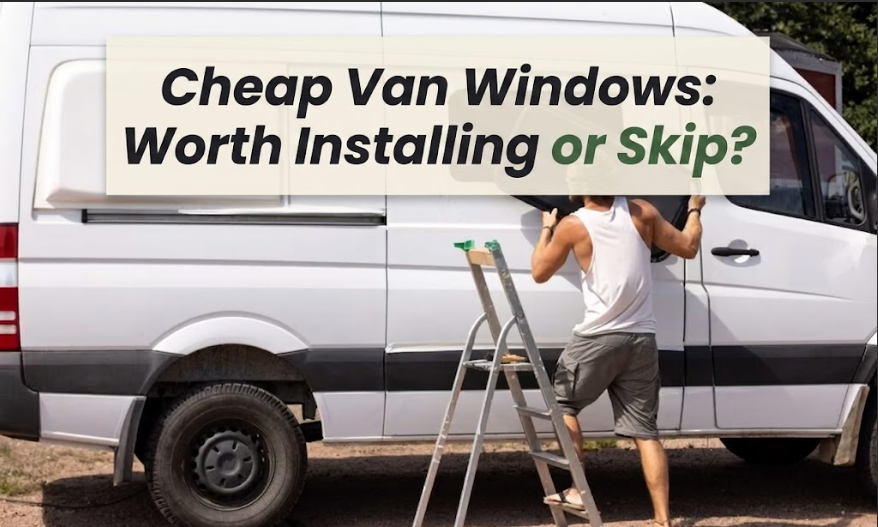
There’s a belief I keep seeing repeated in van build threads, Facebook groups, all the places where budget conversions get discussed at length. It goes something like this: a window is a window. Buy the cheap ones off Amazon, put the savings toward your insulation or a decent mattress, and call it done.
I understand the logic. When you’re looking at a £40 pop-out window sitting in your basket beside a £220 Seitz S6, the difference feels like pure branding. Both are clear. Both have rubber-looking seals around the edge. Both let you open them from the inside. On paper, the budget option seems like an obvious win for anyone building on a shoestring.
But there’s a version of this story that ends with water trickling through a collapsed foam seal at 11pm in a rainy layby, and the £40 window is a central character. I’ve seen it play out often enough that I want to give this question a proper answer, because the answer is not a clean yes or a clean no. It depends on what you’re buying, where the window is going, and whether you understand the real cost of getting this one wrong.
1. What “Cheap” Actually Covers in the Van Window Market
Not all budget windows are the same product. The word “cheap” spans a pretty wide range, and treating them as a single category leads to bad decisions.
On one end there are Chinese-manufactured pop-out windows, the ones available across Amazon and eBay for roughly £30 to £80 each. They typically come in standard caravan dimensions, use thin acrylic or polycarbonate glazing, and arrive with a foam perimeter seal already pressed into the frame. The housing is usually thin aluminium or ABS plastic. They look fine in product photos.
Then there’s the DIY polycarbonate sheet route. You buy a sheet, cut it to fit your opening, and seal it in yourself using butyl tape, lap sealant, and self-tapping screws through a rubber-edged trim. Materials come in around £15 to £40 depending on thickness and polycarbonate grade.
A third option is the salvage window: pulled from old caravans or motorhomes and sold through eBay, motorhome breakers’ yards, or Facebook Marketplace. Quality varies enormously depending on what vehicle they came from and how old they are.
And then there’s mid-range aftermarket, companies like Kiravans in the UK or NordWest in Europe, producing windows specifically designed for panel vans at £80 to £150 per unit. Not cheap, but considerably more accessible than premium options.
For context, here’s how these stack up:
| Window Type | Approx. Cost Per Unit | Glazing Material | UV Resistance | Seal Quality |
|---|---|---|---|---|
| Chinese pop-out (Amazon / eBay) | £30–80 | Thin acrylic / polycarbonate | Low | Foam pre-attached (inconsistent) |
| DIY polycarbonate sheet | £15–40 (materials) | Polycarbonate (your choice of grade) | Depends on grade purchased | Only what you apply yourself |
| Second-hand caravan window | £10–50 | Varies by origin | Usually adequate | Aged but often original quality |
| Mid-range aftermarket (Kiravans, NordWest) | £80–150 | Acrylic or safety glass | Medium to high | Better rubber gasket, proper fit |
| Premium (Seitz S5/S6, Dometic) | £150–300+ | UV-stabilised acrylic | High | Engineered compression seal |
The thing most first-time builders don’t account for: the window itself is only part of the waterproofing equation. Installation matters just as much. A badly sealed Seitz will leak just as surely as a badly sealed budget window. But a budget window gives you fewer margins for error, because the pre-fitted seals are often not doing the job they’re supposed to do.
2. Where Going Budget on Windows Actually Makes Sense
I won’t argue that expensive is always right, because it’s not.
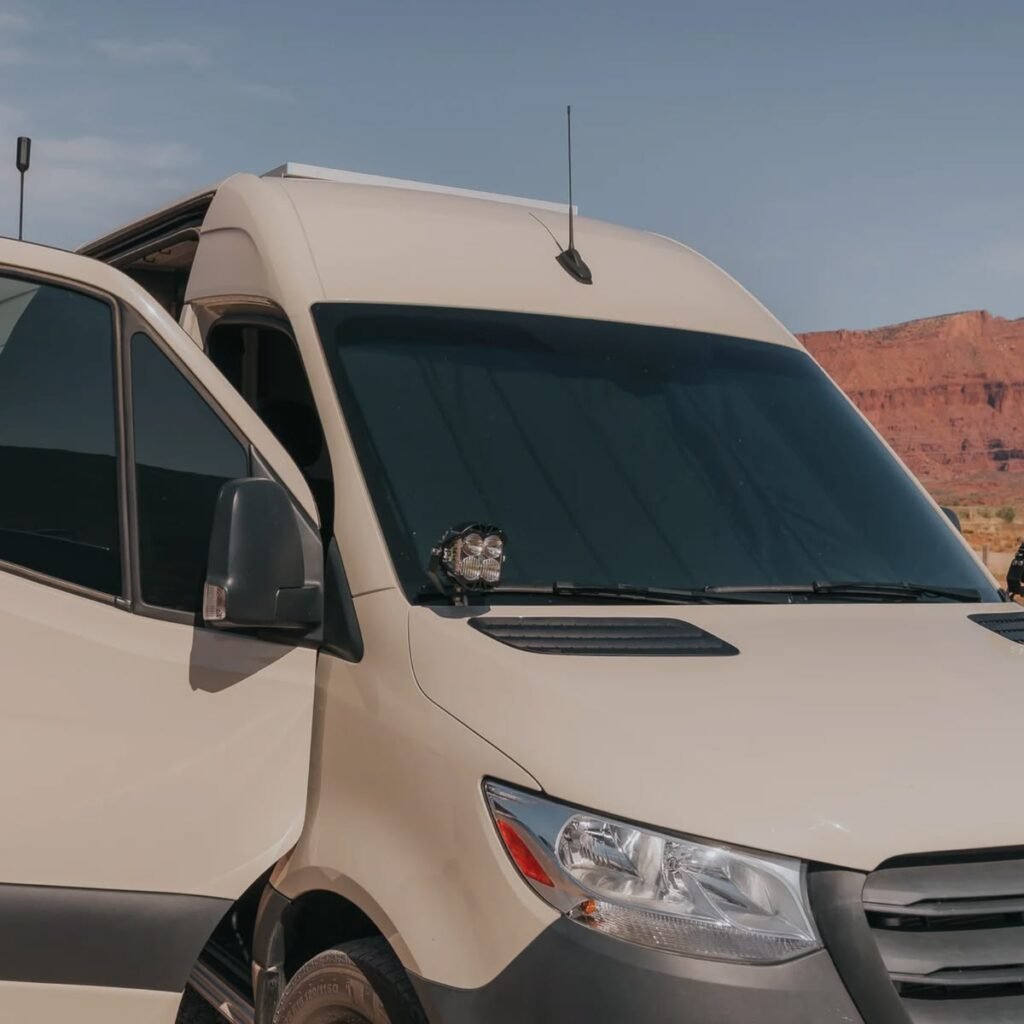
If you’re building a stealth van, a vehicle that looks like an unmodified panel van from the outside, fixed blacked-out windows in the rear are standard. For this, a polycarbonate sheet sealed behind a factory-looking black trim frame is a genuinely reasonable call. The window doesn’t open. Nobody examines the glazing quality from a car park. Spending £200 on a Seitz you’re going to cover with window tint makes no sense at all.
Short-term or seasonal builds are another case where the economics shift. If you’re converting a van for summer use or a single long trip you intend to sell after, a budget window’s lifespan may be perfectly sufficient. UV degradation of cheap polycarbonate typically shows up as yellowing and hazing after around 12 to 18 months of consistent sun exposure. Shorter timelines, and the risk profile changes.
Fixed secondary windows in low-exposure positions are also reasonable candidates. A small rear side window for light in a cargo area, never opened, never stressed. With a solid installation, a fixed seal can hold for years without issue.
But. Even in these cases, what you save on the window often gets spent back on installation materials. Budget windows typically need more sealant, more careful prep, and sometimes additional framing to compensate for thinner edges that don’t bridge an imperfect van cut as forgivingly as heavier-duty frames do. It’s worth factoring that in before you get too far into the numbers.
3. Where Budget Windows Catch You Out
This is where most of the cautionary stories originate, and they follow the same pattern consistently.
Someone installs a £45 pop-out window in a high-rain position, usually the main side windows in the living area, or a roof light. The initial install looks fine. Maybe there’s a slight drip in the first rain that gets attributed to sealant cure time and ignored. Six months later, the foam seal that arrived pre-attached to the window frame has compressed, lost elasticity, and started separating from the acrylic edge. Water finds the gap.
It doesn’t announce itself dramatically. It seeps in slowly, into the edge of the insulation panel, behind the wall lining. By the time the smell or visible damp appears, the problem is no longer just a window. It’s degraded insulation, possibly mould in the wall cavity, and a full strip-out to properly assess the damage.
The two failure points in cheap windows are almost always identical: the pre-fitted foam seal and the UV stability of the glazing.
Foam seals are cheaper to manufacture and attach at production, but they compress and lose elasticity in ways that butyl and EPDM rubber don’t. Quality windows from Seitz or Dometic use compression gasket systems designed to hold their seal through repeated opening cycles and significant temperature variation. Cheap foam is not engineered for that. It just isn’t.
UV degradation is the other issue people underestimate. Standard polycarbonate and cheap acrylic yellow within one to two years of strong sunlight. This affects more than aesthetics. The material becomes brittle, micro-cracks form at the edges and fixing points, and those cracks are where water gets in. If you’re doing full-time van living or long trips across southern Europe, the timeline compresses noticeably.
Security is worth a mention too. Thin ABS plastic frames can be pushed inward with less resistance than a properly engineered van window frame. It’s not the first consideration for most builders, but if you’re sleeping in your van regularly in unfamiliar places, it’s not nothing.
4. The Middle-Ground Option Most Builders Skip Over
Here’s what actually changed my thinking on this. And what I’ve come to see recommended consistently in the better Budget Van Journeys conversations: the second-hand premium window.
Seitz and Dometic windows come off motorhomes and caravans constantly. Breakers’ yards that specialise in motorhomes pull them from vehicles written off in accidents or broken up at the end of their working life. The windows themselves are frequently undamaged or have only cosmetic scratches on the inner panel. You can find them through eBay, through motorhome breaker classifieds, through Facebook Marketplace if you’re patient and search with the right terms.
A second-hand Seitz S6 in a standard 700x450mm dimension might cost £40 to £70. It came off a German or Dutch motorhome with UV-stabilised acrylic, an engineered compression seal, and a frame designed to flex without compromising its waterproofing. The fact that the inner flap has a faint scratch is, genuinely, irrelevant to whether it keeps your build dry.
This is the option that gives you the reliability of a premium window at something close to budget pricing. It’s harder to source than clicking buy on Amazon, and the dimensions may not match your plan exactly, which sometimes means adjusting your planned cut position. But for the main living-area windows, the ones that open every day and need to seal reliably in heavy rain, it’s worth the extra legwork.
If you’re building from scratch and working through a setup plan, factoring this approach in early saves a lot of re-calculating later on.
Where People Go Wrong With This Decision
The pattern that comes up most often is the sunk cost problem.
Someone buys a £40 window, then adds £12 of butyl tape, £8 of lap sealant, a new jigsaw blade, and a full weekend’s work. The total investment is now £70 and two days. Then it leaks.
At that point, removing it means losing the sealant work, potentially marking the van body if anything was over-tightened, and starting from scratch. People often don’t remove it. They apply more sealant over the top, which is not a permanent fix, and six months later the same cycle starts again. By the third round of remedial sealant, the window frame looks terrible and the underlying issue still hasn’t been addressed.
The second common error is buying without checking dimensions against actual van window openings. Budget windows frequently come in caravan-specific sizes that don’t map cleanly onto common panel vans like the Ford Transit, Mercedes Sprinter, or Renault Relay. Cutting an irregular hole to accommodate a non-standard window creates a much harder sealing job than starting with a properly matched dimension.
And there’s quality variance within the cheap category that people don’t account for. Not every £40 Amazon window is the same product. Some sellers source reasonably decent materials. Others send windows with visible seal gaps straight out of the box. Read reviews specifically for waterproofing performance after installation, not just for delivery speed and cosmetic finish.
FAQs
Can I use regular double glazing from a house in a van conversion? Standard double-glazed units are too heavy and not built for the flex and vibration of a moving vehicle. The sealed air gap in conventional double glazing also fails under constant movement, causing condensation to form between the panes over time. Purpose-made van or caravan windows are the right approach, even if that means a more affordable option within that category.
How much should I budget for van windows total, including installation? The window itself can run from £30 to £300 or more depending on type. DIY installation materials, butyl tape, lap sealant, fixings, cutting tools, typically add £20 to £50 per window to the job. If you’re having windows fitted professionally by a van conversion specialist, labour can add £80 to £150 per window on top of the window cost itself, so it’s worth getting a quote before you decide whether to DIY.
What size window fits a standard Sprinter or Transit without major modification? 700x450mm is one of the more common sizes that fits the rear side panels of a Mercedes Sprinter without requiring a complicated cut. For the Ford Transit, sizing varies more noticeably between short, medium, and long wheelbase variants. Always measure your specific van and mark out the intended position before ordering anything. Cutting the opening is the point of no return, and a slightly undersized window is a much bigger problem than a slightly delayed delivery.
Are pop-out windows better than sliding windows for budget van builds? Pop-outs, where the pane hinges outward from the top or bottom, are the most common choice and for good reason. They’re simpler to seal around a fixed frame, lighter overall, and the installation is more forgiving for first-timers. Sliding windows offer wider ventilation but have more moving parts, more potential leak points, and consistently cost more. For anyone building on a budget, pop-out wins on almost every count.
How do I prevent condensation on van windows? Condensation is primarily a ventilation issue rather than a window material issue. A fixed window won’t help because you need actual airflow to reduce moisture levels inside the van. Even a small opening window running overnight alongside a roof vent fan makes a bigger practical difference than any glazing choice. Insulating properly around the window frame, so there’s no cold bridge at the edges where warm air meets cold metal, also reduces the worst of the pooling condensation along the bottom of the glass.
The cheap window question doesn’t have one answer. For fixed non-opening windows in secondary positions, budget options are often perfectly serviceable, particularly with solid installation. For opening windows in the main living area, the real value is in hunting down second-hand premium over buying new cheap, because the reliability gap is significant and the cost difference, when you factor in likely remedial work, frequently isn’t.
Budget Van Journeys isn’t about spending the minimum everywhere. It’s about knowing which corners don’t cost you anything to cut, and which ones cost you twice.