
The first flexible panel I ever bolted to a roof lasted about eighteen months before the output started dropping for no obvious reason. I checked the wiring, checked the controller, checked everything I could think of. Turned out the laminate underneath had started delaminating from heat cycling, something nobody mentioned when I bought it on sale. That panel taught me more about solar than any spec sheet ever has, mostly because it forced me to actually understand why panels fail instead of just trusting the box.
A lot has changed since then, and some of it is worth paying attention to if you’re planning a build this year.
1. What’s Actually Changed in Van Solar This Year
The headline shift is efficiency, and specifically how close flexible panels have gotten to rigid ones. For a long time the rule of thumb was simple: rigid panels for power, flexible for convenience, and you’d pay for that convenience in lost watts. That gap has narrowed a lot. Newer flexible panels using N-type TOPCon cells are now landing in the mid-20s for efficiency, which puts them close to premium rigid monocrystalline panels rather than several points behind.
CIGS thin-film panels are still the most bendable option on the market, wrapping around tighter curves than anything else. They trade some raw efficiency for that flexibility and for noticeably better performance in shade and high heat, which matters more than people think once a panel has been baking on a van roof in July for six hours straight. Bifacial panels are also showing up more in van builds now, picking up some reflected light off white roofs or snow, though the gain is modest unless your install genuinely allows light underneath the panel.
None of this means you need to rip off a perfectly working system and chase the newest cell type. It does mean that if you’re starting from scratch this year, the old “flexible means weaker” assumption deserves a second look.
2. Rigid or Flexible: The Real Tradeoff
This is still the first real decision most people get stuck on, and honestly it should be. Get it wrong and you’re either re-doing the install or living with output you didn’t plan for.
| Rigid Monocrystalline | Flexible Monocrystalline | CIGS Thin-Film | |
|---|---|---|---|
| Typical efficiency | 22-23% | 18-25% | 15-18% |
| Lifespan | 25-30 years | 5-10 years | varies widely |
| Weight | Heavy, needs mounts | Light, low-profile | Lightest, very bendable |
| Heat performance | Drops output as it gets hot | Moderate | Best in heat |
| Best for | Flat roofs, max output | Curved roofs, stealth builds | Tight curves, partial shade |
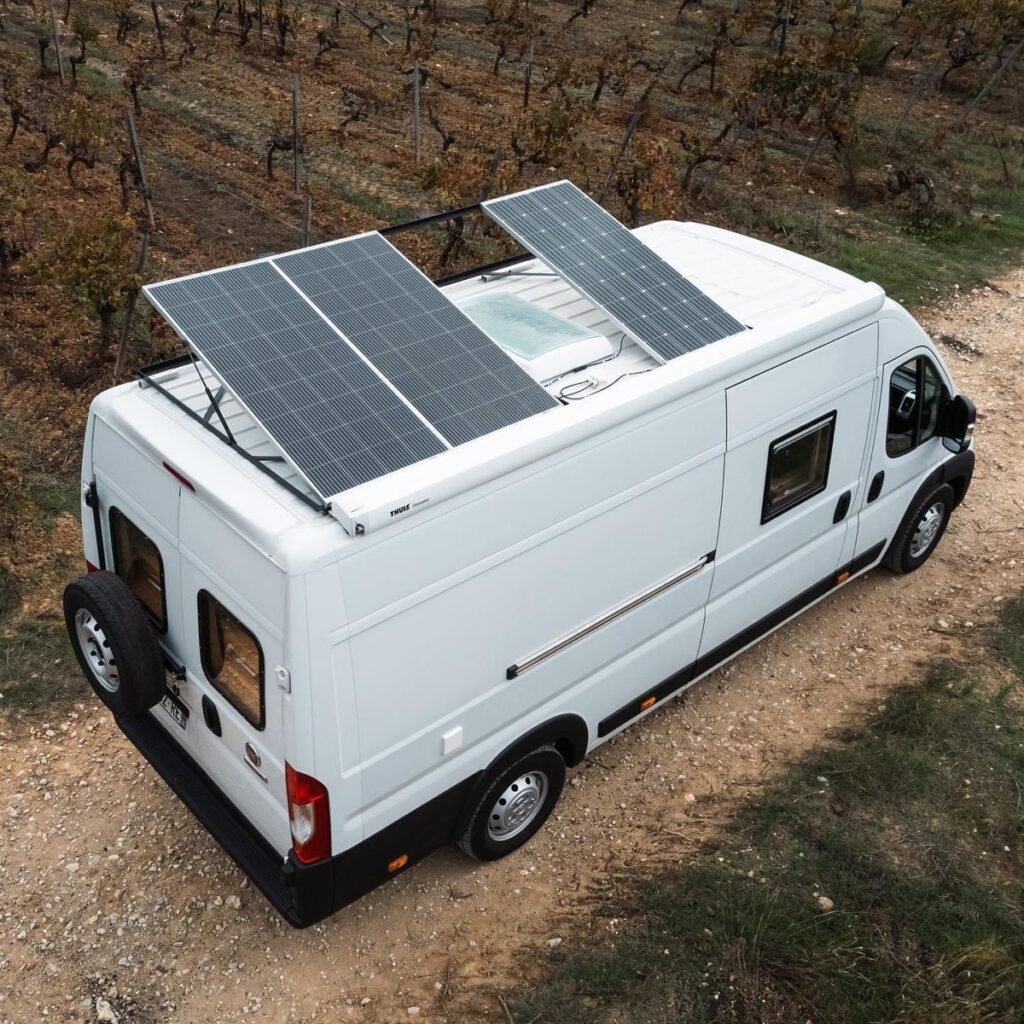
Rigid panels are still the safer long-term bet if your roof is flat enough to take them, mostly because the glass and aluminum frame just hold up better over years of vibration and weather. Flexible panels solve a real problem on curved Sprinter and Transit roofs where a rigid frame simply won’t sit flush, but you’re trading some lifespan for that fit. And that tradeoff is fine, as long as you go in knowing it rather than assuming a flexible panel will behave like a rigid one with a different shape.
If you’re still deciding between the two for your specific roofline, our van solar setup guide for 2026 walks through measuring roof curvature before you buy anything, which saves a lot of return shipping.
3. Sizing Your System Without Overbuying
Most full-time van lifers land somewhere between 400 and 600 watts of solar, and that’s a wider range than it sounds because it depends entirely on what you’re running. Someone working off a laptop and charging a phone needs a fraction of what someone running a compressor fridge, induction cooktop, and a CPAP machine needs overnight.
A rough way to think about it: add up your daily watt-hour usage, divide by your realistic average sun hours (often 3 to 5, not the 6+ hours marketing copy assumes), and that gives you a panel size that should keep pace on a decent day. Cloudy stretches will still eat into your battery reserve, which is exactly why pairing solar with alternator charging matters so much now. Your engine is producing far more power than your panels ever will, and a DC-DC charger lets you capture some of that every time you drive instead of leaving it on the table.
We go deeper into this math, with real numbers from actual builds, in our DIY van solar setup for under $300 total breakdown.
4. Where People Usually Mess This Up
The mistake I see most often, and the one I made myself, is buying the panel first and figuring out the rest of the system later. Panel choice should come after you know your battery chemistry, your charge controller capacity, and roughly how much roof space you actually have once vents and fans are accounted for.
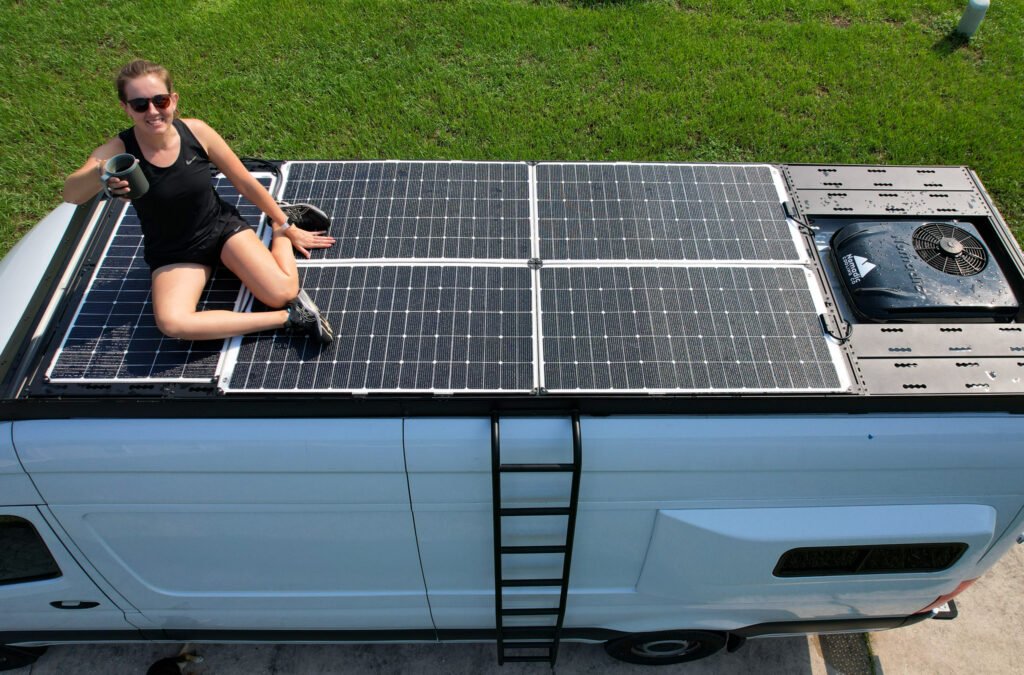
A few specific things trip people up consistently. Wiring panels in series when they face different directions or get shaded differently drags the whole array down to whatever the weakest panel is producing, so parallel wiring is usually the better call unless every panel sees identical sun. Skipping a proper MPPT controller in favor of a cheap PWM unit also quietly throws away a meaningful chunk of your panel’s output as heat, which on a system you’ve spent real money on just doesn’t make sense. And mounting flexible panels flush against the roof without any air gap traps heat underneath them, which is exactly the kind of thing that shortens their already shorter lifespan.
None of these are exotic mistakes. They’re just easy to make when you’re tired, it’s hot, and you want the install finished.
5. Pairing Panels With the Right Controller and Battery
The panel gets the attention but the controller and battery decide how much of that panel’s output you actually get to use. An MPPT controller sized to your array, not your battery, is the standard now, and it’s not really optional anymore the way it might have been a decade ago. Lithium batteries, specifically LiFePO4, have become the default for good reason. They handle deeper discharge without damage, last several thousand cycles, and don’t lose nearly as much usable capacity in cold weather as older chemistries did.
If electrical systems still feel like the part of van building that makes your eyes glaze over, that’s normal. Our van electrical systems for beginners piece breaks the whole chain down, panel to controller to battery to inverter, without assuming you already know what an MPPT does.
One thing worth saying plainly: bigger isn’t automatically better here. We’ve talked to plenty of people who maxed out their roof with 800 watts of solar and then ran a battery bank that couldn’t store half of what the panels produced on a sunny day. That’s money spent on capacity you can never use, and it’s one of the more common ways Budget Van Journeys readers tell us they overspent on a build.
Solar setups don’t need to be complicated, but they do need to be sized to each other. A panel is only as useful as the system it’s feeding into.
FAQs
Do I need 400W or 600W for full-time van life? It depends on your appliances more than your travel style. If you’re running a compressor fridge, charging laptops, and occasionally using a small inverter for kitchen tools, 600W with a decent battery bank is a safer baseline. Lighter users with mostly phone and laptop charging can often get by on 300-400W.
Are flexible panels actually worth it on a curved roof? Yes, if your roof genuinely won’t accept a rigid frame without major mounting work. The shorter lifespan is real, but for many curved Sprinter or Transit roofs, flexible panels are the only practical option without building a custom rack.
Can solar alone run an induction cooktop or AC? Realistically, no, not as a primary power source. Those appliances draw far more than a typical 400-600W array can sustain, and you’d need a battery bank and inverter sized well beyond what most budget builds carry. Most people who run high-draw appliances lean on alternator charging or shore power to top up alongside solar.
Do I really need an MPPT controller instead of PWM? For any system over roughly 200W, yes. PWM controllers waste a meaningful percentage of your panel’s output as heat, and on a system where you’ve already paid for the panels and battery, that wasted output adds up fast.
How long do flexible panels actually last on a van? Most flexible panels hold up for 5 to 10 years in real-world van use, shorter than the 25-30 years you’d expect from rigid panels, mostly due to heat buildup and gradual delamination of the laminate layer. Leaving a small air gap under the panel during install can meaningfully extend that.
A build that gets the sizing right the first time tends to be the one people are still happy with three years later, and that’s really the whole goal. If you’re working out the rest of the budget around your solar setup, our guide on why most first-time van builders overspend is worth a read before you start ordering parts.