
The first summer I spent living in the van, I parked facing east without thinking twice about it, in a gravel pullout outside Moab. By six in the morning the inside of my old Transit had hit ninety degrees with the windows cracked an inch. I woke up because I couldn’t breathe right, not because of an alarm. That was the morning I stopped treating summer heat like a minor inconvenience and started treating it like the thing that would actually decide whether van life worked for me.
A lot of people prepare for winter. Fewer people prepare for July. That’s backwards, because heat in a metal box is its own kind of problem, and it sneaks up faster than you’d expect.
1. Why a Van Heats Up Faster Than Your Old Apartment
A van is basically a metal can with windows. The surface area to interior volume ratio is brutal compared to a house or even a tent, so the same sun that takes hours to warm a room can turn a parked van into an oven in under thirty minutes. Dark exterior paint makes it worse. Windows make it worse again, since glass lets sunlight in and then traps the heat that bounces back, the same greenhouse effect that makes a parked car dangerous for pets and kids.
Here’s where a lot of new vanlifers go wrong: they assume insulation is a winter purchase. It’s not. Good insulation slows heat transfer in both directions, and a van with bare metal walls in August is just as miserable as one with no insulation in January. If you skipped insulation thinking you’d “deal with summer separately,” you didn’t actually save yourself a step, you just moved the problem to a different season. There’s a longer breakdown of what actually works for van insulation if you’re still in the build phase, and it’s worth reading before you buy anything.
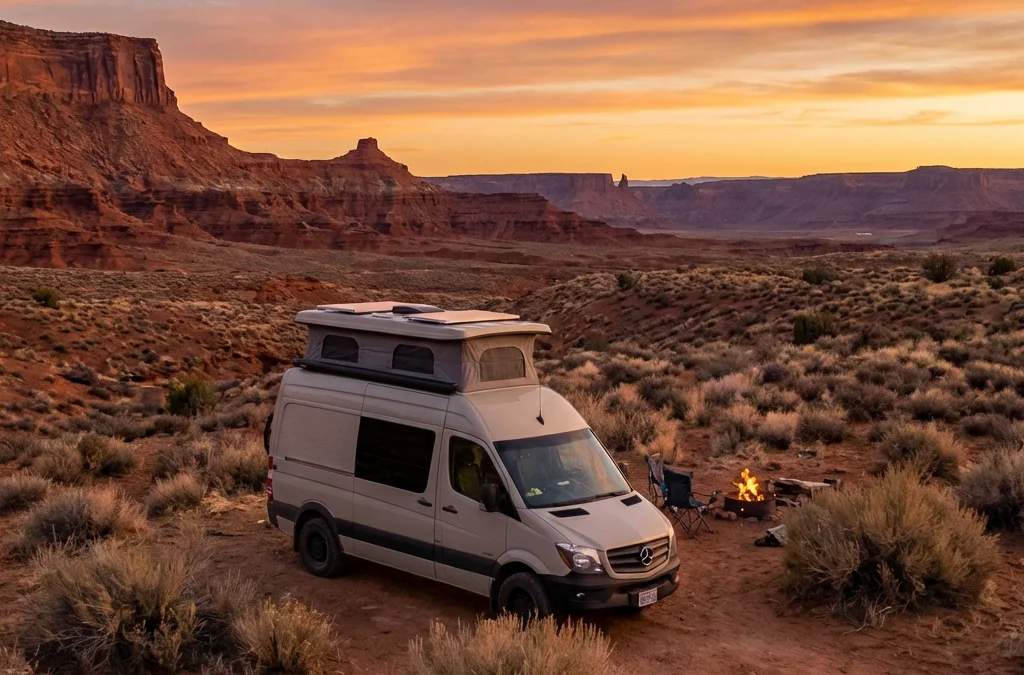
2. Stop the Heat Before It Gets In
The cheapest, most effective summer upgrade I made wasn’t a fan. It was Reflectix cut to fit every window, foil side facing inward. It’s ugly. It also drops the interior temperature by a noticeable amount within the first hour of sun exposure, and it costs less than a tank of gas.
A few things that actually move the needle, roughly in order of effort versus payoff:
- Reflective window covers on every window, not just the windshield
- An external sunshade or awning if your build allows for one, since blocking heat before it touches the glass beats blocking it after
- Parking with the side that has the most glass facing away from direct afternoon sun
- Light-colored vinyl wrap or paint if you’re doing a full exterior refresh, since dark vans run noticeably hotter
If you’re still deciding what to put on your windows long-term, there’s a practical comparison of which van window upgrades are worth installing that goes into more detail than I have room for here.
3. Move the Air or You’re Just Sitting in a Greenhouse
Insulation and window covers slow heat down. They don’t get rid of it. You need airflow, and this is the part people underestimate the most.
A roof vent fan, the kind that pulls air up and out, does more work than people expect from something the size of a dinner plate. Run it on low overnight with a window cracked on the opposite side of the van and you get real cross-ventilation, not just one corner of the van feeling slightly less awful. Cheaper 12V clip fans help too, but they move air around rather than out, which matters less for cooling and more for not feeling like you’re breathing your own exhaled air all night.
And this is the part nobody tells you. A fan running constantly draws more power than most people budget for, especially if you’re trying to sleep through a hot night and a hot week back to back. If your electrical setup is still bare bones, it might be worth looking at a basic DIY solar setup built for under three hundred dollars before you’re stuck choosing between a charged phone and a working fan at two in the morning.
4. Cooling Without Burning Through Your Battery
Real air conditioning in a budget van build is rare, and honestly, most small AC units draw more power than a basic solar and battery setup can realistically support without a generator running constantly, which kind of defeats the point of van life in the first place. So the question isn’t “how do I get AC,” it’s “what actually brings the temperature down enough to function.”
A rough guide, based on what’s worked for me and for a handful of other Budget Van Journeys readers who’ve messaged me about this exact problem:
| Outside Temp | What Actually Works |
|---|---|
| 75 to 85°F | Cross-ventilation, light window covers, parking in partial shade |
| 85 to 95°F | Roof fan running steadily, full reflective coverage, shade is non-negotiable |
| 95 to 105°F | Fan plus a small evaporative cooler, ice packs at night, minimal cooking inside |
| 105°F and up | Relocate if you can, limit daytime hours inside the van, wet towel over the fan intake |
Evaporative coolers, sometimes called swamp coolers, work better than you’d expect in dry climates and barely at all in humid ones, so know your region before you spend money on one. Frozen water bottles or ice packs placed near a fan at night are a low-tech trick that genuinely helps you fall asleep, even if it sounds too simple to work.
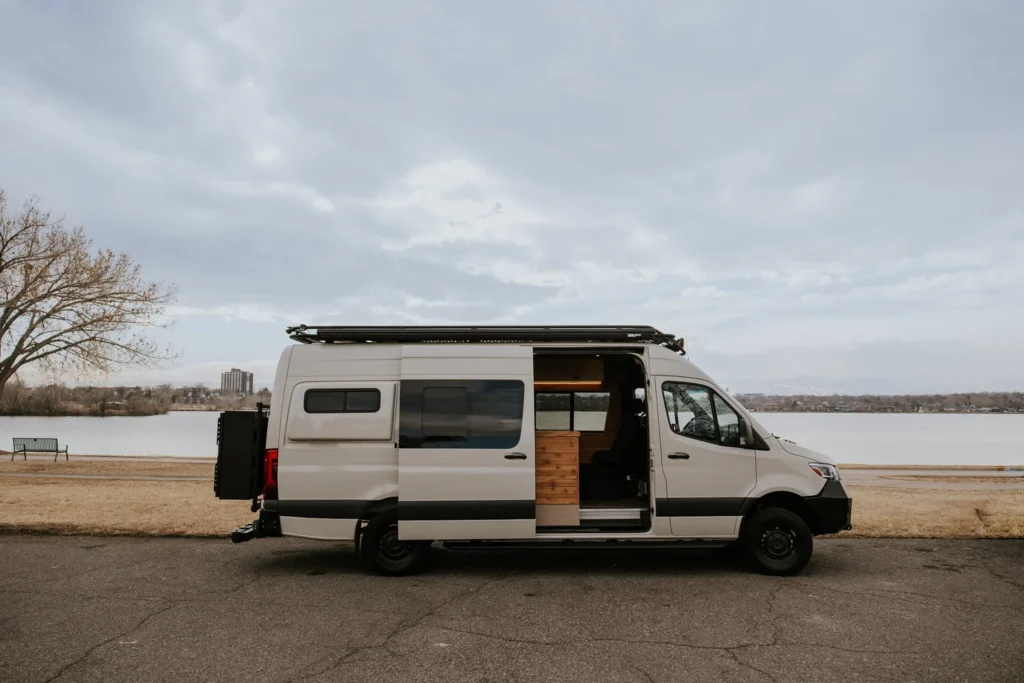
5. Where You Park Still Matters More Than Gear
You can have the best insulation and a brand new fan and still have a miserable night if you park in full sun on asphalt. Pavement holds heat and radiates it back up at night, which is why a gravel lot or a spot under real tree cover beats a paved pullout almost every time, even at the same air temperature.
A few habits that have saved me more nights than any piece of gear has:
- Look for shade that’ll still be there in the evening, not just shade right now, since the sun moves and your morning shade spot might be a furnace by 4pm
- Elevation helps. A few hundred feet up a mountain road can mean a ten degree difference
- Spots near water, even a creek or a lake, tend to run cooler overnight
- Check what’s nearby before you commit to a spot for the whole day, since backing out at 2pm to find shade is its own kind of miserable
If you’re not already using one of the apps that show shaded, vetted overnight spots, the rundown of free overnight parking apps that actually work is a good place to start before your next hot-weather trip.
Where People Usually Get This Wrong
A pattern I see a lot, especially from people who built their van over a single winter and never tested it in real heat: they go all in on blackout curtains and call it done. Blackout fabric blocks light, sure, but it also blocks airflow, and if you’ve sealed every window with thick curtains and no ventilation plan, you’ve built a box that traps both heat and humidity. That’s how condensation and mildew problems start, not just discomfort. Blocking the sun and moving the air have to happen together. One without the other just trades one problem for a different one.
By my third summer I’d stopped thinking about heat as something to survive and started treating it as something to plan around, the same way you’d plan around weather on any trip. Some nights are still rough. That part doesn’t fully go away, no matter how good your setup is. But the difference between a miserable July and a manageable one usually comes down to three or four habits, not a single expensive purchase.
FAQs
Do reflective window covers actually make a noticeable difference, or is that overstated? They make a real difference, often more than people expect from something so cheap. Reflectix or a similar reflective material blocks radiant heat before it builds up inside, which matters more than trying to cool the air after it’s already hot.
Is one roof fan enough for a hot summer, or do I need something more? A good roof fan handles most nights below the mid-90s if you’ve also got window coverage and some shade. Once daytime highs push past that, you’ll likely need to add an evaporative cooler or change your parking strategy, since a fan alone can’t outpace extreme heat.
What’s the cheapest way to cool a van down with no extra power available? Reflective window covers, parking in shade, and ice packs or frozen water bottles placed near airflow at night. None of it needs electricity, and together it can take the edge off even on a rough day.
Does where I park really matter that much, or is it mostly about gear? Parking matters more than most people assume. A shaded gravel spot can run noticeably cooler overnight than a sunny paved one at the exact same air temperature, regardless of how good your insulation is.
Can humidity make van heat worse even if the temperature reading isn’t that high? Yes, and this catches people off guard. High humidity makes it harder for sweat to evaporate, so a humid 88 degrees can feel worse than a dry 95. Evaporative coolers also work far less well in humid conditions, so check your local humidity before relying on one.
If you’re trying to figure out how all of this fits into a realistic monthly budget alongside everything else van life costs, the breakdown of real van life monthly costs for 2026 lays out where summer-specific expenses tend to land.