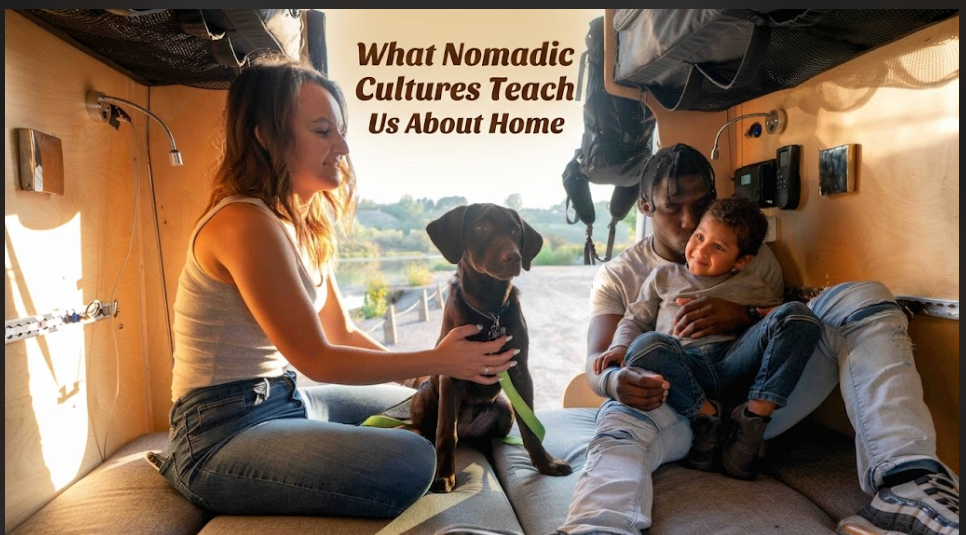
Sello had grown up moving with his family’s cattle across the Botswana flats, spending entire seasons in places that didn’t appear on any map he’d ever seen. By the time I met him near the Okavango Delta, he’d lived in more locations than I’d visited countries. When I asked him once, very naively, whether that kind of childhood felt unsettled, he looked at me with the polite confusion of someone explaining something simple to a person who really should know better.
“Unsettled is when you don’t know where you belong,” he said. “I always knew where I belonged.”
I’ve thought about that exchange a lot since. It quietly dismantled something I’d never realised I’d assumed: that home is a place. A fixed point. A return address.
1. The Assumption Most of Us Never Examine
Western culture has spent centuries building an architecture of permanence. Property ownership as security. Mortgages as milestones. A postal address as a form of identity. The idea that moving frequently is either a privilege of the young, a symptom of instability, or a temporary adventure before real life resumes. This framing is so embedded it becomes almost invisible, and it shapes the way many people approach van life too.
A lot of people who choose to live in a van talk about “freedom from home” rather than a different relationship to it. The van becomes a vehicle for escape, literally and figuratively, rather than a reimagining of what home actually is. And that’s where nomadic cultures have something specific to offer. Not as a romantic ideal to borrow from, but as a genuinely different working model that’s been tested against real conditions for generations.
The San people of the Kalahari, who have been hunter-gatherers across what is now Botswana and Namibia for tens of thousands of years, didn’t own land. They knew it. There’s a distinction that sounds philosophical until you sit with it. Ownership implies the land is subordinate to you. Knowing implies you’re in relationship with it. The knowledge of where water would be in February, which plants would fruit after a dry season, where the gemsbok gathered at dusk, this wasn’t just survival information. It was the texture of being home.
Budget Van Journeys covers a lot of practical ground: the builds, the budgets, the parking strategies. But occasionally the more interesting question is what we’re actually building toward.
2. What Nomadic Cultures Actually Carry
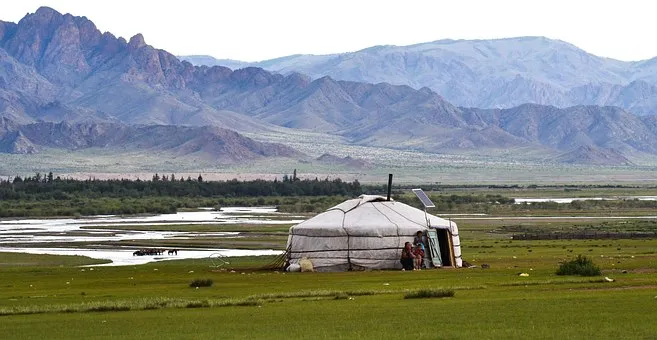
Mongolian nomads have lived in gers, circular felt structures supported by a collapsible lattice frame, for over a thousand years. A ger can be disassembled in roughly an hour and rebuilt at a new site in around the same time. What’s remarkable isn’t the portability. It’s the consistency. Every ger follows the same internal orientation: the door faces south, the hearth sits at the centre, the sacred space is to the north, men’s belongings to the west, women’s to the east. Wherever you are in Mongolia, you know exactly where you are inside any ger because the geometry of home travels with you.
This is what often gets missed in conversations about nomadic life. It isn’t rootlessness. It’s a different kind of root system. The roots are in practice, in ritual, in the relationships between people and between people and the land, not in a particular set of coordinates.
Bedouin hospitality traditions in North Africa and the Middle East operate on a similar logic. The obligation to welcome a stranger for three days without question, to offer food and shelter regardless of your own resources, is often described as a cultural rule. But it’s also a form of distributed home-making. When hospitality is universal and reciprocal, every place you stop is somewhere you’ll be received. Home expands to cover the entire territory your community moves through.
One gap I notice in a lot of van life writing, including on Budget Van Journeys where the focus is often rightly on the practical and financial, is the almost complete absence of thinking about community. Van life is frequently framed as an individual or couple achievement. Nomadic cultures almost without exception were community-organised. The individual or family didn’t travel alone into an indifferent world. They moved within a network of reciprocal relationships that made the movement sustainable and human over long periods.
3. Where Van Life Gets It Right, and Where It Defaults Back
It’s worth naming honestly where these two models overlap and where they pull apart. In plain terms:
What translates well from nomadic tradition to modern van life:
- The reduction of possessions to what genuinely earns its place. Nomadic peoples carried nothing that didn’t serve multiple purposes. A Mongolian del, the traditional coat, functions as day clothing, a sleeping blanket, and a carry bag. This principle sits naturally within van life when people commit to it rather than treating it as a temporary phase before they buy more stuff.
- The willingness to accept uncertainty about future location as a feature rather than a problem to solve. Nomadic communities planned seasonally, not annually, and the plan was always provisional.
- Movement as orientation rather than escape. For nomadic peoples, the route was the relationship to place. The moving was the knowing. Van life, at its best, can work this way. At its worst, it’s just changing the background.
Where van life tends to drift back toward Western defaults:
- Community is opt-in rather than structural. Nomadic societies built mutual support into the fabric of movement. In modern van life, community requires deliberate effort and most people don’t prioritise it until they start feeling the absence.
- Stability is sought through the vehicle itself, the better build, the upgraded gear, rather than through consistent practice and relationship.
- Movement follows work schedules and wifi availability rather than any ecological or seasonal logic. Thru-hikers often develop a seasonal rhythm that van lifers rarely do. The what thru-hikers know about living with less piece explores this gap in useful detail.
4. The Things Worth Actually Borrowing
There’s a version of this conversation that slides into something uncomfortable, and I want to acknowledge it before moving past it. Drawing lessons from nomadic cultures is not the same as aesthetically adopting them. Hanging a Mongolian-style textile in your van or calling your lifestyle “nomadic” doesn’t connect you to the intellectual and practical inheritance behind those words. The value isn’t in the label. It’s in the specific principles, understood in their own context first.
The idea that ritual creates place is one that translates cleanly. The Mongolian ger’s consistent internal geometry isn’t decorative. It means the arrangement of your life is identical regardless of where you park, and this sameness provides orientation when everything else changes. Many people who struggle emotionally with long-term van life describe waking up disoriented, needing a moment to remember where they are and why they’re there. Building a consistent daily structure, the same morning sequence, a fixed arrangement of the workspace, a reliable wind-down routine each evening, functions as a portable geography. You orient to your own practice rather than to a particular place. And the effect on feeling settled is surprisingly quick to develop.
The multi-use possessions principle is one nomadic cultures developed from necessity over centuries. The van storage ideas for small spaces guide addresses the mechanics, but the underlying principle predates van life by millennia: every object you carry is a daily decision about what earns its weight. Nomadic peoples didn’t keep things out of sentiment or habit. Sentimentality was a luxury the load didn’t permit.
And the community piece, harder to manufacture within a culture that doesn’t structure it, is probably the most valuable lesson of all. Building it deliberately, finding recurring spots where you encounter the same people, showing up for others before they need it, making hospitality something you offer rather than wait for, that’s the closest modern van life gets to what made nomadic mobility genuinely sustainable across generations rather than just a season or two.
5. What Shifts When You Stop Treating Home as a Location
The mistake I notice most often in how people set up their van lives isn’t about gear choice or route planning. It’s about the underlying frame.
People who treat van life as an escape tend to feel the absence of what they left behind. People who treat it as a different relationship to home, one that requires different practices to sustain, tend to feel something else. Not necessarily easier. But different in a way that compounds positively over time rather than wearing thin.
Nomadic cultures didn’t opt out of having a home. They built one that moved with them, carried in their practices, their relationships, and their accumulated knowledge of the places they returned to each season. The Bedouin didn’t feel homeless crossing the Sahara. They felt at home in the crossing itself. The Mongolian herder didn’t feel displaced moving to winter pasture. The move was part of the shape of home.
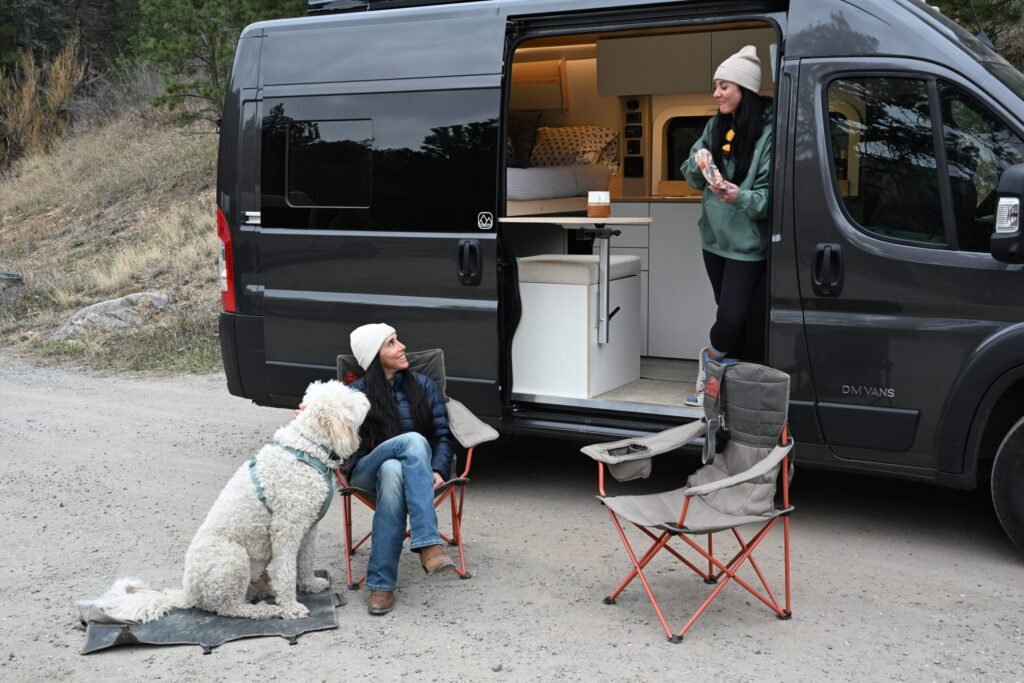
For anyone thinking through this practically, the question shifts. Not “how do I make my van feel more like a home” but “what practices and relationships constitute home for me, and how do I build those portably.” It’s a harder question but a more useful one. It points toward different decisions: investing more in recurring relationships and familiar places than in constant new destinations, building daily structure rather than total spontaneity, and thinking seriously about what your community is and how you tend it over time rather than assuming it will take care of itself.
The Budget Van Journeys van life versus renting comparison deals with the financial and practical trade-offs clearly. But the less discussed comparison is this one: not van versus house, but Western-fixed-home versus portable-home as a practice. Nomadic cultures ran that second model for thousands of years, in conditions considerably harder than anything a modern van lifer will face, and mostly they ran it very well.
There’s something genuinely worth learning in that.
FAQs
Did nomadic cultures struggle with the kind of loneliness some van lifers report?
Traditional nomadic structures were communal by design, which acted as a natural buffer against isolation. Extended family groups moved together, hospitality networks connected different communities, and long-distance solo travel was the exception rather than any kind of norm. Modern van life replicates the mobility without the community infrastructure, which is why loneliness comes up so consistently in van life communities online. It’s a structural gap in the model, not an inevitable feature of the mobile life itself.
Is describing van life as “nomadic” an oversimplification?
Yes, fairly bluntly. Van life shares the characteristic of movement with nomadic traditions but diverges on almost everything else: the communal organisation, the ecological knowledge built and passed down over generations, the cultural continuity, the reciprocal hospitality obligations. Using “nomadic” to describe van life is mostly a self-perception and marketing frame. That doesn’t make van life less valid, but the word carries considerably more weight than most people using it intend.
What’s one thing from nomadic tradition that van lifers can actually use immediately?
Ritual as orientation. Nomadic peoples created consistent internal arrangements wherever they stopped, which provided psychological grounding regardless of physical location. For van lifers, this means a fixed morning sequence, the same spatial arrangement of belongings each time you park up, familiarity built through practice rather than through a familiar address. It sounds minor. The effect on feeling settled is real and faster-developing than most people expect.
How did nomadic peoples maintain community while constantly moving?
Through seasonal patterns and predictable routes. Mongolian nomads returned to the same general areas at the same times each year, creating regular overlap with extended family and allied groups. Bedouin networks built relationships across distance through hospitality obligations that worked in both directions. The community was embedded in the route itself, not stored at a fixed location. The movement was socially structured, not random, and that social structure was the whole point.
Is it realistic to build genuine community into a fully mobile van life?
It requires more deliberate effort than building community from a fixed address, but it’s entirely achievable. Finding recurring spots where you’ll encounter the same travelling community, showing up consistently, being the person who initiates hospitality rather than waiting for inclusion: these are the mechanisms. It helps to treat community as something you actively build and maintain rather than something you fall into. If the financial foundation of staying mobile long-term is the part that needs working out first, the full-time van life cost breakdown is a practical starting point.