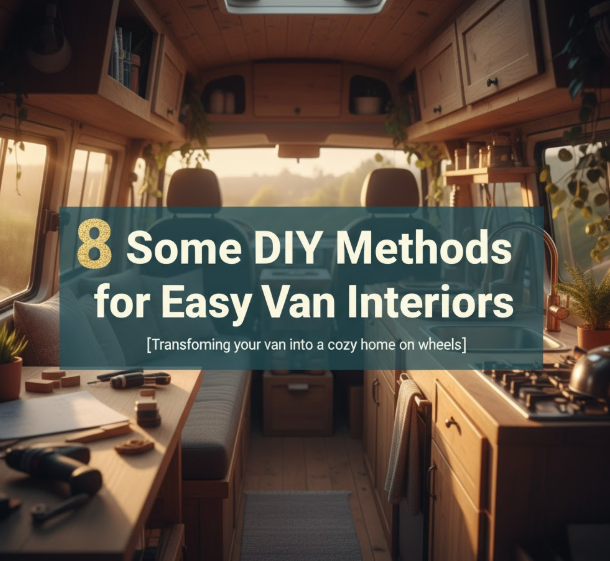
Convert Your Van Into a House on Wheels Without Spending $200,000
You bought a cargo van. Now you’re looking at empty metal walls and a bare floor.
Turning it into a liveable space feels expensive and daunting. You might have even noticed those sweet, fully outfitted van builds on Instagram with a $30K budget and pro-level carpentry skills.
Let me tell you the truth: A comfortable van interior does not require thousands of dollars or expert skills.
The vast majority of van conversions burn cash on overly complex builds that take months to finish. The smart approach keeps solutions simple, low-cost and instantly effective.
This guide teaches you seven quick DIY hacks that will change your van on a budget. All methods use common tools and materials that can be found at hardware stores. No welding. No advanced woodworking. Only simple solutions that really work.
You’ll have a working van interior in weeks, not months. And you’ll pay hundreds, not thousands.
Let’s build something amazing.
1. Insulation on a Shoestring Budget
Why Insulation Comes First
Get your van properly insulated before you build anything.
Metal walls are temperature conductors like you wouldn’t believe. Summer makes your van an oven. Winter makes it a freezer.
Great insulation keeps you comfortable, no matter what the temperature outside is; it also minimizes condensation that leads to rust and mold.
The Reflectix and Foam Board Duo
Skip expensive spray foam insulation. Use this budget-friendly method instead.
Materials needed:
- Reflectix radiant barrier ($50-70/roll)
- 1-inch foam board sheets ($15-20/piece)
- Spray adhesive ($8 per can)
- Aluminum foil tape ($6 per roll)
Installation steps:
Start with the ceiling. Cut Reflectix to fit between the metal ribs. Make sure the back of it is covered in spray adhesive, and press down firmly into place.
Add foam board over the Reflectix for added R-value. Cut pieces so they fit tightly between ribs.
Use aluminum foil tape to seal all seams. Air gaps kill insulation performance.
Do the same on walls and floor.
Where You Can Skip Insulation
Don’t waste effort insulating places you’ll eventually install cabinets or permanent features.
Leave the bottom 6 inches of walls bare where your floor will go.
Door panels are complex and usually not worth the hassle. Get the big flat areas out of the way first.
Insulation Cost Breakdown
| Material | Coverage Area | Cost | R-Value |
|---|---|---|---|
| Reflectix only | 150 sq ft | $60 | R-3.7 |
| Foam board (1″ thick) | 32 sq ft per sheet | $18 | R-5 |
| Spray foam (professional install) | 150 sq ft | $800-$1200 | R-6 to R-7 |
| Our combo method | 150 sq ft | $200-$250 | R-8 to R-9 |
It costs one-quarter as much and provides better insulation than spray foam.
The Condensation Fix
Insulation creates a vapor barrier. That’s good for temperature but can trap moisture.
A few vents, on the small side, should be placed close to both the ceiling and the floor. Roof vents or cracked windows do the trick just fine.
Use moisture-absorbing bags in storage spaces. In humid seasons, change them out monthly.
2. Luxury Vinyl Plank Flooring That Can Be Installed in Hours
Why LVP Beats Everything Else
Forget installing carpet that gets dirty and smells. Avoid pricey hardwood that warps with moisture.
Luxury vinyl plank (LVP) flooring is the van life secret weapon.
It’s waterproof, durable, attractive and installs without glue or nails. Click-lock systems are so easy to install that a kid could do it.
Choosing the Right LVP
Purchase commercial-level, waterproof LVP. It costs a bit more, but can withstand van life abuse.
Look for 4-5mm thick planks. Thinner material reveals every blemish on the floor.
Use neutral colors such as gray or light wood tones. They conceal dirt and complement any style of interior.
The Underlayment Secret
NEVER install LVP or laminate directly on bare metal. You need a level, smooth surface.
Your subfloor should be 1/4-inch plywood. Screw it to metal floor ribs every 12 inches.
Place cork underlayment between plywood and LVP. It helps quiet the road and adds cushioning.
Total height from floor: Less than 1 inch (everything included).
Installation in Four Easy Steps
Step 1: Measure the length and width of your floor space, multiply those two numbers to get the area (in square feet), then go ahead and order about 10% more materials than you need for cuts and mistakes.
Step 2: Let LVP acclimate in your van for 48 hours. Temperature changes affect sizing.
Step 3: Begin in the rear, and move toward the exit. Click planks together, staggering seams.
Step 4: With a utility knife and straight edge, cut the final row to width.
Done. No glue mess. No drying time. Walk on it immediately.
Flooring Cost Comparison
| Flooring Type | Material Cost (100 sq ft) | Install Time | Durability | Water Resistance |
|---|---|---|---|---|
| Carpet | $80-120 | 3 hours | Poor | Terrible |
| Laminate | $150-200 | 5 hours | Fair | Poor |
| Vinyl sheet | $100-150 | 6 hours | Good | Excellent |
| LVP (our choice) | $180-250 | 4 hours | Excellent | 100% waterproof |
LVP looks good, is durable, and has easy installation.
3. Double Your Space with Bed Platform Storage
The Most Important Van Feature
Your bed occupies a large amount of floor space. Get it to do double duty with storage beneath it.
A raised platform bed creates 20–40 cubic feet of storage space. That’s enough for all your gear, clothes and supplies.
The Simple Frame Design
Construct your platform with 2×3 lumber. It is less expensive and lighter than 2x4s.
Make a rectangle frame that matches the size of your mattress. Add cross supports every 16 inches.
Put the frame up on 18-24 inch legs. This height is a perfect fit for plastic storage bins.
Top it with 1/2-inch plywood. Done.
Tools and Materials Under $150
Shopping list:
- Eight 8-foot 2x3s ($3 each = $24)
- One 4×8 sheet 1/2″ plywood (approximately $25)
- Box of 3-inch screws ($8)
- Four 18″ metal or wooden table legs/posts ($40)
- Sandpaper ($5)
Tools needed:
- Cordless drill
- Circular saw or handsaw
- Measuring tape
- Pencil
Total expense: Roughly $102 plus tax.
Make It Even Better
Add hinges to half of the plywood top. Now, storage is accessible without moving the mattress.
Cut a ventilated hole under the mattress. This allows the bedding to breathe and prevents mold.
Install LED strip lights behind the platform. Provides decent ambient lighting at night.
Platform Storage Configuration
| Platform Height | Storage Type | Capacity | Best For |
|---|---|---|---|
| 12 inches | Shallow bins | 15 cubic ft | Shoes, small items |
| 18 inches | Standard bins | 25 cubic ft | Clothes, gear |
| 24 inches | Large bins + vertical | 40 cubic ft | Everything you own |
For a good compromise between storage and bed height, 18 inches seems to be the sweet spot for most people.
4. Magnetic Organization Strips Save Your Sanity
The Kitchen Utensil Problem
When you have zero drawer space, where do you put cooking utensils, knives and tools?
This is immediately solved using magnetic strips, which cost next to nothing.
Strategic Placement Zones
Behind the cooking area: Install a 24-inch magnetic strip for spatulas, ladles and cooking spoons.
By the bed: 12-inch strips hold keys, phone, flashlight and pocket goods.
Tool storage: Heavy-duty magnetic bars organize screwdrivers, pliers and wrenches.
Bathroom zone: A second strip for scissors, tweezers, nail clippers and grooming tools.
Installation That Won’t Damage Walls
Most magnetic strips include screws. Don’t drill unnecessary holes in your van walls.
Instead, use command strips rated for 5+ pounds. They securely hold magnetic bars and come off cleanly.
Industrial strength velcro sticks to curved van walls better than command strips.
Things That Are Excellent on Magnetic Strips
Obviously: Knives, scissors, metal utensils, tools.
Not so obvious: Spice tins with metal lids, metal makeup containers, bobby pins, magnetic organizers for charging cables.
Get creative. If it has metal then it can hang magnetically.
Magnetic Storage Investment
| Strip Length | Weight Capacity | Best Use | Cost |
|---|---|---|---|
| 12 inches | 2–3 lbs | Keys, small tools | $8–$12 |
| 18 inches | 4–6 lbs | Kitchen utensils | $12–$18 |
| 24 inches | 8-10 lbs | Knives, heavy tools | $18–$25 |
The entire van gets organized with five or six magnetic strips for 60 bucks.
5. Curtain Room Separators for Privacy and Temperature Control
The Multi-Purpose Van Curtain
In a van, curtains do more than block off windows. They create privacy, divide living zones and keep temperature in check.
Having the right curtains setup makes your van seem 50% larger—by clearly defining different areas.
The Three Essential Curtain Zones
Zone 1: Cab divider curtain – Separates driving area from living space. Keeps the heat in the rear when winter comes.
Zone 2: Side and rear window curtains – Privacy plus insulation for sleeping.
Zone 3: Curtains for closets or storage – Cover up the clutter instantly.
Inexpensive Materials
You can skip custom van curtains that cost $300-500.
Purchase blackout curtain panels at Walmart or Target. $15-25 per panel.
For thermal curtains, buy insulated cellular shades. Cut to fit your windows.
Regular fabric stores carry blackout material by the yard (8-12 bucks). If you have basic skills, sew your own.
The No-Sew Hanging Method
Don’t want to sew? Create pockets with iron-on hem tape.
Weave paracord or thin bungee cord through the pocket.
Install tiny eye hooks on your van walls or ceiling.
Stretch the paracord between hooks. No sewing or curtain rods—just perfect hanging curtains.
Curtain System Budget
| Solution | Material Cost | Install Time | Insulation Value |
|---|---|---|---|
| Custom van curtains | $300-500 | 2 hours | Good |
| Reflectix window covers | $40-60 | 1 hour | Excellent |
| Store-bought panels | $75-100 | 3 hours | Fair |
| DIY fabric + paracord | $50-80 | 4 hours | Good |
For privacy year-round, combine Reflectix covers for winter insulation with fabric curtains.
6. Wall-Mounted Folding Table to Maximize Floor Space
The Dining & Work Surface Challenge
You need a table for eating, working on the laptop and preparing food. But permanent tables are a waste of floor space.
Wall-mounted folding tables provide work space when you want it and disappear when you don’t.
Build Your Own in 30 Minutes
Materials:
- One 24×18 inch piece of plywood or butcher block ($15-20)
- Pair of folding shelf brackets ($12–$18/pair)
- Four screws to attach into wall studs
Assembly:
Find the metal ribs in your van walls. These are your mounting points.
Install folding brackets 18 inches apart, leveled perfectly.
Fasten your table top to the brackets.
Fold down for a sturdy work surface. Fold up to reclaim floor space.
Making It Better
Sand and seal the top with polyurethane. Provides waterproof protection and easy cleanup.
Add a small lip around the outer edge to prevent things from sliding off when driving.
Install a phone or tablet holder mounted on the wall above the table, for watching shows during meals.
Put a little LED light underneath that lights up when the table is down.
Table Configuration Options
| Table Size | Seats | Work Space | Folded Depth | Cost |
|---|---|---|---|---|
| 18×12″ | 1 | Laptop only | 2″ | $25 |
| 24×18″ | 1-2 | Full meal/work | 3″ | $35 |
| 30×20″ | 2 | Spacious | 4″ | $50 |
For most solo van lifers, 24×18 inches of tabletop is more than enough. The 30×20 might be what couples want.
7. Tension Rod Storage Hacks for Tight Spaces
The Wasted Space Problem
There are strange gaps and empty spaces in every van that seem pointless. Between wall ribs. Above windows. Under the ceiling.
Tension rods transform these dead zones into useful storage.
Seven Ways to Use Tension Rods
Over the bed: Create a mini closet for hanging clothing. Mount two rods side by side 12 inches apart.
Across the back doors: Hang wet towels, coats or drying laundry.
Under the ceiling: Add S-hooks and hang pots, pans or bags.
In the shower area: Obvious but necessary. Holds shower curtain and organizer pouches.
Between wall ribs: These gaps are perfect for tension rods. Hang small baskets or organizers.
Across the cooking area: Create a pot lid holder or spice rack with hanging baskets.
Behind the driver seat: Tension rod with clips holds maps, notebooks or tablet.
Choosing the Right Rods
Buy spring-loaded adjustable tension rods, not twist-lock types. Spring-loaded hold better in a moving vehicle.
Even if you’re hanging lightweight items, get rods rated for 10 pounds or more. Road vibrations test weak rods.
Rubberized end caps avoid damaging van walls and provide more grip.
Maximizing Tension Rod Systems
These accessories amplify function:
Shower curtain rings: Hold anything that has loops or fabric.
S-hooks: Hang items with handles or hanging holes.
Small baskets: Wire or fabric baskets fit over rods.
Clip hangers: Great for chips, bags or papers.
Total investment: $30-50 organizes half your van.
Tension Rod Storage Comparison
| Rod Length | Weight Limit | Best Location | Cost | Items Stored |
|---|---|---|---|---|
| 18-28″ | 5 lbs | Between ribs | $6-8 | 3-5 items |
| 28-48″ | 10 lbs | Above bed | $8-12 | 8-12 items |
| 48-72″ | 15 lbs | Across doors | $12-18 | 12-15 items |
Begin with three or four rods. Add to it as you find new uses.
Putting It All Together: Your Van Build Timeline
Week One: Insulation and Floor
Days 1-2: Install Reflectix and foam board insulation.
Days 3-4: Lay subfloor and cork underlayment.
Days 5-6: Click together LVP flooring.
Day 7: Rest and plan your next steps.
Week Two: Big Structures
Days 8-10: Build and install the bed platform.
Days 11-12: Test storage bins and organize under the bed.
Days 13-14: Install wall-mounted folding table.
Week Three: Details and Organization
Days 15-16: Hang all curtains and establish your privacy zones.
Days 17-18: Install magnetic strips in kitchen and tool areas.
Days 19-20: Hang tension rods and test them with items.
Day 21: Finishing touches and cleanup.
Empty van to functional tiny home in three weeks.
Total Budget Breakdown
| Project | Materials | Tools (if needed) | Total |
|---|---|---|---|
| Insulation | $200-250 | $20 | $220-270 |
| Flooring | $180-250 | $0 | $180-250 |
| Bed platform | $100-120 | $40 | $140-160 |
| Magnetic strips | $50-70 | $0 | $50-70 |
| Curtains | $75-100 | $10 | $85-110 |
| Folding table | $30-40 | $0 | $30-40 |
| Tension rods | $40-60 | $0 | $40-60 |
| TOTAL | $675-890 | $70 | $745-960 |
Complete van conversion under $1,000. Most fancy builds cost $10,000-30,000.
Common Mistakes That Waste Money and Time
Overbuilding From the Start
New van converters try to install everything right away. Custom cabinets, complicated electrical systems, full kitchens.
Then they find that half of it is not even used.
Start simple. Live in the basic setup for one month. You’ll learn what you actually need as opposed to what looked cool on YouTube.
Buying Wrong-Sized Materials
Measure three times, cut once. Measure your van before shopping.
Returns are a pain and waste time. Sure, it’s normal to cut materials to fit, but if you can start with approximately correct sizes, that saves headaches.
Ignoring Weight Distribution
Everything you add weighs something. Too much weight in the back makes the van handle poorly and kills gas mileage.
Spread weight evenly. Heavy items go low and centered.
For the average cargo van, limit total added weight to 500 pounds.
Skipping the Test Period
Do not seal, paint, or permanently install anything until you have tested it.
Use removable mounting methods initially. Live with the layout for two weeks.
Only make it permanent when you are 100% certain it’s working.
For more helpful tips on planning your van conversion journey and budget-friendly travel advice, visit Budget Van Journeys for comprehensive guides and resources.
FAQ: Your Quick Van Conversion Questions Answered
Q: How long will a basic DIY van conversion take?
A: By using these seven tricks, you can have a functional van interior up and running in 3-4 weeks working weekends and evenings. Full-time work reduces this to 10-14 days. Custom builds take 3-6 months for complex designs.
Q: Will I need special tools to do these projects?
A: No. A cordless drill, a circular saw or handsaw, measuring tape and utility knife can do it all. Most people already own these. If you were to start from zero, total tool investment would be $100-150.
Q: Is it legal to live in a converted van?
A: Laws vary by location. Check local laws regarding living in a vehicle. Plenty of cities permit it with restrictions. Stealth camping and changing locations often helps. Find van life communities for local advice.
Q: What is the load capacity for a cargo van?
A: Look up your van’s payload capacity (a range of 2,000 to 4,000 pounds depending on model). Our basic conversion weighs in at 400-600 pounds total. Leave space for water, food, gear and passengers.
Q: What’s the best van for budget conversions?
A: The Ford Transit, Mercedes Sprinter or RAM ProMaster vans from 2015 to 2018 offer good value. Expect $15,000-25,000 for decent condition. The shorter wheelbase models are easier to drive and park.
Q: Will I have to register my van differently once it is converted?
A: In most states, there is no need to change your registration unless you have altered the outside of the vehicle or added permanent fixtures that would change the class of the vehicle. Before you get started, review your state DMV requirements.
Q: How do I handle bathroom needs in a basic van?
A: Portable camping toilets ($50-150) work well. Many van lifers rely on gym memberships for shower access or install portable shower systems. Public restrooms, truck stops and campgrounds supplement these options. For more information on van life essentials and regulations, check out REI’s guide to van life basics.
Q: Do I really need to insulate my van in a mild climate?
A: Yes. Even temperate regions experience temperature fluctuations. Insulation prevents condensation, rust and mold. It’s the foundation of any conversion. Skip it and you’ll regret it within months.
Your Van Adventure Starts Now
You have seven proven tricks that will create a comfortable interior in your van without breaking the bank.
These methods are effective because they’re simple, low-cost and fast. No complicated construction. No expensive materials. Only practical solutions that real van dwellers actually use on a daily basis.
Take Action This Weekend
Pick one project and start. Maybe insulation. Maybe the bed platform.
Completing one thing builds momentum. That visual of progress helps you to keep moving forward.
In under a month, you could have a fully outfitted van ready to hit the open road.
Join the Community
Van life is not only about the vehicle. It’s all about the freedom and the experiences.
Network online with fellow van dwellers. Share your build. Ask questions. Draw on the experience of people who have been doing this for years.
The community is very helpful and friendly to newcomers.
Remember What Matters
Your van doesn’t have to look Instagram-perfect. It has to work for your life.
A simple, well-thought-out conversion beats an expensive, complicated one that never gets done.
Focus on functionality first. Add beauty later if you want.
The key is to get out there and start living the life you want. These seven hacks will get you there faster and cheaper than any other method.
Start building today. Your adventure is waiting.