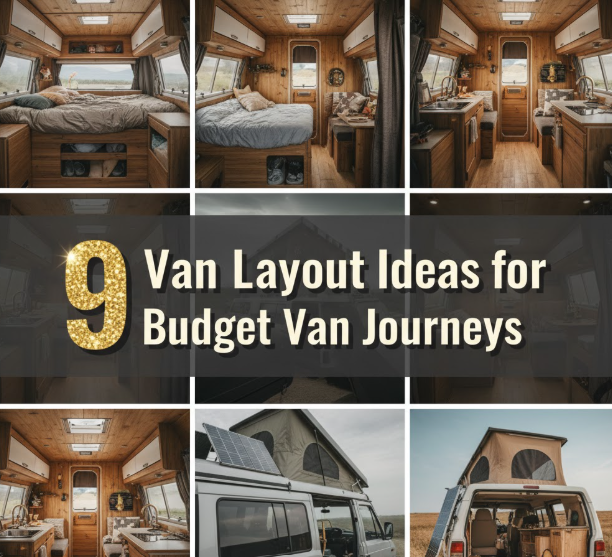
Ever look at a small van and say, “There’s no way someone can live in that thing”?
Think again.
Radical freedom is within a few clicks after thousands of people turned to outfitting small vans as perfectly functional micro-homes — in some cases, without breaking the bank on housing. It does not require a large budget to do so. It’s a smart layout.
Whether you’re a weekend warrior, a full-time hunter/gatherer/worker in your van, or a total noob who’s just testing the waters of van life, how (and if) you set up your space will be what makes or breaks this lifestyle for you. A poorly designed layout can turn even a spacious van into a closet. But a well-designed one? It can turn a small cargo van into something surprisingly comfortable and livable.
Read on to see 9 proven budget van journeys layout ideas that real van lifers actually use to get the most out of small spaces! All are practical, cost-effective and can be personalised according to van size and lifestyle.
Let’s dive in.
Your Van Layout Is the Most Important Decision You’ll Make
You need a plan before you spend your first dollar on wood, foam or storage bins.
Your layout influences everything — how well you can sleep, how easily you can cook, how much gear you can haul and even your sanity after week three on the road.
These are the questions a good layout answers:
- Where will you sleep?
- Where will you cook and eat?
- Where will you keep your things?
- Do you need a workspace?
- Will you be traveling solo, with your partner or with a pet?
Getting these right before you build saves time, money and loads of frustration.
9 Budget Van Layout Ideas at a Glance
| Layout Idea | Best For | Skill Level | Estimated Cost |
|---|---|---|---|
| Longitudinal bed + side storage | Solo travelers | Beginner | $200–$500 |
| Transverse bed + garage | Gear lovers | Beginner | $150–$400 |
| Convertible bed/sofa | Couples | Intermediate | $300–$700 |
| L-shaped kitchen + bed | Foodies | Intermediate | $400–$800 |
| Sliding drawer system | Minimalists | Beginner | $100–$300 |
| Loft bed + living area | Tall vans | Intermediate | $500–$1,000 |
| Fold-down Murphy bed | Multi-use van | Advanced | $400–$900 |
| Modular removable setup | Part-time lifers | Beginner | $150–$500 |
| Stealth urban layout | City dwellers | Intermediate | $300–$700 |
Design Concept Idea #1: The Longitudinal Bed with Side Storage
This is the classic. It’s simple, it gets the job done, and it won’t break the bank.
How It Works
The bed runs lengthwise on one side of the van — either the driver’s or passenger side. You incorporate storage under the bed platform with drawers or open cubbies.
You position your kitchen setup — which can be anything from a two-burner camp stove on a wooden shelf.
Why It Works on a Budget
You’re using mostly plywood, 2×4 lumber and basic hardware. No fancy custom furniture needed. Many van builders finish this layout for less than $300.
Who Should Use This
Solo travelers love this layout. It gets you a full-length bed without having to fold anything. If you have a van layout that allows it, you can also slide into bed from the back doors or the side.
Pro Tip: Make sure that you build your bed platform at least 10–12 inches high so that you can store items in the under-the-bed space. For easy access, use sliding drawers.
Layout Concept #2: Transverse Bed with Rear Garage
What Makes This Layout Different
Instead of a bed that runs lengthwise, you have one that goes sideways — wall to wall at the back of the van. You have your living and kitchen area in front of the bed. Below the bed? That’s your “garage.”
The Garage Concept
The area beneath a transversally placed bed is ideal for bikes, surfboards, camping chairs or whatever gear is particularly bulky. You enter it through the rear doors.
This layout is popular with outdoor enthusiasts who have gear to carry.
Budget Breakdown
| Item | Estimated Cost |
|---|---|
| Plywood (¾ inch) | $40–$70 |
| Lumber for framing | $30–$50 |
| Screws and hardware | $20–$30 |
| Foam mattress topper | $50–$100 |
| Total | $140–$250 |
The Tradeoff
If you’re tall, a transverse bed might feel short depending on your height and van width. Regular vans are some 60–66 inches wide and they work for people under 5’6″. Taller people can sleep in a diagonal position.
Layout Idea #3: The Dual-Purpose Bed-and-Sofa Combo
This is great if you’re traveling with someone else and you want the van to feel like more than a bedroom.
The Basic Idea
In the daytime, you have your sofa or bench seat all to yourself. At night, it folds or stretches into a bed. Kind of like a fold-out couch — but homemade, using inexpensive materials.
How to Build It Cheap
At the core of it all is a hinged platform. You make a bench with a back part that is hinged. Dip the back at night for a flat surface. Throw on a foam pad, and now you have a bed.
Foam cushions are available at fabric stores or discount retailers for $30–$60. The wood frame can be constructed for less than $100.
Why Couples Love This
Given that you’re sharing such close quarters with another person, having a “living room” during the day makes an enormous psychological difference. You don’t feel like you’re stuck in a bedroom all day every day.
Storage Tip: Construct the bench seat with a hinged top so you can stow objects under it during the day.
Layout Tip #4: L-Shaped Kitchen + Fixed Bed
This is for the van lifer who’s serious about cooking — but still doesn’t want to spend thousands on a build.
The Layout Explained
On one side of the van is the bed. In the back, you add an L-shaped kitchen wrapping around the corner. This affords you more counter space than a straight galley kitchen, without occupying much additional floor area.
Kitchen Elements to Include
- A two-burner propane stove ($30–$60)
- A small plastic or stainless sink with a hand-pump faucet ($40–$80)
- A 12-volt cooler or small fridge ($80–$150)
- Open shelving overhead for spices and other small items
If you are a savvy shopper, all this can be done for less than $400.
Making It Feel Bigger
Use cabinetry made of light wood or paint. Place an LED strip along the bottom of the upper shelf. This reflects the light and makes the space feel more spacious.
Space-Saving Tips That Work With Any Layout
Before we dive into more layout ideas, here are a few universal tricks that work no matter what layout you go for.
Use vertical space. The walls are a forgotten thing for most people. Install pegboards, hooks and small shelves up above the main pieces of furniture.
Go magnetic. Magnetic knife strips and spice containers are a good way to save drawer space in your kitchen area.
Choose dual-purpose items. A cutting board that sits over your sink provides additional counter space. A storage ottoman serves also as seating and a footrest.
Keep it lightweight. Heavier builds affect fuel economy. Go with thin plywood instead of heavy countertops.
Layout Idea #5: The Sliding Drawer System for the Minimalist
Not everyone needs an elaborate build. This would be the layout for you if all you need is a bed and neatly organized storage.
The Core Concept
Your storage system revolves around a sliding drawer platform. The bed sits on top. Under the bed, you have a number of large drawers — one for clothing, another for cooking stuff, and so on.
Why Minimalists Love It
Nothing to fold, nothing to convert, nothing hard. You pull open a drawer, take what you need and slide it closed. Simple.
Building This on a Budget
You can find heavy-duty drawer slides at hardware stores for $10–$20 a pair. The drawer boxes are simply rectangles of plywood. All of it can be done for under $200 if you’re willing to do it yourself.
Layout Idea #6: The Loft Bed for Vans with a High Roof
If you have a Transit or Sprinter high-roof van, you’re sitting on top of a goldmine of vertical space.
How Loft Layouts Work
Rather than creating a bed at floor level, you lift it. Your bed platform is perched high — almost at the roof. Underneath it you’ve got full standing height and a proper living area, with a couch, desk or kitchen setup.
Why This Changes Everything
All of a sudden, your mini-van feels like a studio apartment. You have a bedroom on top and a living room below.
Budget Considerations
This configuration needs increased structural support since the bed is raised. You’ll require stronger framing and wall anchors. Plan on spending an additional $100–$200 in hardware compared to a floor-level build.
Safety Tip: Ensure that your loft bed frame is securely anchored to the van’s walls or floor. Test the structure before sleeping in it.
Concept #7: The Murphy Bed That Folds Down
The Murphy bed concept, borrowed from tiny apartments, works wonders in vans.
What It Is
The Murphy bed collapses against the wall in the daytime, opening up floor space. At night you fold it down for a full sleeping surface.
When This Makes Sense
This layout is great when you want the van to pull double duty — say, if you’d use it for work deliveries on weekdays and then road trips on weekends.
When the bed’s folded up, the van is empty and utilitarian. When folded down, it’s a snug bedroom.
DIY Murphy Bed on a Budget
Online wall-mount Murphy bed hardware kits are $80–$150. Add some plywood for the frame and a foam pad, and you’re in the $250–$400 range total.
The build is a bit trickier than just making a platform bed, but there are great step-by-step YouTube tutorials that will take you through the process.
Concept Design #8: The Modular Removable Layout
This is the most versatile choice on this list. It’s perfect for those who don’t want to wholly commit to van life — or who need to use their van for other purposes.
How It Works
Rather than building everything into the van permanently, you make modular units that are removable. Your bed is a separate platform. Your kitchen exists in its own box unit. All can be removed in no more than an hour.
Why This Is Budget-Friendly
There’s nothing to screw into the van, so no permanent modifications. That is great for leased vans or ones you may sell down the road. It also means that you can upgrade or replace components without starting over from scratch.
Modular Build Tips
- Use rubber-footed furniture legs to prevent units from sliding
- Use clamps or quick-release bolts for unit stability
- Use the same heights for all units so surfaces align
Layout Idea #9: The Ninja Urban Layout
This final one is for those who live in the city or park on suburban streets and prefer to blend in.
The Goal of Stealth
From the outside, a stealth layout appears to be an ordinary cargo van. No roof racks. No visible window covers. No external gear. It’s comfortable and fully functional on the inside — but from the curb there’s no indication anyone lives inside.
Key Design Choices
- Window covers that complement the van’s interior (dark fabric on the inside, no reflective material on the outside)
- No overhead lighting that would seep through the panels at night
- Battery-powered LED lights instead of running power from the van
- A kitchen that can be stored completely flat or inside a cabinet when not in use
Budget for Stealth Features
| Feature | Budget Option | Cost |
|---|---|---|
| Window blackout covers | DIY Reflectix + fabric | $20–$40 |
| Interior curtain divider | Tension rod + curtain | $15–$30 |
| LED lighting | Battery-powered strips | $10–$25 |
| Ventilation | Roof vent fan | $80–$150 |
How to Choose the Right Layout for You
Facing nine choices can be daunting. Here’s one easy way to narrow it down.
Ask These Three Questions
1. How many people are sleeping in the van? Solo travelers have more flexibility. For couples, the convertible sofa or loft configuration works best.
2. How long do you expect to live in the van? Weekend warriors can make do with the modular or transverse bed. Full-timers want a more permanent and comfortable setup.
3. What activities are most important to you?
- Outdoor gear haulers → Transverse bed with garage
- Foodies → L-shaped kitchen
- City parkers → Stealth layout
- Minimalists → Sliding drawer system
Real Costs: What Budget Van Journey Layout Ideas Actually Cost
Let’s be honest about money. Here is a realistic breakdown of cost for a basic but complete DIY van build.
| Category | Budget Build | Mid-Range Build |
|---|---|---|
| Wood and framing | $100–$200 | $200–$400 |
| Insulation | $50–$100 | $150–$250 |
| Mattress/foam | $50–$150 | $150–$300 |
| Kitchen setup | $80–$150 | $200–$400 |
| Lighting | $20–$50 | $80–$200 |
| Electrical (basic) | $100–$300 | $300–$600 |
| Miscellaneous | $50–$100 | $100–$200 |
| Total | $450–$1,050 | $1,180–$2,350 |
These are DIY estimates. If you pay someone to build your van, it is going to cost a lot more.
Further Reading: For a deeper look at van conversion costs and planning, The Vanlife Collective is a great resource with real builder breakdowns and community advice.
Budget Van Journeys Layout Ideas: FAQs
Q: Which van layout is the cheapest to build? The sliding drawer system or the basic longitudinal bed layout are the cheapest. Each can be done for under $300 using basic tools and inexpensive materials.
Q: Can I design a van layout even if I have no carpentry experience? Yes. Many beginner-friendly plans take only a saw, drill and screwdriver. You can start with a simple platform bed and customise over time.
Q: How long does it take to build a van layout? A simple bed and storage unit can be made in a weekend. A full build with kitchen, electrical and insulation generally takes 2–4 weeks part-time.
Q: Should I insulate before building the layout? Absolutely. Insulation goes in before furniture and flooring. Skipping it will render the van unbearable in summer and freezing in winter.
Q: What wood do you recommend for budget van builds? The standard is ¾-inch plywood. It’s strong, widely available and cheap. For lighter-weight builds, ½-inch plywood works for shelves and cabinet doors.
Q: Can I stand up inside a standard cargo van? Most standard cargo vans like the Ford Transit Connect or Dodge Grand Caravan don’t offer standing room. High-roof vans like the Ford Transit High Roof or Mercedes Sprinter 170 do.
Q: What is a good first project for a beginner builder? Start with the bed platform. It is the most important piece of furniture in your van, and it teaches the essential skills you will apply for the rest of your build.
Q: Are modular van builds safe for driving? They can be if you do them right. Use rubber feet and secure heavy items with straps or cargo nets. Always avoid loose heavy items that might turn into projectiles in the event of a crash.
Wrapping It All Up
You do not need to break the bank for van life. And your van can be small.
What truly counts is how intelligently you utilise the square footage available.
These 9 budget van journeys layout ideas prove that with a few basic tools, inexpensive materials and a solid plan you can convert even the smallest van into an efficient, livable mobile home.
Start simple. Build what you need. Upgrade as you go.
Whether you’re drawn to the minimalist elegance of the sliding drawer system, the flexibility of modularity or the full-featured comfort of a loft bed layout, there’s a design here that suits your lifestyle as well as your budget.
The open road is waiting. All you need to start is a plan — and now you have nine.