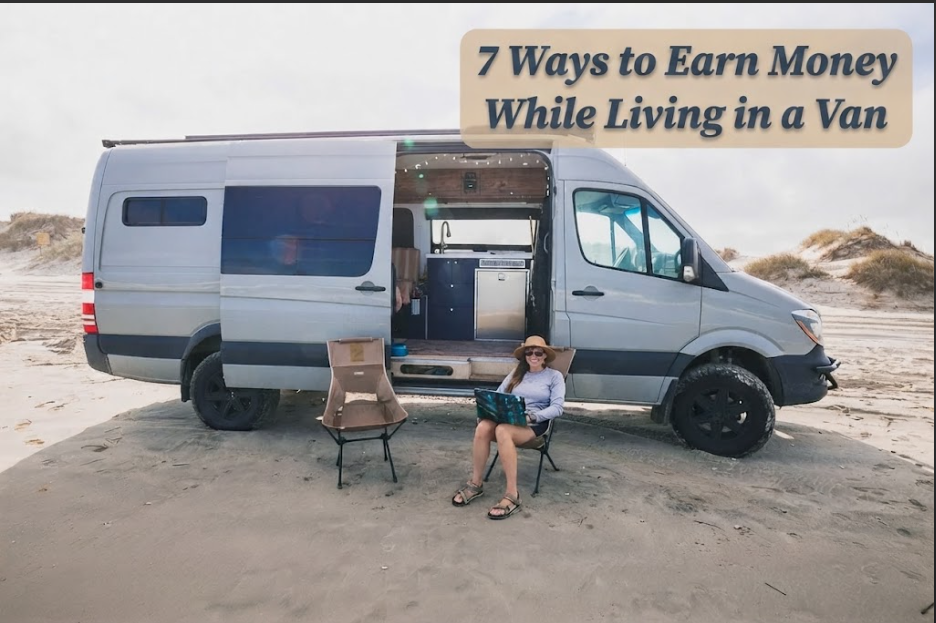
The first year I lived in the van, I turned down a freelance contract because I assumed nowhere I’d be parked would have reliable enough internet to do the work properly. I was wrong about that, and it cost me about $2,400 I didn’t need to lose. That mistake taught me more about van life income than any of the successful months that came after it.
Money is the part of this lifestyle nobody plans for as carefully as the build. People will spend weeks researching solar panels and mattress foam density, then figure the income side out later, on the fly, somewhere in a Walmart parking lot with two bars of signal. It doesn’t have to go that way.
1. Remote Employment, Not Freelancing
Start here if you already have a job that can technically be done from anywhere. It’s the most stable option on this list by a wide margin.
The catch is bandwidth, not willpower. A lot of van dwellers assume rural cell coverage will be fine and find out mid-video-call that it isn’t. A dedicated hotspot on a carrier with strong rural coverage, plus a signal booster mounted on the roof, solves this for most routes in the continental US. Budget $50 to $120 a month for data, more if the job involves video calls daily.
This path pairs well with the kind of route planning discussed in what sailors taught us about van living, where resource planning ahead of time beats improvising once you’re already out of range.
This isn’t a fringe idea anymore, either. Some companies have gone as far as building the lifestyle into an actual job posting. Deel, a payroll and remote work company, ran a six-month “van life” position paying travelers a monthly salary specifically to work from a converted van while documenting the trip. Most remote roles won’t be quite that on the nose, but it shows how normalized working from the road has become inside otherwise conventional companies.
2. Freelance Writing, Editing, or Design
This was the mistake category for me. Freelance work travels well because deadlines are usually flexible by the day, even if not by the week.
The people who do this successfully treat client communication like it’s the actual job, not a side task. Reply within a few hours during business hours, even from the road. Say something specific if a location will affect your availability. Clients tolerate an unconventional lifestyle. They don’t tolerate silence.
Rates vary enormously by niche, and undercutting yourself because you have low overhead is a trap. Your rent might be near zero, but your time isn’t worth less because of where you’re typing from.
3. Seasonal and Gig Work Tied to Location
Campgrounds, national parks, ski resorts, and harvest operations all hire seasonal workers, often with a free camping spot included as part of the deal.
This is where van life income and van life lifestyle genuinely overlap instead of competing for the same hours. A season as a camp host can pay modestly in cash but save $400 to $600 a month in camping fees, which functions the same as income once you run the numbers.
Here’s where people usually go wrong with seasonal work: they take the first listing they find without checking whether the site has cell signal for their other income streams. A camp host job with zero connectivity can quietly kill a freelance side income for three months straight.
4. Content Creation, Realistically Scaled
Nearly every van life resource mentions YouTube or Instagram as an income source, and it’s true, but the scale people imagine rarely matches the scale that actually pays.
| Monthly Followers/Subscribers | Realistic Monthly Income Range |
|---|---|
| Under 5,000 | $0–$100 (mostly affiliate links) |
| 5,000–25,000 | $100–$600 |
| 25,000–100,000 | $600–$3,000 |
| 100,000+ | $3,000+ (sponsorships become viable) |
Most people planning a budget don’t land in that bottom row. They land in the top two, and treating content creation as a primary income plan before it’s proven itself is one of the more common ways a van life budget falls apart in month four. Treat it as a slow-building side stream, not a launch strategy, and it tends to work out better.
5. Trade Skills That Travel
Electricians, mobile mechanics, hairstylists, and massage therapists can all work on a mobile or contract basis in towns along a route. This one gets overlooked because it doesn’t fit the laptop-on-a-picnic-table image, but the pay is often better and more consistent than content work.
The tradeoff is licensing. Some trades require state-specific certification, which limits which states you can legally work in without extra paperwork. Worth checking before you count on this one as a primary plan.
6. Selling Physical Goods or Crafts
Handmade goods, refurbished finds from thrift stores, or small-batch products sold at farmers markets and online marketplaces can work, especially in a van build with any spare storage.
This one demands the most honest self-assessment of storage space. A van already tight on room for daily living doesn’t have much room left for inventory, and overcommitting to a product-based income while also trying to live minimally creates exactly the kind of clutter van life is supposed to solve.
7. Van Life Consulting or Coaching
After a couple of years, some van dwellers start getting paid to help newer people plan builds, routes, or budgets. It’s a smaller market than the others on this list, and it only really works once you’ve built a track record that people trust.
If you’ve read the breakdown of what a sub-$5,000 van build actually needs, you’ve seen the kind of specific, lived-in knowledge that separates a real consultant from someone just repeating YouTube advice. That specificity is what people pay for.
The Combination That Actually Works
Almost nobody on this list is living off one income stream alone. The people who make van life financially sustainable for years, not months, usually combine two or three of these, one stable and predictable, one flexible and seasonal, one small and experimental.
Budget Van Journeys hears from a lot of readers who want the single answer, the one job that solves the whole equation. It rarely works that way. And honestly, the stacking is part of what makes the lifestyle feel sustainable rather than precarious. You’re not betting everything on one client or one algorithm.
I still keep the remote contract work as my base and treat everything else as the layer on top. Some months that base carries almost everything. Other months, a seasonal gig covers more than I expect. It shifts, and that’s fine.
Frequently Asked Questions
Do I need a remote job before starting van life, or can I figure out income after I’m on the road? Having at least one stable income source lined up before you leave is safer. Figuring it out entirely after departure works for some people, but it adds financial stress on top of the adjustment period of learning to live in a van.
How much monthly income do most van dwellers actually need? Based on realistic cost breakdowns, most solo van dwellers need $1,000 to $1,800 a month to cover fuel, insurance, maintenance, food, and occasional camping fees, depending on how much they travel.
Is content creation a reliable way to fund van life? Not on its own, especially in the first year or two. It works best as a supplemental income while a more stable source, like remote work or seasonal jobs, covers the baseline costs.
What’s the biggest income mistake new van lifers make? Assuming connectivity will be fine everywhere and not testing it before committing to remote work that depends on it. A signal booster and a realistic route plan solve most of this.
Can seasonal work really replace a full income? For part of the year, often yes, especially when free camping is included as part of the compensation. Most people still pair it with a second income stream for the off-season months.
For anyone building out their financial plan alongside their rig, the best van life YouTube channels worth following in 2026 include a few creators who post honest monthly income breakdowns, which is worth more than most budgeting spreadsheets.