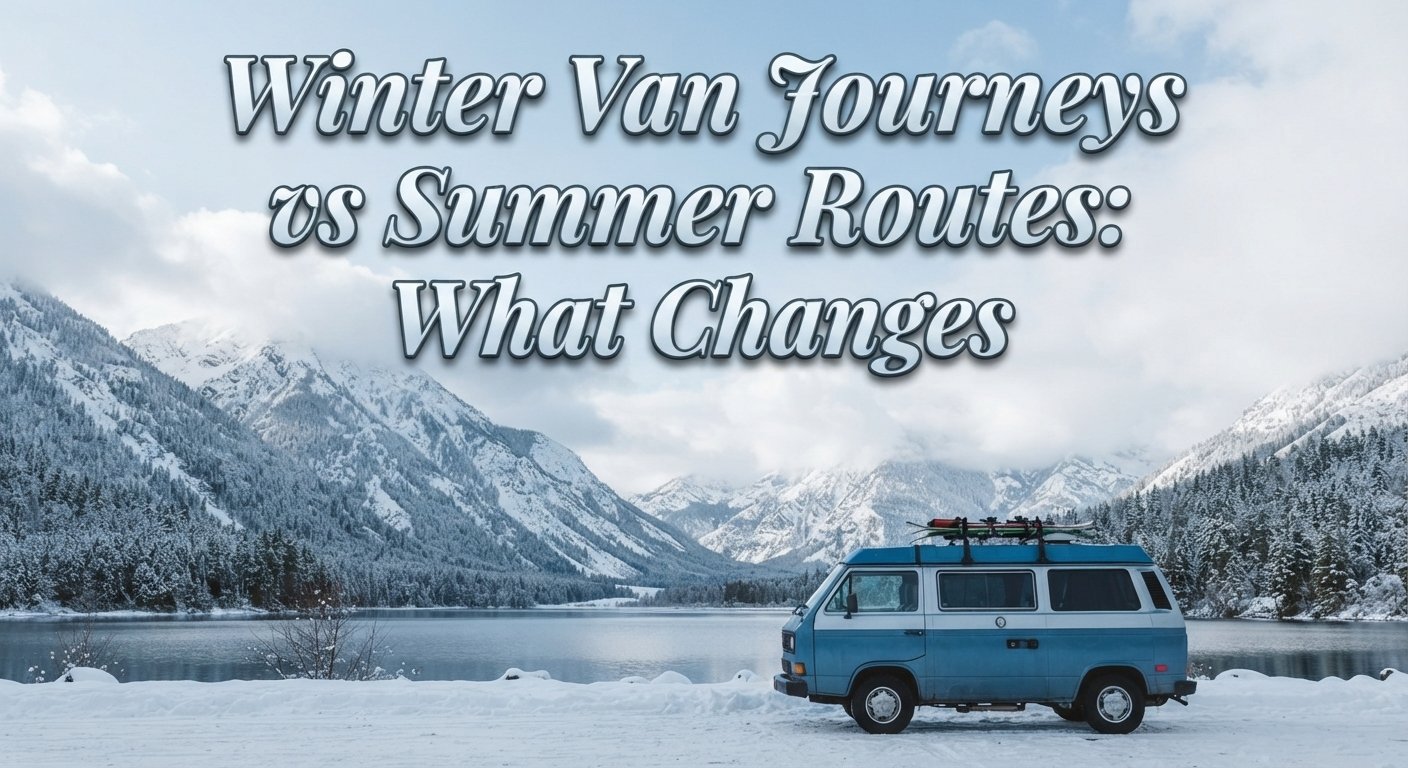
Same van, same route through Colorado, six months apart. In July it took me four hours and a stop for ice cream. In January it took nine hours, a white-knuckle pass with chains I’d never installed before, and a night parked in a gas station lot because the mountain road closed at dusk. I hadn’t changed anything about how I drive. The season changed everything about what driving actually meant.
That gap surprised me more than it should have, honestly, given how long I’d been doing this. I’d assumed winter would mean colder mornings and more layers, a manageable adjustment around the edges. It turned out to be closer to running a different kind of trip altogether, with different math on almost every line that matters.
What Actually Happened Over Those Two Trips
The summer route was straightforward in the way summer routes usually are. Wake up, check the weather app mostly out of habit, drive until the scenery got good enough to stop, park somewhere free for the night, repeat. Fuel stops were routine. Cell service, when it existed at all, behaved the way it usually does out there, which is to say inconsistently but predictably so.
The winter version of the same 340 miles broke down completely differently. I checked road conditions three separate times before leaving, once the night before and twice that morning, because a pass had a chance of closing with fresh snow. I budgeted an extra two hours that I didn’t end up needing, and then needed an extra three hours I hadn’t budgeted for a slower, chain-controlled stretch through the mountains. Free overnight parking, the kind I’d relied on all summer, was either plowed shut or simply gone, buried under enough snow that pulling off the road wasn’t an option.
And the fuel gauge told a story I wasn’t expecting either. Running the heater constantly, on top of colder, denser air that changes engine efficiency slightly, meant I burned through noticeably more gas covering less distance than I would have in July.
1. Fuel Costs Move More Than People Assume
This is the part that catches a lot of van dwellers off guard heading into their first winter season. It isn’t just the propane heater running through the night, though that adds up fast on its own. It’s that a gas or diesel engine simply runs less efficiently in cold air, and idling the engine occasionally for heat when parked overnight burns fuel that a summer trip never touches.
Budget Van Journeys covers the underlying math in more detail in budgeting gas money for long, slow van trips, and the seasonal piece of that puzzle deserves its own line item. A rough rule that held up across several winters for me: expect 10 to 20 percent worse fuel economy in sustained cold compared to a mild-weather trip of the same distance, more if you’re also gaining elevation or running the engine for heat overnight.
2. Where You Can Park Changes, Sometimes Overnight
Here’s where people usually go wrong, and it happened to me more than once before I adjusted. A free dispersed camping spot that worked fine in September can be completely inaccessible by December, either because the access road isn’t plowed or because the whole area closes seasonally, which a lot of Forest Service land actually does.
The list of usable spots shrinks in winter just as the need for reliable, safe parking goes up. That’s a rough combination, and it’s part of why I now build in a backup plan, a paid campground or an RV park with hookups, before I ever leave for a winter route rather than assuming I’ll find something the way I would in summer.
3. Connectivity Gets Worse Right When You Need It Most
Cell towers don’t move seasonally, but weather absolutely affects how well they reach you, and winter storms are some of the worst offenders. Heavy cloud cover and precipitation degrade certain frequencies, and a spot that tested reliably in July can go patchy in a January storm without any change to the actual infrastructure.
I’ve written before about why bars on your phone lie to you more than people expect, and it’s worth revisiting specifically through a winter lens in why cell service lies to you more on the road. Checking road conditions and weather alerts is precisely the moment you most need reliable data, and it’s precisely the moment winter conditions are most likely to take that away from you.
4. Your Van’s Systems Behave Differently, and Not Always Obviously
Batteries lose real capacity in cold temperatures, something a lot of first-time winter travelers learn the hard way one dead-battery morning at a time. Lithium batteries in particular can refuse to charge below a certain temperature threshold, which matters enormously if your setup depends on solar charging you assumed would just work the way it did all summer.
Insulation, something plenty of van builders treat as optional in a mild climate, stops being optional the moment overnight temperatures drop below freezing regularly. If you’re heading into your first cold-weather season and haven’t dealt with this yet, insulation vs no insulation and whether it really changes comfort walks through exactly what changes and why it matters more than people expect until they’re the ones shivering.
5. Insurance and Storage Assumptions Shift With the Season Too
This one surprised me the most, mostly because it’s the least visible of everything on this list. A lot of van insurance policies factor in where the van is typically parked and stored, and a shift from mostly boondocking in dispersed spots to more time in paid RV parks or urban street parking during winter can, in some cases, change how an insurer views your risk profile.
It’s worth revisiting your policy before a seasonal shift, not after something happens. Cheap van insurance: what beginners get wrong first covers the classification issues that trip people up generally, and the same logic applies here. An insurer who assumed your van sits in a driveway most nights may have questions if your actual winter pattern looks nothing like that.
A Season-by-Season Look at What Actually Changes
Here’s a rough progression of what shifts as the year moves from summer into winter, based on the pattern I’ve noticed across several years of doing both:
Early fall: Free camping spots start closing on higher elevation routes. Nighttime temperatures start requiring real insulation for the first time since spring.
Mid fall: Solar charging output drops noticeably as days shorten. Fuel budgets start creeping up on any route with elevation gain.
Early winter: Road closures become a real planning factor, not a rare exception. Battery performance in cold mornings becomes something you actually notice.
Deep winter: Overnight parking options narrow to mostly paid sites with hookups. Cell reliability during storms becomes its own daily variable to check.
Late winter into spring: Everything above gradually reverses, though thaw and mud season bring their own separate set of problems that deserve a different article entirely.
What I’d Tell Someone Doing Their First Winter Route
Plan for roughly double the buffer time you’d give a summer trip covering the same distance. Not because you’ll definitely need it, but because the one time you do need it, you’ll be glad you had it instead of scrambling.
Check road conditions from an actual state transportation department site, not just a weather app, since closures and chain requirements show up there faster and more reliably. A resource like National Vehicle’s winter RVing safety guide is worth reading in full before your first real cold-weather trip, particularly the sections on tire prep and knowing when a route simply isn’t worth attempting that day.
None of this means winter routes aren’t worth doing. Some of my favorite Budget Van Journey memories come from quiet winter mornings with nobody else around for miles, which is its own kind of reward that summer crowds rarely offer. It just means the planning has to actually change, not just the packing list.
Frequently Asked Questions
Do I really need snow tires, or are chains enough for occasional winter driving? Chains work fine for occasional, planned mountain passes where you know conditions in advance. If you’re doing sustained winter travel through genuinely snowy regions for weeks at a time, dedicated snow tires perform noticeably better across a wider range of conditions and don’t require pulling over to install them.
How much extra should I budget monthly for a winter van life season? Between higher fuel costs, more paid camping nights replacing free dispersed sites, and possibly more propane for heat, most full-time winter travelers see their monthly costs run 20 to 35 percent higher than a comparable summer month.
Is it safe to run a propane heater overnight while sleeping? Only with a properly installed, vented heater and a working carbon monoxide detector that you test regularly. Unvented heaters or anything not rated for enclosed space use are a genuine safety risk and not worth the savings over a properly installed system.
Can solar alone keep my battery charged through winter? It depends heavily on your latitude and how much tree or cloud cover you typically deal with, but solar output commonly drops by half or more in winter compared to summer due to shorter days and lower sun angle. Most winter travelers need either a larger panel setup, a way to charge from the alternator while driving, or occasional shore power access to make up the difference.
Should I avoid mountain passes entirely in winter, or is it manageable with the right prep? Manageable with real prep, meaning chains you’ve practiced installing, a full tank before the climb, and a genuine willingness to turn around or wait out a storm rather than push through. Treating a closed or actively storming pass as optional rather than mandatory is the single biggest safety decision most people get wrong.
Anyone planning their first cold-weather season should start that planning earlier than feels necessary, probably a full month before the temperatures actually drop, because half of what makes winter routes workable is stuff you sort out before you’re already cold and behind schedule.