
Most “top van route” lists are just tourism content wearing a converted Sprinter. They pick the scenic corridors, describe the scenery in glowing terms, and quietly leave you to discover that the campground closest to that famous viewpoint is $55 a night and fully booked until mid-August.
This one is built differently. These five routes made the cut not because they photograph well (though most do), but because they hold up when you factor in free camping density, realistic driving costs, and how they actually behave for a high-roof van on a genuine budget. Some are well-known. One or two aren’t. All of them work.
1. What Actually Makes a Van Route Worth Doing
Scenery is easy enough to find on a map. What’s much harder to figure out before you’re already three hours into a drive is whether a corridor has enough free dispersed camping to support a real budget trip, whether the roads treat a tall-bodied van with any kind of respect, and whether the route even operates in shoulder season or closes the moment October arrives.
Those are the questions that separate a good van route from a pretty one.
Route 66 is the example I keep coming back to. Iconic, yes. Genuinely enjoyable in places. And almost exclusively lined with paid accommodation and paid campgrounds, with the occasional exception that requires a lot of research to find. The nostalgia-to-free-camping ratio is simply not in your favour. The routes below were chosen specifically because that ratio flips in your direction.
One other thing worth saying upfront: Budget Van Journeys readers who track their actual spending consistently find that the single biggest cost variable isn’t the campsite fee, it’s the unplanned decision-making on the road. Routes that make those decisions easier, because free camping is abundant and well-documented, tend to come out cheaper than routes that look affordable on paper but require constant improvisation.
The routes below are roughly ordered from most budget-accessible to slightly more variable, though “slightly more variable” still means genuinely workable with a bit of advance planning.
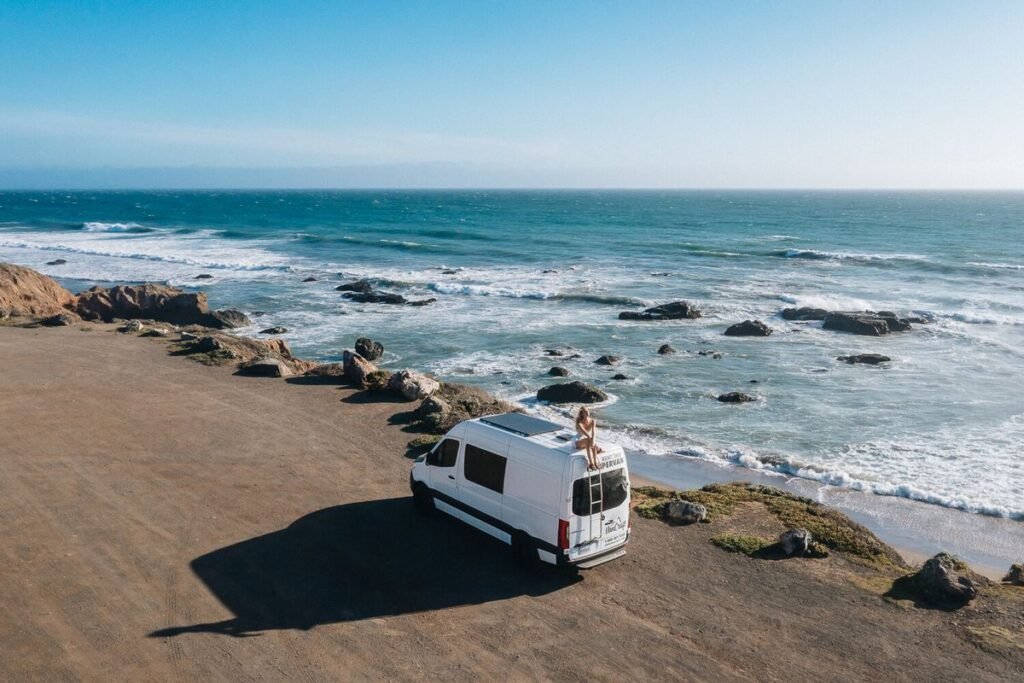
2. The Five Routes Worth Building a Trip Around
Southern Utah BLM Corridor: Moab to Escalante
This is the most consistently affordable long-form van route in the continental US, and it isn’t particularly close. The Bureau of Land Management land coverage along the Highway 191 and Highway 12 corridors is dense enough that a two-week trip with one or two paid nights is entirely realistic, and those paid nights will probably be a choice rather than a necessity.
The backbone of this route runs from Moab south through the Bears Ears area, across to Capitol Reef, and down into the Grand Staircase-Escalante National Monument, which is one of the largest BLM-managed areas in the country at nearly two million acres. Dispersed camping within a 20-minute drive of most major access points is well-documented, well-reviewed on Campendium, and in many cases genuinely spectacular.
A few things to know before committing to it. The access roads off the main highway are often unpaved and some require real ground clearance. Not all of them, but enough that you want to verify conditions before pointing a standard-height Sprinter down a BLM track at dusk. For Transit or Sprinter conversions on all-season tyres, most of the highly-reviewed sites are fine. And on summer weekends, the popular free spots fill Thursday afternoon. Arrive early in the week or travel in spring and autumn to avoid competing for the same five parking areas that everyone has bookmarked.
Best months: mid-March through May, September through late October.
Blue Ridge Parkway: Virginia to North Carolina
The Blue Ridge Parkway stretches 469 miles from Shenandoah National Park in Virginia down to the edge of Great Smoky Mountains National Park in North Carolina, and it is one of the few major scenic routes in the US where genuinely free camping is built directly into the route. The National Park Service issues free backcountry camping permits for designated zones along the Parkway itself, applied for online before your trip.
The dispersed camping picture gets even better when you account for the National Forests that flank the route. Pisgah National Forest to the south and George Washington National Forest to the north both permit dispersed camping with more flexibility than the Parkway zones, and the combination of the two systems gives you a lot of options without paid fallbacks.
From a practical driving standpoint, this is a gentler route than anything in the western US. No high-clearance concerns, no sand, no extreme altitude. The road was designed specifically for scenic touring and it handles standard van heights without issue.
If you’re based on the east coast and have been assuming that all the good cheap routes require a cross-country drive to access first, the Blue Ridge Parkway is the direct counter-argument to that assumption. It also happens to be genuinely, consistently beautiful from the first mile to the last.
Northern California Pacific Coast Highway: Leggett to Crescent City
The full Pacific Coast Highway gets mentioned in almost every van route list, and the southern California section earns that attention, but it also earns its reputation for expensive camping, high fuel prices, and summer crowds on the most popular stretches between Morro Bay and Big Sur.
The northern section from roughly Leggett up through the Lost Coast and into the redwood corridor toward Crescent City is a different experience entirely. Campsite density improves significantly north of San Francisco. The Six Rivers National Forest and the Humboldt Redwoods area both offer dispersed camping with solid Campendium and Dyrt coverage, and the old-growth redwood forest in this region is something that doesn’t translate well to descriptions. You have to see it to understand why people make the detour.
The honest caveat is fuel. California consistently prices petrol higher than most other states by a meaningful margin, sometimes $0.60-$0.80 above the national average. That variable makes the PCH more expensive per mile than equivalent-distance routes in the southwest or the southeast, and it’s worth building into your numbers honestly. Cutting fuel costs on a long van road trip matters more on this route than almost any other one on this list, and even small adjustments to speed and driving behaviour add up over a week on the coast.
What the northern California section offers that nothing else does: old-growth forests at a scale that feels genuinely ancient, coast access, and an almost complete absence of the van life traffic that has made the south coast feel more like a scene than a place.
Best months: May through September, with June and September being the sweet spots before and after peak crowd season.
Highway 2 / Northern Rockies: Montana and Northern Idaho
Highway 2 across northern Montana, connecting the Glacier National Park region to the Idaho panhandle, is genuinely underused by the van life community. Most van trip attention goes to the Colorado and Utah corridors in the southern Rockies, which means the National Forest dispersed camping along this northern route is both abundant and far less competed for than the equivalent terrain would be if it sat 800 miles further south.
The trade-off is that this is a tightly seasonal route. The high-elevation National Forest sites along this corridor open as snow melts, usually June, and the window closes meaningfully by late September. The weather can be unpredictable outside that window. But within it, the Flathead and Lewis and Clark National Forest dispersed camping areas deliver extraordinary scenery with a fraction of the weekend competition you’d find at comparable sites in Colorado or southern Utah.
One practical note that matters: the Going-to-the-Sun Road inside Glacier National Park has a vehicle length restriction. Vehicles over 21 feet are not permitted on the road between Avalanche Creek and the Sun Point parking area, which covers the most scenic section. If your van conversion puts you over that length, you’ll need to access the park at the eastern end or take the park shuttle. The surrounding National Forest camping sits outside that restriction entirely.
Best months: late June through early September, with July being peak for accessible high-elevation sites.
New Mexico and Arizona Desert Loop: Santa Fe, White Sands, the Gila
This is the route I’d recommend to anyone who wants genuinely wild scenery, reliable warm weather for winter travel, and BLM camping access comparable to southern Utah but with significantly fewer people and, in many areas, better road access for standard van builds.
The New Mexico section anchors this route well. A loose loop from Santa Fe south toward White Sands National Park (yes, it’s a full National Park now, as of 2019), west through the Gila National Forest, which contains the first designated wilderness area in the United States, and back north through the high desert gives you a concentrated run of remarkable scenery with dispersed camping density that rivals anything in the west. White Sands itself is a day-use fee area with no overnight camping, but the BLM land in the surrounding basin is abundant.
Budget Van Journeys has covered the best states for free overnight van camping in more depth elsewhere, and New Mexico features prominently, for good reason.
The timing here is the reverse of the northern routes. This is a winter route. Southern New Mexico and southern Arizona between October and March sit at ideal temperatures, clear roads, and very low van life traffic. The same region in June or July is genuinely punishing, the kind of heat that turns a black-roofed van into something you do not want to be inside. Plan accordingly.
Best months: November through March.
3. Route Comparison at a Glance
Fuel costs below are estimated at $3.60/gallon with a van returning 18mpg. Adjust these for your actual vehicle. The free camping density rating reflects Campendium coverage and recent dispersed site reports, and is genuinely subjective rather than a calculated score.
| Route | Best Season | Est. Miles | Fuel Cost Est. | Free Camping Density | Crowd Level |
|---|---|---|---|---|---|
| Southern Utah BLM Corridor | Mar-May, Sep-Oct | 400-600 | $80-120 | Very High | Moderate (peaks in summer) |
| Blue Ridge Parkway | Apr-Nov | 400-500 | $80-100 | Moderate-High | Low-Moderate |
| N. California PCH (Leggett-Crescent City) | May-Sep | 300-450 | $110-160 | Moderate | Low |
| Highway 2 / Northern Rockies | Jun-Sep | 600-900 | $120-180 | High | Low-Moderate |
| New Mexico / Arizona Desert Loop | Nov-Mar | 500-800 | $100-160 | High | Very Low |
The fuel cost range on each route accounts for variation in the actual mileage driven once you factor in supply runs and side trips, which almost always extend the total beyond the core corridor distance.
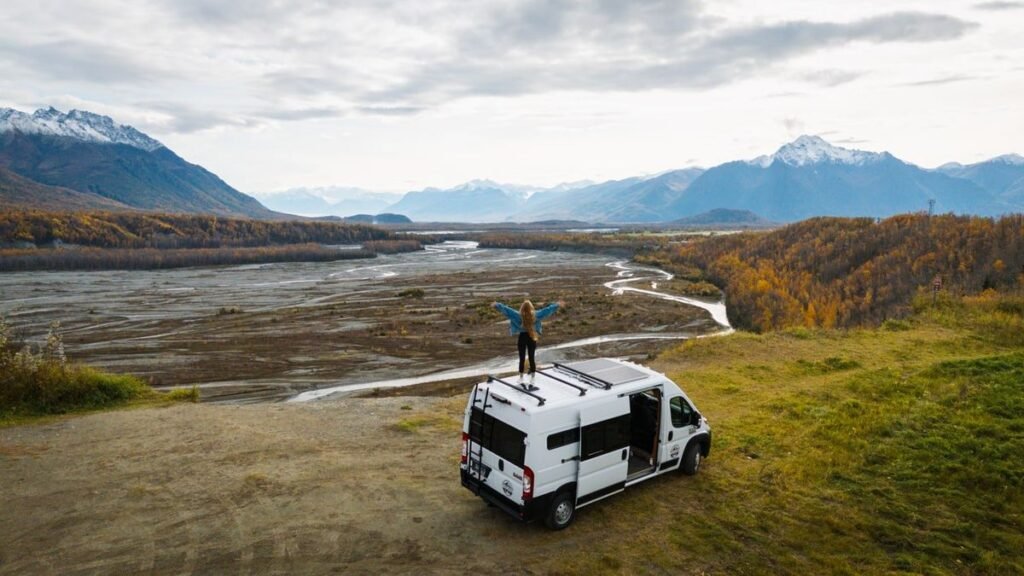
4. Where Most Van Route Planning Goes Wrong
The assumption behind most first-time van route planning is that you start with a list of places worth seeing and work backwards to figure out the camping. This feels logical and it consistently produces trips that cost more than expected.
The issue is that well-known destinations tend to sit at the ends of branch roads rather than on efficient through corridors, and the camping within reach of those destinations is either paid, limited, or both. So you end up with a route that covers a lot of miles between expensive overnight stops.
The myth worth busting here: iconic routes are not cheap routes. They’re iconic because they were promoted, which means they’re now popular, which means the free camping density around them has either declined or requires much more active research to access. The five routes above work because they were selected in the reverse order, free camping first, scenery second, rather than the other way around.
The free camping apps tested by Budget Van Journeys are a useful starting point for any route on this list. The specific habit that genuinely changes trip cost is spending 45 minutes with Campendium or The Dyrt before finalising any section of your route, identifying three free sites within range of each overnight, and checking that at least one of them has a review dated within the last six months. It sounds like a small thing. Across a two-week trip, it typically saves $200-300 in backup paid camping fees.
And the other thing people consistently get wrong: they overestimate how far they want to drive per day. A 300-mile travel day sounds efficient. On two-lane mountain roads in a loaded van, it is tiring, expensive, and leaves you arriving at a campsite too late to actually settle. Capping daily driving at 100-150 miles and planning to stay somewhere two or three nights keeps both the fuel budget and your energy level in genuinely better shape.
5. Combining Routes Without Breaking the Budget
For anyone planning a longer circuit, the five routes above sequence well across a year without overlap in the difficult seasons. Rough order that works: start with the New Mexico and Arizona loop in December or January, move north to the southern Utah BLM corridor in March or April, cross east to the Blue Ridge Parkway in May, head back west for the northern California coast in June, and push north to Highway 2 and the Montana Rockies in July. Then reverse or loop as the season turns.
That kind of macro-routing takes advance planning, but it produces the thing most van route lists promise and don’t deliver: a genuinely cheap circuit that happens to also be beautiful, because you’re in each region at its best and least crowded window.
For a real-numbers look at what this kind of trip costs end to end, the breakdown in this cross-country van trip for under $1,500 total is worth reading before you finalise the budget. Some of the cost line decisions there translate directly to multi-region routing.
FAQs
Which of these five routes has the lowest realistic total cost for a two-week trip?
Southern Utah, in April or May, by a reasonable margin. A two-week trip staying primarily on BLM and dispersed National Park land during that window can realistically come in at $600-900 total including fuel, food, and one or two paid nights, for a single van lifer with a self-contained setup and no major mechanical surprises. Travel days push the daily average up. Fully stationary days in a free site drop it below $20.
Is the Pacific Coast Highway actually worth doing on a tight budget, or is it mostly hype?
The northern section, from Leggett up to the Oregon border, is genuinely worth it on a budget and produces an experience the southern section doesn’t. The stretch from Los Angeles to Big Sur is beautiful but expensive to camp along, and it doesn’t offer meaningfully better scenery than alternatives that cost considerably less. If fuel money is limited, spending it on the redwood coast rather than the Big Sur approach is the right call.
Can these routes be done in a standard van build without modifications?
Most of them, yes. The Southern Utah corridor requires reasonable care on unpaved access roads and benefits from higher ground clearance on the rougher tracks, though most of the well-reviewed sites are accessible in a standard build. The Blue Ridge Parkway and New Mexico loop are accessible in almost anything. Highway 2 through Montana involves occasional narrow two-track roads but nothing requiring 4WD as a strict requirement. None of these routes need a lifted, aggressive build to function.
How do I find specific free camping spots along these routes before I leave?
Campendium and The Dyrt are the two most reliable apps for all five routes. Cross-reference with FreeCampsites.net for additional coverage. For the Utah and New Mexico/Arizona routes, the BLM state office websites publish dispersed camping zone maps that are more accurate for detailed boundary questions than any app. The habit of checking recent reviews specifically, not just star ratings, is what flags the spots that have deteriorated or changed access conditions since they were originally listed.
Does shoulder season travel on these routes actually save money, or is that just theory?
It saves real money. Popular free sites along the Utah corridor, the Montana forests, and the northern California coast fill on summer weekends, often meaning a paid backup campground at $30-50 per night. Shift by four to six weeks into shoulder season and that competition largely disappears. The fuel cost stays the same regardless of when you travel. The camping cost drops to near zero. Over a two-week trip the difference can be $150-300 in total, which on a tight budget is significant.
The best van route isn’t the one with the most famous name attached to it. It’s the one you can actually afford to travel slowly, because slow travel, staying in a canyon or a forest or a stretch of coast for three days rather than half a day, is where these trips become the thing people still talk about years later.
Every route above makes that possible. Some of them just need you to show up in the right month.