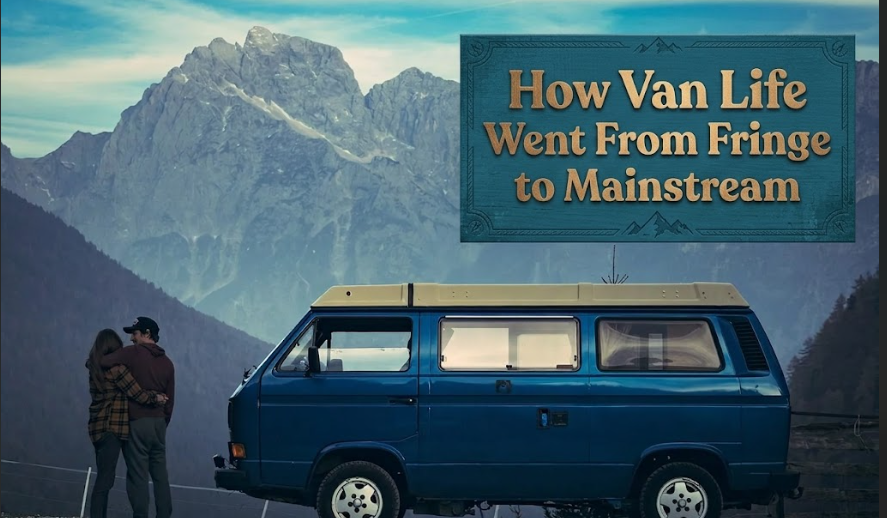
There’s a version of van life that’s been circulating for years. A twenty-something with sun-bleached hair parks a vintage van on a coastal cliff somewhere, opens the back doors to reveal a perfectly styled interior with fairy lights and potted succulents, and posts a photo that gets tens of thousands of likes. That image became the mental shorthand most people reach for when someone mentions living in a vehicle.
And because of it, a lot of people have assumed van life is a phase. An aesthetic. Something belonging to a specific demographic before they settle down and get a real address.
That’s not really what it is anymore. It probably wasn’t fully accurate back then, either.
1. What “Fringe” Actually Looked Like
Van life as an intentional lifestyle isn’t new. Travelling communities across the UK, North America, and Australia have lived in vehicles for generations, often out of necessity rather than choice, and largely outside any mainstream conversation. The Volkswagen campervan culture of the 1960s and 70s put it into a countercultural spotlight, but that’s different from normalisation. Counterculture is still culture at the margins.
The version that existed through the 1990s and early 2000s was genuinely marginal. People lived in vans because they had to, or because they rejected conventional life in a way that came with real social cost. It wasn’t curated. It wasn’t photographed for Instagram. And it certainly wasn’t something you’d see discussed in housing-cost roundups or lifestyle magazine features.
That started changing slowly, then all at once.
The speed of the shift surprised a lot of people, honestly, including those who’d been doing it for years. There’s a slight irony in the long-term van lifers watching their once-fringe lifestyle get absorbed into mainstream conversation. Some find it useful. Some find it irritating. Most have mixed feelings.
2. The Three Things That Tipped It Over
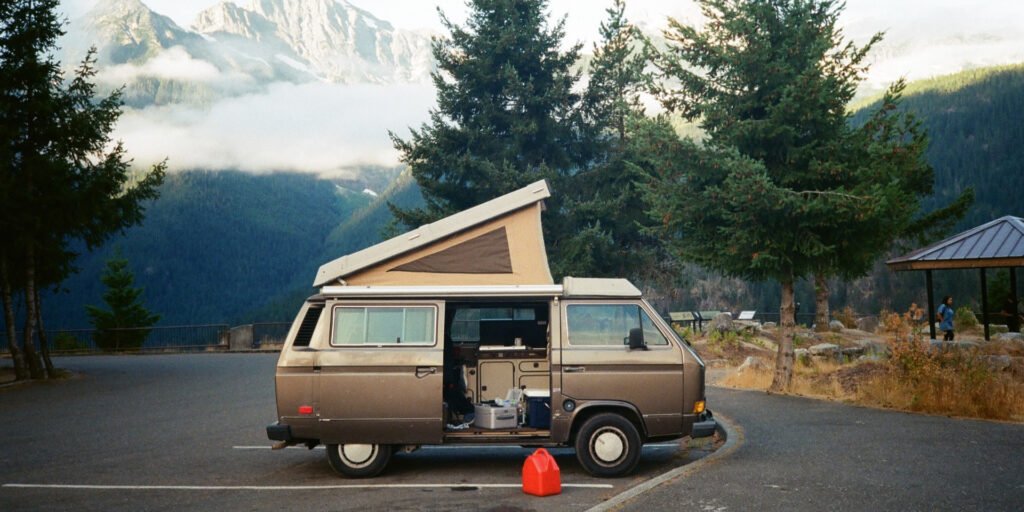
Social media made van life visible, but visibility alone doesn’t produce a cultural shift. Three other things happened in parallel, and together they changed the practical calculus enough that living in a van became a reasonable option for a much wider range of people.
Remote work became genuinely real. Not theoretical remote work where someone worked from home on Fridays and still needed to be in the office Tuesday through Thursday. Actually location-independent income, for a large number of people across different fields, working with a laptop and a reliable internet connection. Graphic designers, developers, customer support staff, writers, online tutors, virtual assistants. Once that formula actually worked as a long-term arrangement, a van stopped being a sacrifice and started being a viable home base.
Rents kept climbing. This is the unglamorous part of the conversation and it’s worth saying plainly. In many cities across the US, UK, and Australia, a single room in a shared flat costs more per month than running a van, covering fuel, and paying for a gym membership that gets you showers. Once people started running the actual numbers, the logic shifted. Budget Van Journeys has a thorough breakdown of whether full-time van life is actually cheaper than renting, and the results tend to surprise people who haven’t looked closely.
The pandemic created a permission structure. This sounds like an odd way to put it, but it’s accurate. Millions of people who had been living on a kind of economic autopilot, paying rent for a flat they barely used because their lives were structured around commuting to an office, got abruptly confronted with the question of what they were actually doing and why. The usual guardrails had dissolved. Some of those people looked at a van and thought: why not? A portion tried it during that window and never went back.
3. Who Is Actually Living in Vans Now
The “young adventurer” picture persists in media coverage, but the demographic spread in 2026 is considerably wider than that image suggests. Retired couples touring national parks in Sprinters. Families with two children in high-roof conversions. Freelancers in their 40s who maintain a home address and use a van for four or five months at a time. Tradespeople living near seasonal job sites for a few months to cut down costs. And yes, twenty-somethings on Instagram, still very much present.
Mainstream didn’t flatten van life into one thing. It widened the range.
The motivations are just as varied as the people. Some are doing it to save money, actively. Some genuinely prefer the simplicity and freedom of a smaller life. Some are trying to build savings while housing costs are out of reach, and this is a way of living reasonably well while doing that. These are different from each other, and they sometimes get blurred together online in ways that create confusion, particularly when someone tries to claim the “real” reason everyone does it.
| Type of Van Lifer | Primary Motivation | Typical Setup |
|---|---|---|
| Remote worker (25-45) | Location freedom, lower fixed costs | Cargo van, insulation, solar panel |
| Retired couple | Travel, reduced fixed costs | Sprinter or Transit, full conversion |
| Family | Intentional lifestyle, adventure | High-roof van or compact motorhome |
| Seasonal worker | Job proximity, low overheads | Basic camper, minimal build |
| Young solo traveller | Freedom, exploration | Varies widely, often DIY |
4. Where the Mainstream Narrative Gets It Wrong
The trouble with any lifestyle becoming mainstream is that it gets processed through two opposing lenses. Both of them are incomplete.
The first is the romanticised version. Everything looks like a curated feed. People post the mountain-top sunrises and the freedom and very rarely the bit where they’re parked in a motorway services car park at midnight with a damp sleeping bag and a gas line they can’t figure out. The romantic version attracts people who aren’t prepared, and those people have a hard time. Then they post about having a hard time, which cycles into the second lens.
The second is the reactionary pushback. Every few months there’s a wave of content claiming van life is a scam, or financially disastrous, or secretly miserable. Some of this is a valid correction. But a lot of it overcorrects into implying that nobody has a genuinely good experience, which isn’t accurate either.
The actual experience sits in between. It can be quite good, or quite difficult, depending almost entirely on how prepared you are, what your budget looks like, and whether your expectations match reality. People who go in informed, with a working van and a clear monthly budget, tend to do well. People who spend twelve thousand on a build and then run out of money in month two, less so. Looking at real monthly cost data for van life before you commit is the kind of step that separates the two outcomes.
One thing I keep coming back to, honestly, is that the most vocal critics of van life tend to be either people who tried it underprepared and had a bad experience, or people who’ve never tried it but seem invested in the idea that unconventional choices must fail. Neither is a particularly reliable narrator.

5. What Mainstream Adoption Has Actually Changed
The culture has shifted in ways that matter practically, and not only because more people know what a Sprinter is.
The collective body of knowledge has expanded enormously. DIY build guides, free camping resources, real-cost breakdowns, van conversion tutorials for specific models. Someone starting a van conversion in 2026 has access to far more detailed, practical information than someone doing the same in 2016. Budget Van Journeys covers things like working remotely from a van in a way that actually functions day-to-day and why buying used tends to save more than people assume, which is exactly the kind of grounded, specific information that wasn’t documented at scale ten years ago.
More vans on the road has also brought more pressure on certain free camping spots. Popular sites on public land get overcrowded, and with sustained overcrowding comes environmental damage, and with damage comes closures. This is a real tension, and it’s one that the van life community hasn’t fully resolved. The answer lies in responsible site use and genuine dispersal away from already-busy spots, but that requires the newer wave of van lifers to be as careful as the communities that built this culture before them.
Regulation has started catching up too, inconsistently. Some cities have tightened overnight parking restrictions. Others have introduced designated areas with facilities. The legal picture varies so significantly by region that it’s one of the first things anyone planning extended van life needs to research specifically for their area, rather than assuming a general rule applies nationally.
The shift from fringe to mainstream has been real and it’s been fast. It hasn’t made van life categorically easier or harder. What it’s done is change who’s part of the conversation, widen the reasons people try it, and significantly improve the quality of information available to anyone starting out. That last part matters more than it sounds. The difference between a good first year and a miserable one is often just preparation, and the tools for preparation are genuinely better now than they’ve ever been.
FAQs
Is van life really just for young people? The demographic breakdown doesn’t support that assumption. Retired couples, families with children, and professionals in their 30s and 40s all make up significant portions of the full-time and part-time van life community. The social media version skewed young because it was more shareable visually, but the actual population is much wider than that.
Did the pandemic have a lasting effect on van life numbers? Yes, and the effect seems durable. There was a noticeable spike in cargo van and campervan sales in 2020 and 2021 across multiple markets. Some people returned to conventional housing once circumstances changed, but a meaningful proportion stayed in vans. The longer-term shift in remote work norms has probably been the more persistent driver.
Is living in a van actually cheaper than paying rent? It depends on where you’d otherwise be renting, what vehicle you buy and how much you spend building it out, and how you manage ongoing costs. In high-rent cities, full-time van life often comes out significantly cheaper. In lower-cost areas, the gap narrows. The only honest answer is to do the specific maths for your situation rather than assuming either direction.
Has the culture around van life changed since it became more mainstream? It has, in both directions. The practical information available is substantially better. The community is broader and more varied. At the same time, some of the free camping spots that were once quiet are now crowded, and there’s considerably more commercial pressure from brands trying to monetise the aesthetic. Whether the trade-off is worth it depends on what drew you to van life in the first place.
What do most first-time van lifers get wrong? Overspending on a conversion before they know whether the lifestyle suits them. A lot of people put significant money and months of work into an elaborate build, then discover fairly quickly that sleeping in a van isn’t for them. Starting with something functional and low-cost, and testing the life properly before committing to a full build, is consistently the advice that comes from people who’ve been doing this a while. The build can always come later. The money spent on a build you don’t use, less so.