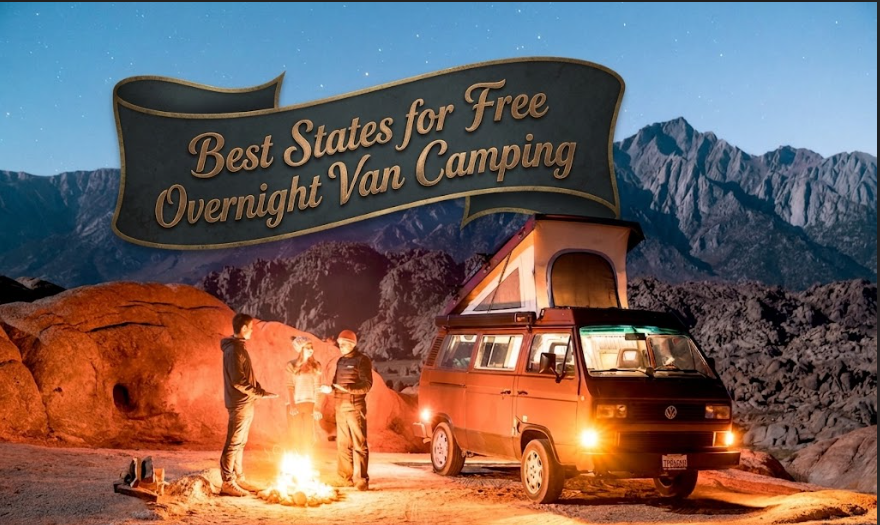
The state that comes up most consistently in van life forums as the gold standard for free overnight camping is Utah. Utah is genuinely excellent. It’s also the most crowded it’s been in years, dispersed camping access around Moab has tightened considerably, and people arriving with advice from two or three years ago are regularly surprised by restrictions and designated zones that simply didn’t exist before.
The best states for free van camping aren’t always the most talked-about ones.
What follows is a genuine comparison of the states that actually deliver, state by state, what each offers in real terms and where each falls short, based on BLM (Bureau of Land Management) land and national forest dispersed camping rules. These are the legal frameworks that make free overnight van camping at scale possible in the US.
1. How BLM Land Actually Works Before You Start Planning
BLM land is federally managed public land where dispersed camping, meaning camping outside any designated campsite, is permitted for free. The standard rule across most BLM land is a 14-consecutive-day limit per location, after which you must move at least 25 miles before establishing a new camp. That resets the clock. A significant number of full-time van lifers in the western US live by this rule continuously through winter months in Arizona and New Mexico.
One critical distinction that trips people up constantly: National Parks do not permit dispersed camping. They operate designated campgrounds with fees and reservation systems. BLM land adjacent to National Parks is a completely different legal category. Arriving at the edge of Canyonlands expecting BLM-style freedom because you saw it on a map means nothing if the land classification is wrong. Gaia GPS and the onX Offroad app both show land ownership layers clearly, and downloading those layers offline before heading somewhere remote is worth the five minutes it takes.
National Forests permit dispersed camping under Forest Service rules broadly similar to BLM. Some forests have restricted zones, and fire season, which in the Southwest typically runs from May through October, introduces bans on open fires and occasionally on camping itself in high-risk areas.
The percentage of a state that’s federally managed land is the single biggest variable in how viable free camping is there. That percentage varies enormously across the West.
2. Nevada vs Utah: Same Reputation, Very Different Trade-offs
Nevada carries roughly 87% federally managed land, the highest percentage of any US state. The sheer scale of accessible dispersed camping there is difficult to overstate. The Black Rock Desert in the northwest is famous partly for Burning Man, but outside the event period it’s open playa and surrounding high desert terrain with almost no restrictions and almost no one. The Basin and Range region in the south and the Monitor Valley in the centre are equally open and far less frequented than almost any destination in the van life conversation.
Nevada gets overlooked because it doesn’t photograph the way Utah does. The trade-off for that is real solitude and genuine space. The downsides are also real: water sources are scarce, cell signal across much of the state is minimal to nonexistent, and summer temperatures in the southern half regularly exceed 43°C. Spring and autumn are the viable windows for most Nevada camping.
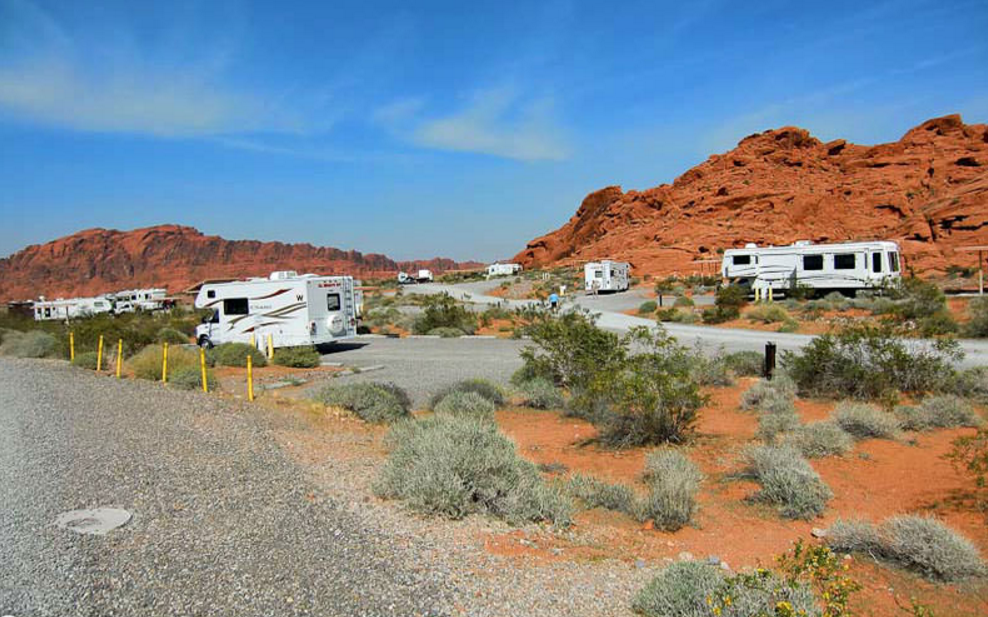
Utah sits at around 72% federally managed land and delivers experiences that depend entirely on where you go. The BLM lands around Moab draw enormous numbers because of proximity to Canyonlands and Arches, and that popularity has consequences. Dispersed camping areas in the Moab Field Office now operate with designated zones and enforced stay limits that didn’t exist a few years back. Arriving in March or October without a clear plan often means competing for spots that were once reliably empty.
Southern Utah, specifically the BLM land around Grand Staircase-Escalante National Monument, the Cottonwood Canyon Road corridor, and the Skutumpah Road area near Kanab, is where the experience most people imagine Utah being actually still exists. That stretch of the state is less crowded, less regulated, and more consistent with what the old blog posts and YouTube van build videos promised. Budget Van Journeys readers asking about Utah are almost always better pointed there than toward Moab.
3. Arizona vs New Mexico: The Honest Assessment
Arizona’s case is legitimate. The Prescott and Coconino National Forests, the Tonto National Forest south of Payson, and the BLM lands of the Sonoran Desert collectively offer enormous dispersed camping access. The seasonal window runs October through April in the lower elevations, which is a genuine advantage for van lifers who want to keep moving through winter without the complexity of snow and frozen pipes.
The Sedona area is the exception. Red Rock Country is heavily visited, parking access around town is restricted, and arriving expecting the kind of open dispersed camping that characterises most of Arizona is often a disappointment. The Coconino Forest further from Sedona is still excellent. But Sedona itself requires more planning than most of Arizona does.
New Mexico gets significantly less attention in van life spaces than Arizona, and it shouldn’t. The Carson National Forest north of Taos, the Gila National Forest in the state’s southwest, the BLM lands along the Rio Grande del Norte National Monument near the Colorado border: collectively this is diverse, beautiful terrain with considerably less traffic than comparable Arizona spots. Middle-elevation areas between 1500 and 2500 metres in New Mexico are viable across a wider seasonal range than low-desert Arizona, avoiding the extreme summer heat without requiring the cold-weather preparation of higher mountain states.
Cell signal in the Gila National Forest is patchy to nonexistent. Downloading topographic offline maps before going anywhere remote in New Mexico is not optional, it’s the minimum preparation required.
4. Oregon and Montana: Two Different Kinds of Commitment
Oregon divides cleanly by geography, and treating it as one unit misses the point. Western Oregon is wet, popular in summer, and better as a passage route than a long-stay destination for free camping. The eastern half is a different state entirely. The Deschutes National Forest, the Ochoco Mountains, the high desert country around the Steens Mountain, and the Owyhee Uplands BLM area bordering Idaho: these are underused, genuinely remote, and dry. Late June through September is the window. Outside that period the weather becomes unpredictable in the higher elevations.
Montana demands more preparation than any other state worth mentioning here, and it earns it. The Flathead, Gallatin, and Beaverhead-Deerlodge National Forests offer dispersed camping in terrain that remains relatively uncrowded because it’s harder to access and has a narrower viable season. Snow arrives at elevation by late September, sometimes earlier. Cold-weather preparation for a Montana van trip is a different category of planning than for Arizona or Nevada. But the country is exceptional, and the low foot traffic across most of the state’s national forests is something that’s increasingly rare in popular destinations.
Quick Reference: Free Camping Suitability by State
STATE        BLM/FED %   BEST SEASON       CROWDS    WATER     NOTES
-----------  ----------  ----------------  --------  --------  ----------------------
Nevada         ~87%      March-May/Sept-Nov   Low    Scarce    Unmatched access, plan water
Utah           ~72%      March-May/Sept-Oct   High   Moderate  Avoid Moab, go south
Arizona        ~48%      October-April        Med    Moderate  Best winter base state
New Mexico     ~34%      Year-round           Low    Moderate  Underrated, less crowded
Oregon East    ~32%      June-September       Low    Good      Vastly better than West OR
Montana        ~29%      June-September       Low    Good      Scenic, narrow season
Colorado       ~36%      June-September       High   Good      Crowded, plan carefully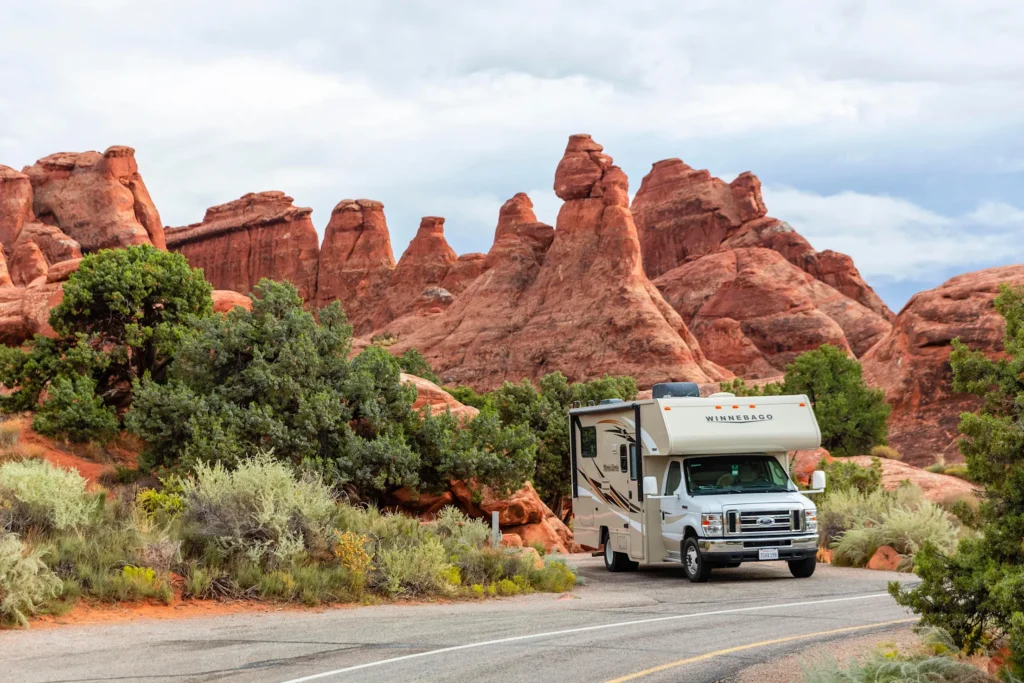
5. The Mistakes That Keep Showing Up
The 14-day rule is misread more than almost any other rule in free camping. It means 14 consecutive days at one specific location, then a 25-mile move. It does not mean a 14-day total limit per state or per year. Budget Van Journeys hears from readers regularly who thought they’d used up their allowance and have been driving unnecessarily. You can camp on BLM land indefinitely provided you move every two weeks.
Fire restrictions are the other failure point. In fire season, which in the Southwest runs roughly May through October depending on rainfall that year, large portions of national forests and BLM land prohibit open fires and sometimes gas stoves. These restrictions change quickly based on conditions and website updates lag behind reality. Calling the BLM field office or forest ranger district for the specific area before arriving is the only reliable method. iOverlander reviews sometimes flag active restrictions but not consistently enough to depend on.
State trust lands are a separate category that looks identical on some maps. Most western states have trust land interspersed with BLM and national forest land, and state trust land generally does not permit camping without a permit. The visual difference on standard maps isn’t always obvious. Using an app that shows land ownership layers removes the guesswork.
FAQs
Do I actually need to move 25 miles after 14 days, or is that loosely enforced? It’s on the honour system in genuinely remote areas, but in popular corridors like the Moab BLM lands and parts of the Sonoran Desert, BLM rangers do patrol and do enforce it. The policy exists to prevent effective homesteading of public land. In places with low traffic and no ranger presence, compliance is mostly self-regulated, but the rule is real and can result in fines if an inspector does come through.
Can I have a fire on BLM land? Outside of restriction periods, yes, with conditions. Fires must use an existing ring where one is present, or a fire pan on bare mineral soil otherwise. All fires must be cold to the touch before leaving. During fire restrictions, which cover most of the Southwest in summer, open fires, charcoal, and sometimes gas stoves are prohibited. The ban can go up and come down within days based on conditions. Checking with the local field office or on InciWeb before lighting anything is the practical approach.
How do I reliably find water when free camping in Nevada or Arizona? Carry more than you think you need before leaving the last town. Water access on BLM land in the desert Southwest is not reliable. The iOverlander app and Water Near Me both flag known water sources from community submissions. Small towns throughout Nevada, Utah, and Arizona generally have gas stations or RV parks that fill tanks or sell water by the gallon. Treating any natural water source with a proper filter like a Sawyer Squeeze or Katadyn is necessary; desert springs and stock tanks carry bacteria and parasites.
Is Colorado worth it given the crowds? Yes, but it requires specific planning. The San Isabel and White River National Forests are genuinely excellent for dispersed camping, and the scenery warrants the trip. The problem is that showing up without designated backup spots in high summer often means competition for good locations. Arriving on a Tuesday rather than a Friday makes a meaningful difference, and heading for the less-celebrated forests like the Rio Grande National Forest in the San Luis Valley returns something closer to the uncrowded experience most people are looking for.
What solar setup do I need for extended BLM camping in the Southwest? In Nevada, Arizona, and New Mexico, a 200-watt panel paired with a 100Ah lithium battery handles daily power needs for a modest van setup, which covers phone charging, LED lighting, a laptop, and a 12V fridge, through most of the year. Larger setups or heavy power users should scale up accordingly. The average daily peak sun hours in the Sonoran Desert run around six to seven hours, which makes solar consistently reliable in a way that northern states in autumn and winter are not. In Oregon and Montana in shoulder seasons, supplementing with a shore power stop every week or so is typically necessary.
Colorado earns its reputation and doesn’t need defending. But the honest version of this list acknowledges that New Mexico’s Gila region, eastern Oregon, and the Monitor Valley in central Nevada each deliver something comparable, sometimes better, with a fraction of the traffic. The popularity of certain destinations is self-reinforcing, and the less-discussed states tend to reward people who look past the first page of van life search results.