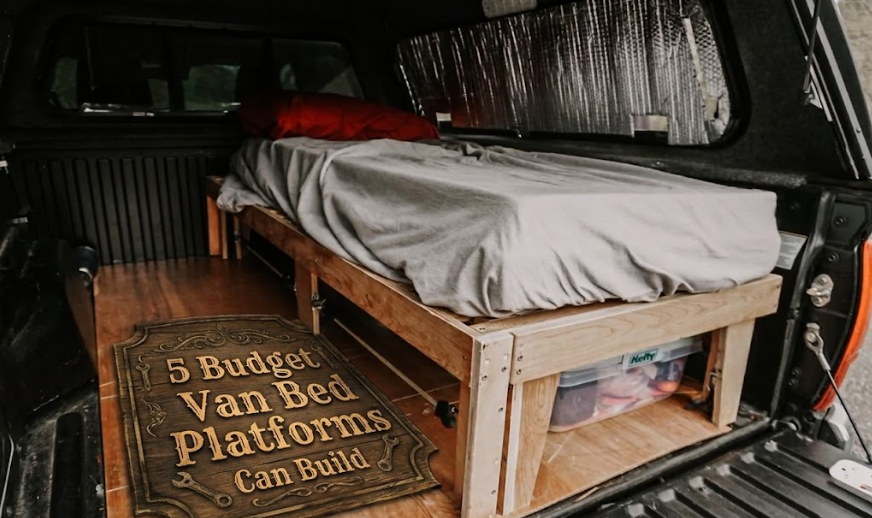
There’s this assumption floating around van build communities that a bed platform is complicated. That you need a drill press, a table saw, and some kind of woodworking muscle memory before you can attempt it. I ran into it constantly when I was planning my first build, and I think it puts off a lot of people who would otherwise just, you know, build the thing.
The truth is that most of these platforms come down to cutting plywood and screwing things together. Some of them don’t even require that much.
At Budget Van Journeys, the whole point is that van life doesn’t need to drain your savings before you even hit the road. The bed platform is the perfect example of that. Done right, it can cost somewhere between £40 and £150 depending on what you have access to, and it’ll hold a mattress for years without complaint.
Here are five approaches that actually work, for different vans, different budgets, and different levels of DIY confidence.
1. Get Your Measurements Right First
This part comes before everything else. Skip it and you’ll build a platform that either doesn’t fit, blocks a door, or sits at a strange angle because nobody accounted for the wheel wells.
Wheel wells are the main issue. In most panel vans, the rear wheel arches cut into the interior floor space, and your platform needs to either sit on top of them or be built around them. Measure the height of the wheel wells, the width at their narrowest point, and the total floor length from the back doors to wherever you want the platform to end.
A few other numbers worth writing down before you touch any timber:
The height from the van floor to the ceiling at the rear. This tells you how much headroom you’ll actually have once the platform and mattress are in place. Most people find that a platform height of around 30 to 35cm leaves enough room to sit up in bed without making contact with the roof.
The width at floor level and at waist height. Van walls taper inward as they rise, and that affects whether you can build to full width at platform height or whether you need to plan for angled edges.
Once you have those numbers, the rest is planning around them.
2. The Five Platforms
Flat Plywood Box
This is the most common starting point, and for a lot of people, the most practical option full stop. The idea: build a rectangular frame from 2×4 timber, attach vertical supports at regular intervals, then cover the whole structure with a sheet of 18mm plywood.
The top is your sleeping surface. Underneath is storage. The storage is genuinely useful as long as you build hinged or removable sections into the top, because a sealed box you can’t open isn’t storage, it’s just a higher floor. This platform typically costs between £50 and £80 in materials if you’re buying new timber.
2×4 Frame with Plywood Top
Slightly lighter than the full box. Instead of boxing in the entire base, you build a ladder-style frame with two long runners and cross-supports between them, then attach legs at the corners. The space underneath is open, which makes accessing gear easier, but everything under there needs to be bagged or contained or it’ll slide around on corners.
Good option if you want to keep weight down or if you prefer a build that’s easier to dismantle when you change your mind about the layout.
Pallet Wood Platform
Free, or nearly free, depending on where you look. Pallets are worth hunting for around industrial estates and building suppliers, and you can often pick them up for nothing.
The catch is the extra height they add, their weight, and the levelling work involved since pallet wood is rarely perfectly even. They need sanding and treating before you’d want to sleep above them. But there’s something genuinely satisfying about a platform built from salvaged materials. It fits the budget van spirit pretty well, and the finished look is rustic in a way a lot of people actually want.
Hinged Fold-Down Platform
More planning involved here, but worth it if you’re using the van as a day vehicle as well as a sleeping space. The platform folds up against one wall during the day and drops down to sleeping position at night.
You need solid hinges and a wall mount you trust completely. Use at least two large hinge points and a fold-down leg support on the free edge rather than relying on a cantilever design alone. The leg keeps things sturdy and doesn’t ask too much of the wall fixing. More work to build. Very practical if your van has more than one use.
Aluminum L-Track Modular Frame
The most expensive of the five, though still within budget territory compared to buying a pre-built solution. L-track is the slotted aluminum rail system you’ll see in cargo vans and sprinter conversions. Fix the track to the van floor and walls, then attach a platform frame using track bolts.
The advantage is complete adjustability. You can reconfigure the platform, remove it entirely, or shift its position without making new holes anywhere. For anyone still working out their ideal layout, or planning to change the build over time, that flexibility is worth the extra cost. A basic L-track setup for a bed platform runs around £100 to £150.
| Platform Type | Approx. Cost | Build Difficulty | Storage Under? | Fixed or Removable |
|---|---|---|---|---|
| Plywood Box | £50-£80 | Low | Yes (with access panels) | Fixed |
| 2×4 Frame + Ply | £45-£70 | Low | Open storage | Fixed |
| Pallet Wood | £0-£20 | Medium (levelling needed) | Limited | Fixed |
| Fold-Down | £60-£100 | Medium-High | No | Removable |
| L-Track Frame | £100-£150 | Medium | Depends on design | Fully removable |
3. The Mistakes That Cost People Sleep
The height problem gets almost everyone on their first build. You plan the platform at 40cm because that gives excellent storage underneath. Then you lie down and your nose is six inches from the ceiling. Always mock up the height before you commit to building anything. A couple of stacked cardboard boxes with your actual mattress on top takes ten minutes and gives you a genuine sense of what that headroom feels like when you’re horizontal.
Moisture under the mattress is the other thing people don’t address early enough, and it’s a bit frustrating because by the time you notice it, the problem is already developed. A solid platform with no airflow creates a condensation trap. Whatever design you build, leave gaps in the top surface if you can, or cut a series of ventilation holes in the plywood. Not glamorous. But it extends the life of your mattress considerably, and it’s much easier to do during the build than to retrofit later.
And securing. A platform that isn’t bracketed to the van can shift, usually not dramatically, but it creaks and moves and gradually works loose where it meets the wall. Simple L-brackets at the floor line and against one wall are usually enough for a static design, and they take about fifteen minutes to add.
One more thing, because it gets missed more often than you’d think: build the access panels for your under-platform storage before the platform goes into the van, not after. Trying to add hinges in a confined space while kneeling on a cold van floor is, well, it’s a good reminder to plan ahead.
4. What You’ll Actually Need to Buy
For most of these builds, the materials list is short. Timber (2×4 or similar studs), one or two sheets of 18mm plywood, wood screws, sandpaper, and a finishing oil or paint for any exposed surfaces. Tools: a drill, a circular saw or jigsaw, a tape measure, a pencil.
Some people already have most of this. Some people borrow a drill and buy a handsaw, which is completely fine for a first build. None of this needs to be a significant outlay. The point of building your own platform is that you’re not paying for someone else’s labour or markup.
For the L-track option, the track itself and compatible hardware is where the cost concentrates. Everything else stays the same as the other builds.
One thing that catches first-time builders off guard more reliably than anything else: buy more screws than you think you need. Running out halfway through is the kind of small frustration that turns a productive afternoon into a longer day.
Budget Van Journeys covers full van conversion builds in other guides if you want to see how the platform fits into the wider picture, but honestly the bed is a solid standalone project and a good way to build real confidence before you tackle the more complex parts of a conversion.
FAQs
Does a van bed platform need to be bolted to the van floor? Technically no, but it’s worth doing. A heavy static platform on rubber-matted flooring can stay in place through friction for a while, but some kind of anchor makes everything more stable and less prone to creaking. Bolt-through floor fixings or L-brackets against the side wall are both widely used options.
How much weight can a DIY plywood platform hold? An 18mm plywood top on a 2×4 frame with supports spaced every 50 to 60cm will hold well over 300kg without noticeable flex. For a mattress and one or two sleepers, this is far more than you’ll ever need. If you have unsupported spans over 80cm, add a cross-support underneath.
What’s the ideal height for a van bed platform? Most builders aim for the platform surface to sit between 28 and 36cm off the van floor. Add your mattress thickness to that figure and check that you have at least 85 to 90cm of clearance between the top of the mattress and the ceiling when lying flat. Always mock it up before cutting timber.
Can I build one of these with no DIY experience? Yes, particularly the plywood box and the 2×4 frame designs. If you can measure, cut a reasonably straight line, and use a drill, you have enough skill for either of those. Budget Van Journeys recommends them as a genuine entry-level project because the tolerances are forgiving and the process teaches you a lot about the van before you move on to anything more involved.
Is pallet wood safe to use inside a van? It depends on the pallet. Look for the HT stamp, which stands for heat treated. Avoid pallets marked MB, which were treated with methyl bromide, a pesticide not suitable for enclosed living spaces. The marking is usually stamped or burned into the side of the pallet frame. Worth checking before you haul anything home.
There’s something quietly satisfying about building your own sleeping space before a long trip. It doesn’t need to be perfect, it just needs to hold a mattress and let you wake up rested. And any of these five designs will do exactly that.
Start simple. The fold-down version will still be there after your first build.